You're building out a seating product line and the question comes down to this: do you source recliner mechanisms, sofa bed mechanisms, or both? The price difference between the two looks manageable on a per-unit basis — until you account for the tooling, the frame engineering, the weight, and what happens when a batch of 2,000 units arrives and the mechanism doesn't fit your frame spec. That's where the real cost gap opens up.
The quick verdict: recliner mechanisms are lower unit cost, lighter, and easier to integrate into standard upholstered frames. Sofa bed mechanisms carry higher structural complexity, more steel, and tighter dimensional tolerances — but they open a different market segment entirely. The decision isn't which is better. It's which one your product line and your buyers' end-market actually need.

Structural Architecture: Where the Cost Difference Starts
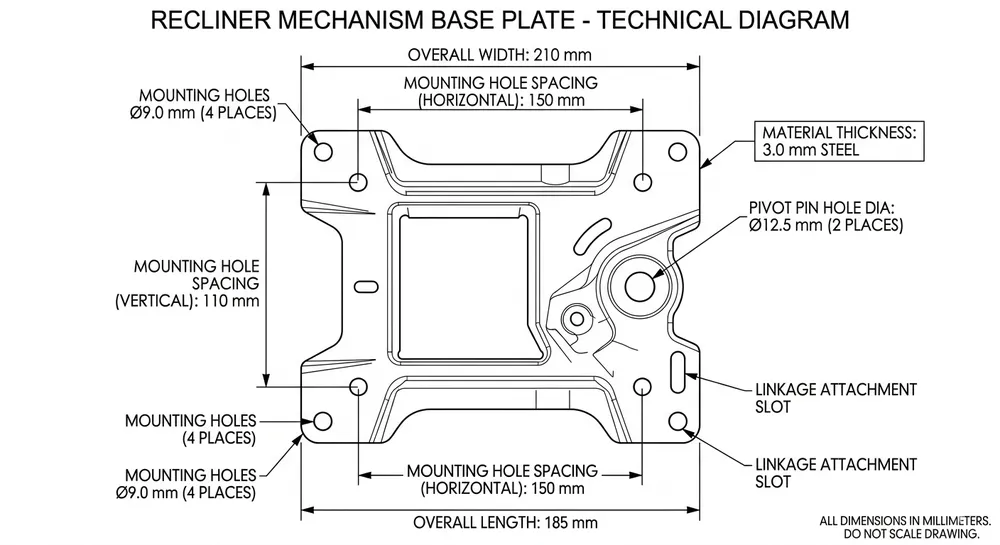
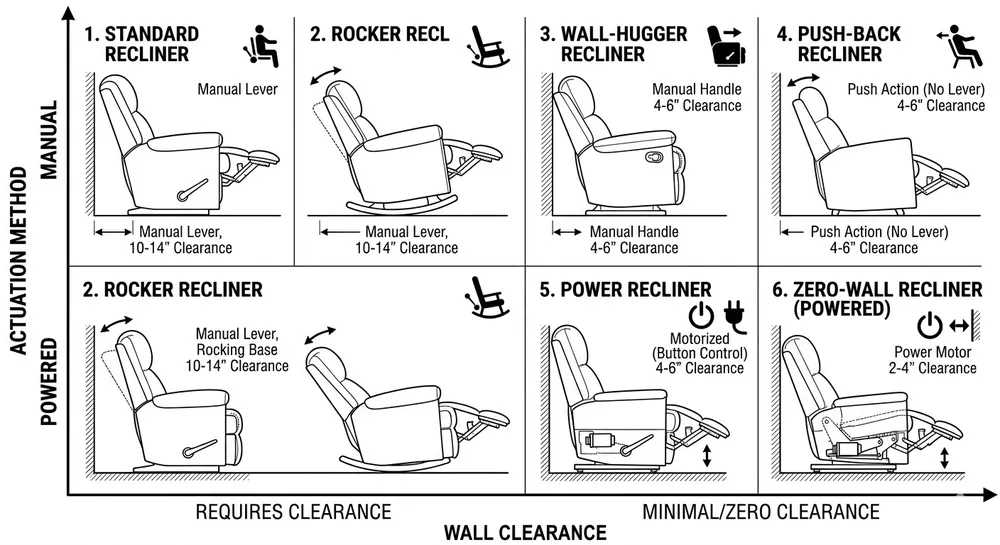
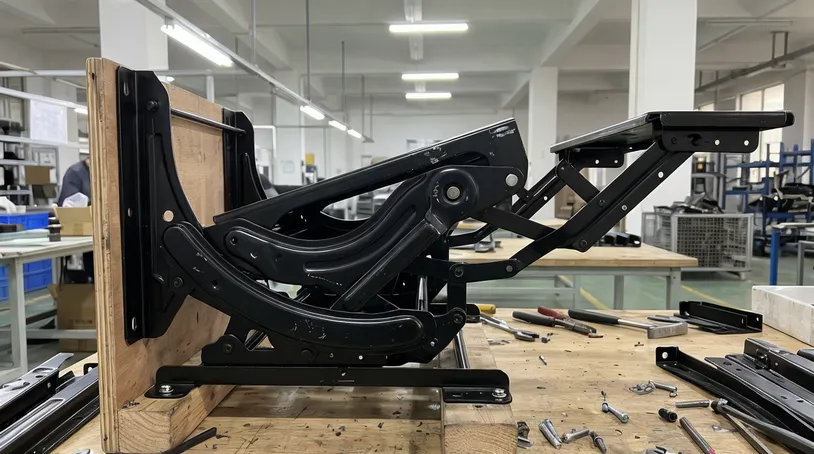
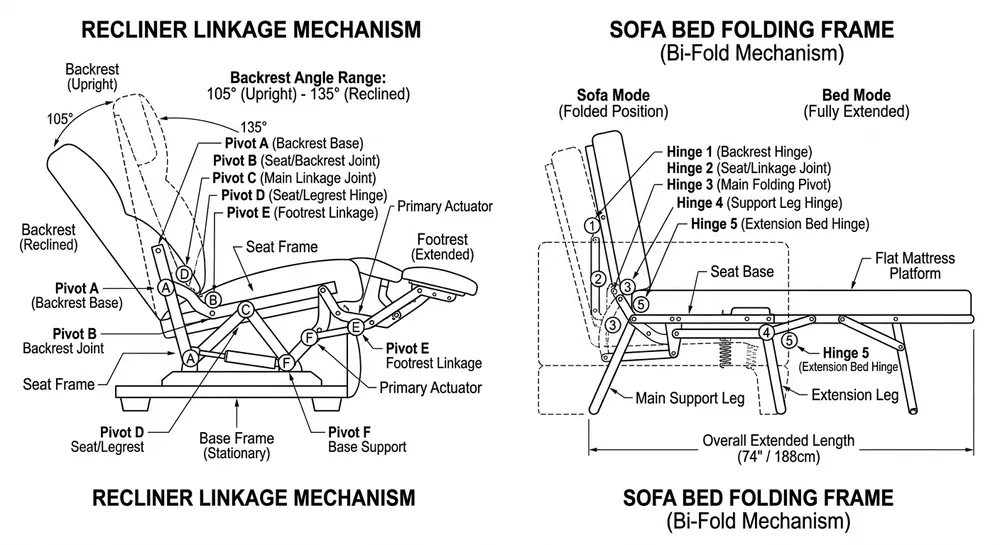
A recliner mechanism is fundamentally a linkage system. It controls backrest angle and, in more complex configurations, footrest extension. The core components are stamped steel side plates, pivot pins, a tilt lock or continuous-position lock, and a return spring or gas spring. The whole assembly is designed to carry dynamic load in one axis — the recline arc — and hold position under a seated occupant's weight.
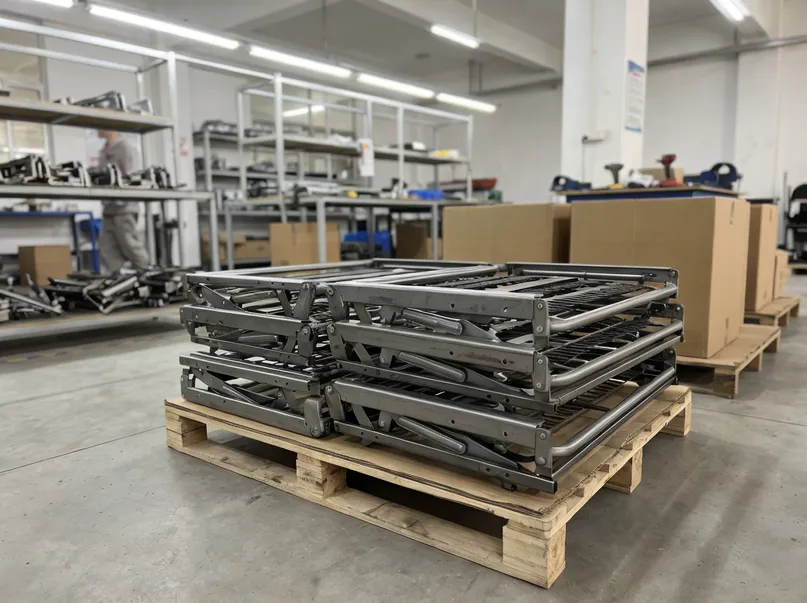
A sofa bed mechanism is a folding frame. It has to do something structurally harder: transform a seating geometry into a flat sleeping surface and back again, while supporting distributed load across the full sleeping area. That means more pivot points, longer steel members, cross-bracing, and a locking system that holds the bed flat under dynamic load (someone rolling over at 2 AM puts a very different stress pattern on a frame than someone sitting down).
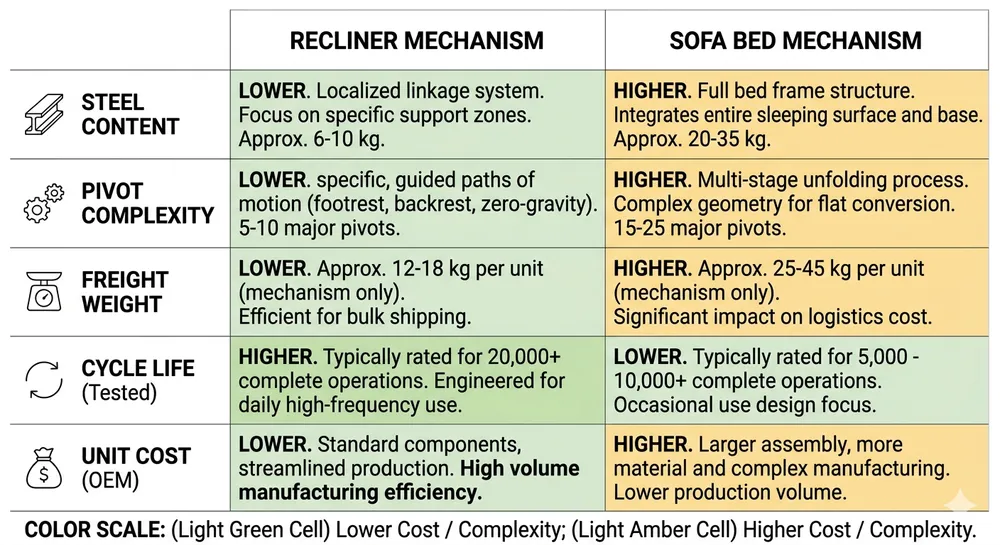
The steel content difference is significant. A standard recliner mechanism for a single-seat chair runs roughly 2.5–4 kg of steel per unit depending on configuration. A sofa bed mechanism for a standard 3-seat sofa runs 12–20 kg. That weight difference flows directly into your freight cost, your frame engineering, and your upholstery labor — the sofa bed frame dictates more of the finished product's structure than a recliner mechanism does.
(We've had buyers switch from a heavier sofa bed spec to a lighter folding frame design and save $18–24 per unit in sea freight alone on a 40-foot container. That's not a small number at 500 units.)
Head-to-Head Specification Matrix
| Dimension | Recliner Mechanism | Sofa Bed Mechanism |
|---|---|---|
| Steel content per unit | 2.5–4 kg | 12–20 kg |
| Primary load direction | Single-axis (recline arc) | Multi-axis (seat + flat bed) |
| Pivot point count | 2–4 | 6–12+ |
| Lock system | Tilt lock / continuous position | Flat-bed latch + seat lock |
| Dimensional tolerance criticality | Medium | High |
| Frame integration complexity | Low–Medium | High |
| Typical unit cost range | Lower | Higher (1.8–3× recliner) |
| Freight weight impact | Low | High |
| Cycle life requirement | 50,000–100,000 cycles | 10,000–30,000 cycles |
| Surface treatment standard | Zinc or powder coat | Powder coat (corrosion risk higher) |
The cycle life numbers deserve a note. Recliner mechanisms get used multiple times a day — someone adjusting their position while watching TV. Sofa beds get converted far less frequently, so the cycle life spec is lower, but the load per cycle is higher and more varied. A sofa bed mechanism that passes a 10,000-cycle test at rated load is doing more structural work per cycle than a recliner mechanism rated at 100,000 cycles.
The Hidden Cost Analysis: What the Unit Price Doesn't Show
The per-unit mechanism price is the number buyers compare first. It's also the least useful number for total landed cost.
Frame engineering cost. A sofa bed mechanism is load-bearing in a way a recliner mechanism isn't. The sofa bed frame IS the structural skeleton of the finished product — your upholstery manufacturer has to build around it, not just attach to it. That means more engineering time, tighter tolerances on the frame weld, and less flexibility to swap suppliers mid-production run without re-engineering the fit. We've seen buyers underestimate this by 15–20% of total product development cost when they're entering the sofa bed category for the first time.
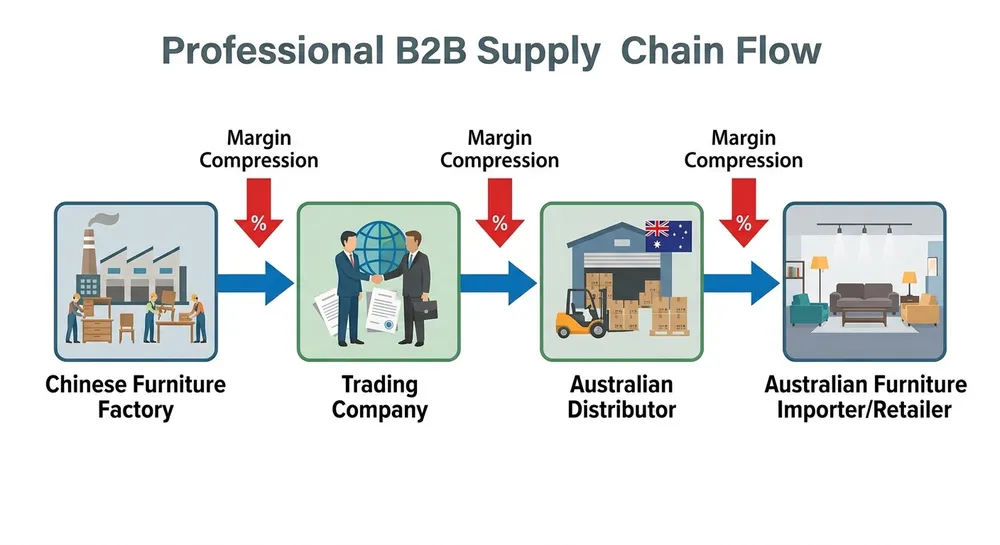
Freight and container efficiency. At 12–20 kg per sofa bed mechanism versus 2.5–4 kg for a recliner, you're loading significantly more dead weight per container. On a 40-foot container of finished sofas, the mechanism weight alone can shift your freight cost per unit by $12–30 depending on your destination port. Buyers shipping to North America or Australia feel this more than European buyers due to longer sea legs.
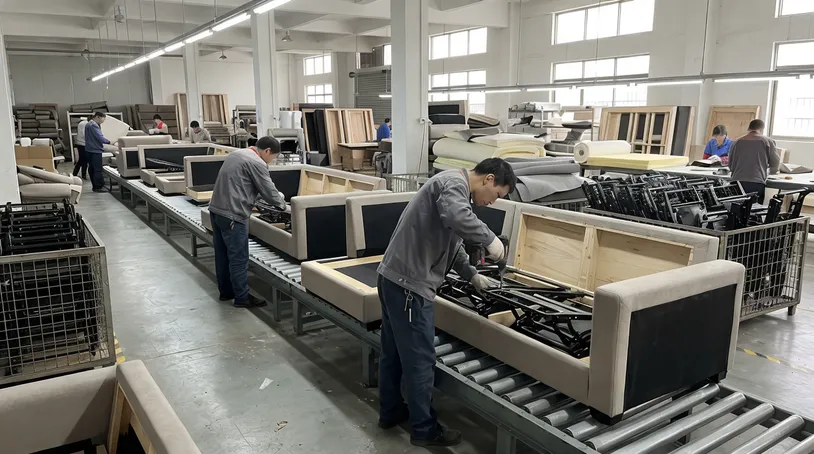
QC failure cost. Sofa bed mechanisms have more failure modes. A recliner mechanism that fails QC typically has a lock issue or a spring tension problem — both detectable in a standard functional test. A sofa bed mechanism can pass a basic open/close test and still have a dimensional issue that causes the mattress platform to sit 8mm off-level, which your end customer notices immediately. We run a flat-plane verification on every sofa bed frame before shipment — it adds time, but it's the check that catches the failures that basic cycle testing misses.
Warranty and RMA exposure. Recliner mechanisms in standard residential use have a well-understood failure profile. Sofa bed mechanisms, especially in rental or hospitality applications, see abuse patterns that residential testing doesn't capture. If your buyers are supplying hotels or serviced apartments, the RMA risk on a sofa bed mechanism is meaningfully higher than on a recliner — and that risk lands on your margin, not the end user's.
Application Showdown: Which Mechanism Wins in Your Market
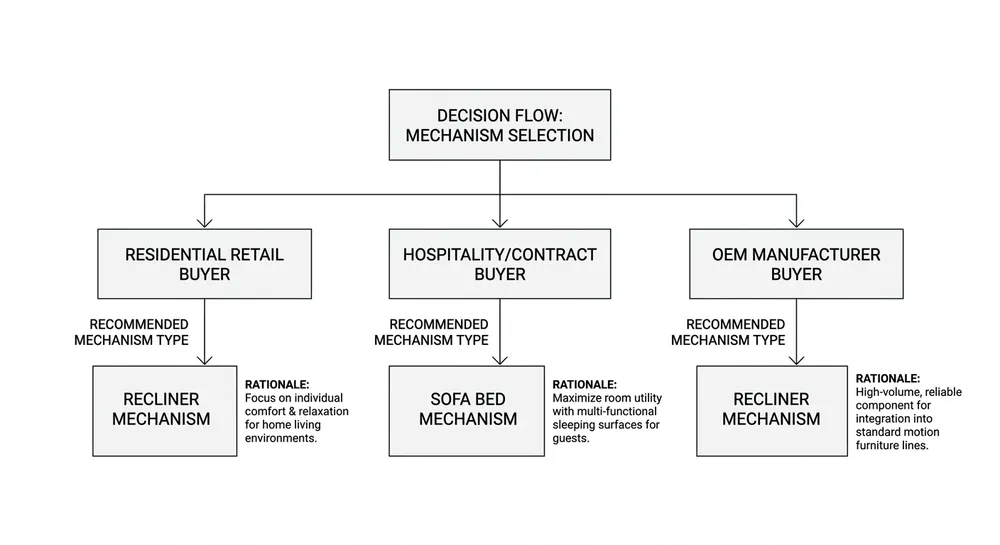
Residential Furniture Retail — Recliner Mechanism Wins
Your buyer is a furniture retailer or importer supplying mid-market residential. They need consistent quality, predictable lead times, and a mechanism that their upholstery supplier can work with without custom tooling. Recliner mechanisms fit this profile cleanly. Lower unit cost, lighter freight, simpler frame integration, and a well-understood warranty profile. The margin structure works at standard retail price points.
Sofa bed mechanisms in this channel are viable but require a higher retail price point to absorb the cost. If your buyer is competing on price in the mid-market, the sofa bed SKU is harder to protect margin on.
Hospitality and Contract Furniture — Sofa Bed Mechanism Wins
Hotels, serviced apartments, and student accommodation projects need the dual-function. There's no substitute for a sofa bed mechanism here — the product requirement is the product requirement. The commercial logic is different too: contract furniture buyers are specifying for a project, not a retail price point, so the higher mechanism cost is absorbed into the project budget rather than squeezed against a shelf price.
The key sourcing requirement in this segment is cycle life documentation and load certification. Buyers in this channel will ask for test reports. Make sure your supplier can provide them. (We supply SGS-certified load test reports with every sofa bed mechanism batch — this is the document that gets hospitality projects approved at the procurement stage.)
OEM Furniture Manufacturers Scaling a Product Line — Depends on the SKU Mix
If you're an OEM manufacturer building out a full seating range, you likely need both. The question is sequencing. Recliner mechanisms are the lower-risk entry point — simpler integration, faster first-production learning curve, lower tooling exposure if you're doing OEM customization. Sofa bed mechanisms make sense once you've established your frame engineering capability and have a buyer channel that can absorb the higher price point.
We've worked with manufacturers who tried to launch both simultaneously and ran into frame engineering bottlenecks on the sofa bed side that delayed the whole line. Sequence matters.
Supplier Validation: What to Verify Before You Commit
Whether you're sourcing recliner mechanisms or sofa bed mechanisms, the QC checkpoints are different enough that they're worth spelling out separately.
For recliner mechanisms, the critical verifications are:
- Lock mechanism cycle test (minimum 50,000 cycles at rated load — ask for the test report, not just the claim)
- Backrest angle range and hold force — these need to match your upholstery frame spec exactly, or you'll have fitment issues at assembly
- Surface treatment consistency — zinc plating thickness should be uniform across the batch; spot-check with a coating thickness gauge on arrival
- Spring tension calibration — recliner mechanisms that feel "stiff" or "loose" in use are almost always a spring spec issue, not a structural one
For sofa bed mechanisms, the critical verifications are:
- Flat-bed dimensional tolerance — the sleeping platform should be level within ±3mm across its full length; anything outside that shows up as a visible sag or tilt in the finished product
- Hinge and pivot pin material — zinc alloy pivot pins in a sofa bed mechanism are a cost-cutting move that shortens service life significantly; specify steel pins and verify on the drawing
- Load test certification — for hospitality applications, you need a third-party load test report (SGS, TÜV, or equivalent); a supplier's internal test report is not sufficient for contract procurement
- Locking latch engagement force — the bed-flat latch should engage positively with audible click confirmation; mechanisms that rely on friction or gravity to hold flat position will fail in use
RFQ language that protects you: When you send an RFQ for either mechanism type, specify the load rating, cycle life requirement, surface treatment standard, and dimensional tolerances in the RFQ document — not just the product name. "Recliner mechanism" is not a specification. "Recliner mechanism, 120 kg rated load, 80,000-cycle test, zinc plated 8–12μm, backrest range 105°–145°" is a specification. The difference between those two RFQs is the difference between a supplier quoting what they have in stock and a supplier quoting what you actually need.
We've been manufacturing recliner and sofa mechanisms since 2008. The buyers who get the best outcomes are the ones who come in with a spec, not just a product category name. If you're not sure what spec to write, that's a conversation worth having before the RFQ goes out — not after the first container arrives.
Scenario Winners at a Glance
| Buyer Scenario | Recommended Mechanism | Key Reason |
|---|---|---|
| Mid-market residential retail | Recliner | Lower unit + freight cost, simpler integration |
| Premium residential / lifestyle brand | Either | Price point supports sofa bed margin |
| Hotel / serviced apartment projects | Sofa Bed | Dual-function is non-negotiable |
| Student accommodation | Sofa Bed | Space efficiency drives the spec |
| OEM first production run | Recliner | Lower integration risk, faster ramp |
| OEM scaling full seating range | Both | Sequence recliner first, add sofa bed second |
| Contract furniture distributor | Sofa Bed | Project buyers absorb higher cost |
The structural differences between these two mechanism types are real, and they flow through to your product cost in ways that a per-unit price comparison won't show you. Steel content, frame engineering, freight weight, QC complexity, and warranty exposure all move in the same direction: sofa bed mechanisms cost more to source, integrate, and support. That cost is justified when your market segment demands the dual-function. When it doesn't, you're paying for capability your buyers don't need.
If you're evaluating both options for a specific product line, send us your frame drawings and target market — we'll give you a direct cost comparison across both mechanism types for your actual spec, not a generic price list. Visit our Recliner & Sofa Mechanism category page for full product specifications, or Request a Quote with your load rating, cycle life requirement, and annual volume.