MVMHardware Preview

DNOOO blank theme is active for local preview.

How to Select the Right Furniture Hinge Mechanism: A B2B Buyer’s Specification Guide

The wrong hinge spec doesn't fail at the showroom. It fails six months after your customer's cabinets are installed — when the door sags, the overlay gaps, or the finish blisters in a coastal kitchen. By then you're managing warranty claims, replacement shipments, and a conversation with your buyer about why the hardware didn't hold up.

Hinge selection looks simple from the outside. It isn't. The parameters that matter — overlay type, opening angle, load rating, cycle life, surface finish — interact with each other and with the end application in ways that aren't obvious from a catalog page. This guide walks through each one, explains what the numbers actually mean for commercial use, and tells you what to confirm with your supplier before the order is locked.

We've been manufacturing hinge furniture mechanisms since 2008. What follows is how we think about specification when a buyer sends us a brief.
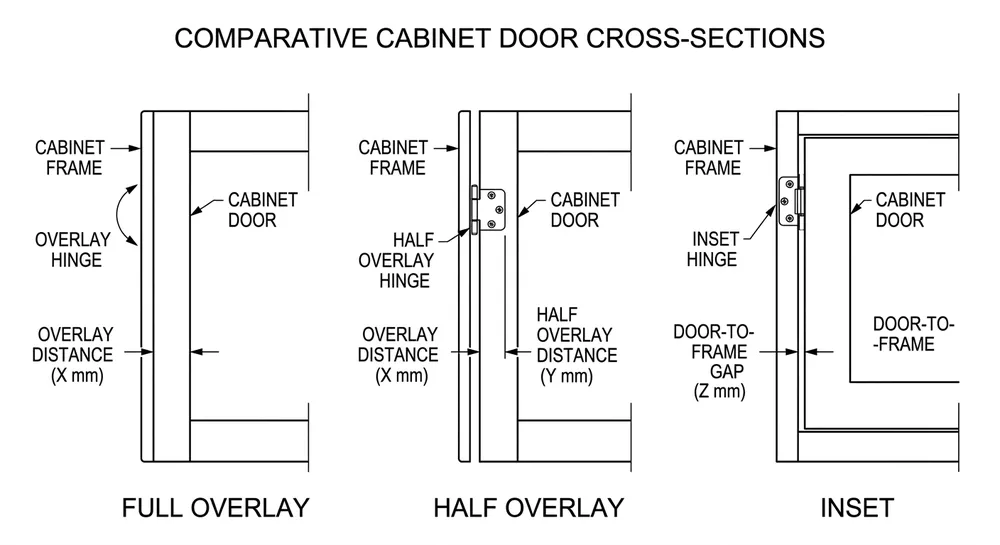
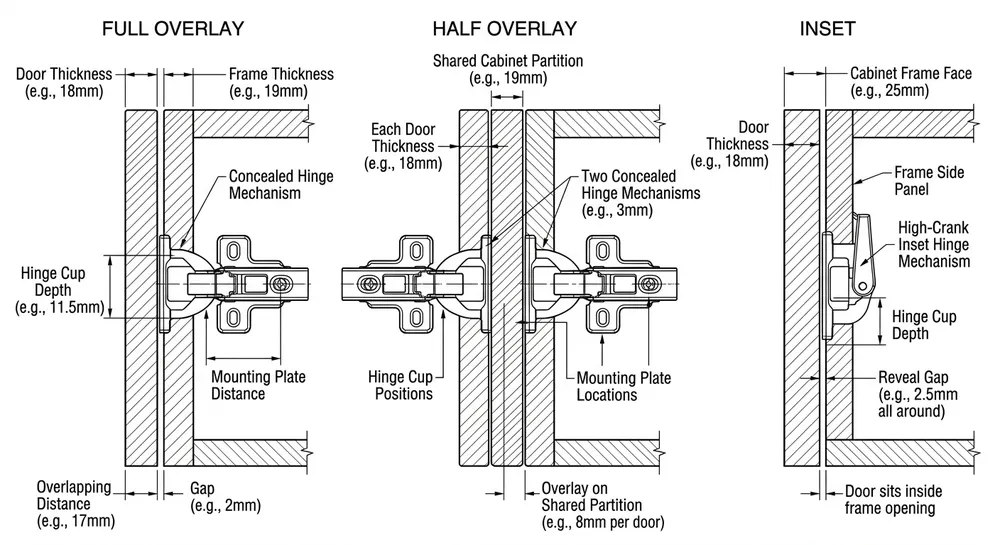
Diagram showing full overlay, half overlay, and inset cabinet hinge overlay configurations with dimensional callouts

Overlay Type: The Spec That Determines Everything Downstream

Overlay type is the first decision, and it has to be right before anything else matters. Get it wrong and the arm length, cup bore position, and mounting plate geometry are all wrong — you can't fix overlay with adjustment screws.

The three configurations are full overlay, half overlay, and inset. Full overlay is the most common in flat-pack and RTA furniture: the door covers the full face frame or panel edge, leaving a small reveal gap. Half overlay is used on shared panels where two doors meet — each door covers half the panel thickness. Inset sits flush inside the frame opening, which requires tighter tolerances on both the cabinet carcass and the hinge itself.

For buyers supplying into the RTA or flat-pack segment, full overlay is the default. Half overlay becomes relevant when your customer's cabinet line uses shared center stiles. Inset is a premium configuration — it's more forgiving of hinge quality variation in the wrong direction, meaning dimensional inconsistency shows immediately as a visible gap or bind.

(We see inset hinge orders go wrong more often than full overlay, not because inset is harder to manufacture, but because buyers sometimes spec inset without confirming their cabinet manufacturer's carcass tolerances. The hinge can be perfect and still look wrong if the opening isn't square.)

Overlay Type Typical Application Key Spec to Confirm
Full overlay RTA, flat-pack, standard kitchen cabinets Cup bore diameter, arm length, reveal gap
Half overlay Shared panel / center stile cabinets Arm length matches panel thickness
Inset Frameless premium cabinetry Carcass tolerance, hinge dimensional precision

Opening Angle: Match the Application, Not the Maximum

Hinge manufacturers list opening angle as a selling point. 110°, 120°, 165°, 180° — bigger numbers look better in a catalog. In practice, the right opening angle is the one that fits the installation, and over-specifying it costs you money without adding value.

Standard kitchen and wardrobe applications work fine at 110°. The door opens far enough to access the interior without hitting adjacent walls or appliances in typical room layouts. 120° is useful for corner cabinet solutions where the door needs to clear the adjacent cabinet face. 165° and 180° are for specific applications: tall pantry doors in open-plan kitchens, display cabinet doors that need to lie flat against the wall, or commercial furniture where full access matters operationally.

The mechanical trade-off is real. Higher opening angles require a longer arm geometry or a multi-link mechanism, which adds material, increases the hinge's closed height, and in some configurations reduces the load rating at full extension. A 165° hinge carrying a heavy door is working harder at full open than a 110° hinge in the same position.

For most cabinet door applications in the 400–800mm height range with standard 18mm panel construction, 110° is the right spec. If your buyer's product line includes corner units or display cases, add 120° as a second SKU. Don't default to the highest angle available — it adds cost and can create installation problems in tight spaces.
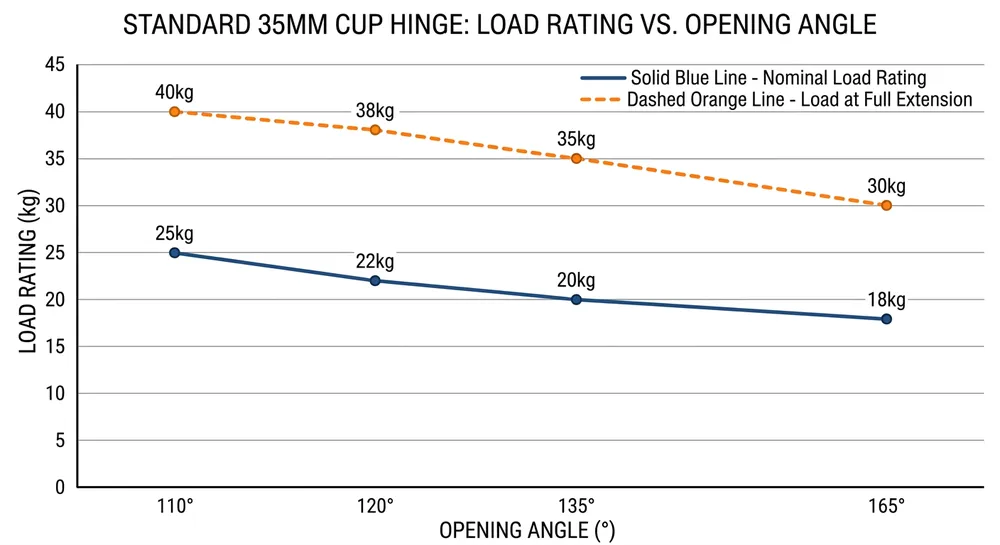
Chart comparing furniture hinge load ratings at different opening angles from 110 to 165 degrees

Load Rating and Cycle Life: The Numbers That Separate Commercial from Residential Spec

These two parameters are where most catalog-level buying guides stop short. Load rating tells you how much weight the hinge can carry. Cycle life tells you how many open-close operations it survives before performance degrades. Both matter, and they interact.

Load rating is typically expressed in kilograms per hinge pair. Standard residential cabinet hinges are rated for doors up to 15–20 kg per pair. Commercial applications — hotel room furniture, office storage, retail display units — need higher ratings, typically 25–40 kg per pair, because the doors are heavier (solid wood or thick MDF construction) and the use frequency is higher.

The number to ask for is the rated load at the specified opening angle, not just the nominal rating. A hinge rated at 30 kg at 90° may be rated lower at 120° due to the moment arm geometry. If your buyer's product uses heavy doors that open wide, confirm both figures.

Cycle life is where residential and commercial specs diverge most sharply. A residential kitchen cabinet opens and closes maybe 10–20 times per day. At that rate, a 50,000-cycle hinge lasts roughly 7–14 years. A hotel wardrobe or office storage unit in a busy environment can see 50–100 cycles per day — the same hinge lasts 1–3 years. Commercial furniture for hospitality, healthcare, or education needs 100,000-cycle minimum specification, and high-traffic applications should be spec'd at 150,000+ cycles.

We run 100% functional testing on every hinge before shipment, and batch qualification includes load-cycle verification. The cycle life figure on our spec sheets is the tested floor, not a marketing estimate. (We've had buyers come to us after a competitor's hinges failed at 30,000 cycles on a hotel project — the catalog said 80,000. The difference is whether the supplier actually runs the test or just prints the number.)

Application Recommended Load Rating Recommended Cycle Life
Residential kitchen / wardrobe 15–20 kg/pair 50,000 cycles
Mid-range hospitality / office 25–30 kg/pair 80,000–100,000 cycles
High-traffic commercial 35–40 kg/pair 150,000+ cycles
Heavy solid-wood doors 40+ kg/pair Confirm per door weight

For buyers sourcing for the hospitality or commercial office segment, the cycle life spec is a direct risk-reduction tool. A hinge failure in a hotel room generates a maintenance call, a guest complaint, and a warranty claim against your product. Specifying correctly at the sourcing stage is cheaper than managing that chain.

Surface Finish Selection by Environment: Where Spec Errors Show Up in the Field

Surface finish on a furniture hinge is not a cosmetic decision. It's a corrosion protection decision, and the right choice depends on where the furniture ends up.

We run three finish lines in-house: powder coating, nickel plating, and zinc plating. Each has a different corrosion resistance profile and a different dimensional impact on the hinge.

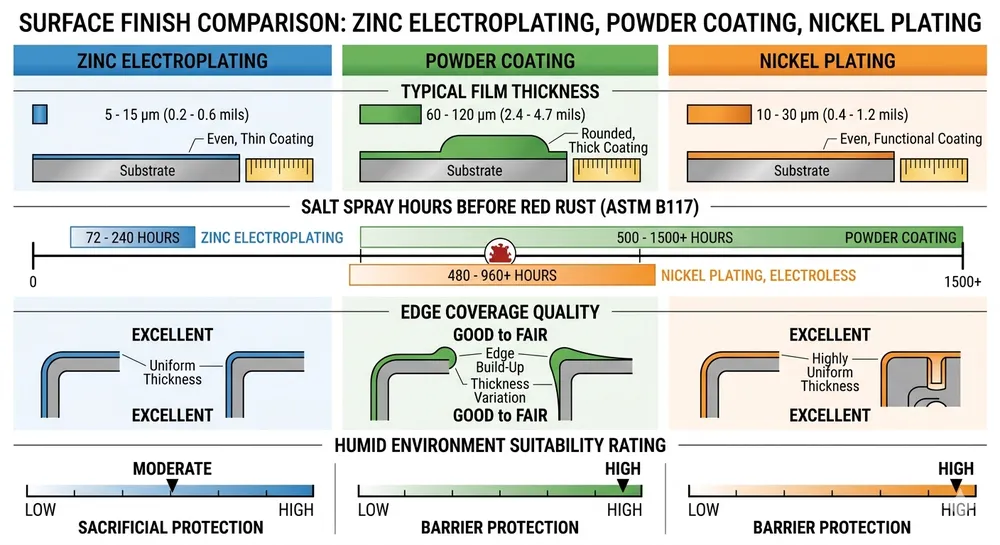
Nickel plating is the standard for interior furniture in dry environments. It gives a clean, consistent appearance, holds tight dimensional tolerances (the plating layer is thin — typically 5–10μm — so it doesn't affect fit on tight-clearance assemblies), and passes standard 48-hour salt spray without issue. For most European and North American residential furniture, nickel-plated hinges are the right call.

Zinc plating with trivalent chromium passivation offers better corrosion resistance than standard nickel at a similar cost point. We converted our zinc line to trivalent chromium passivation several years ago — hexavalent chromium is restricted under RoHS and REACH, and buyers supplying into the EU need the documentation to prove it. Zinc-plated hinges are a good choice for kitchen environments where humidity is elevated but not extreme.

Powder coating is the right choice for outdoor furniture hardware, coastal market products, and any application where the hinge will see sustained humidity or salt air. Our powder line runs at 60–80μm film thickness, which passes 500-hour salt spray testing. The trade-off is dimensional: 60–80μm of coating adds measurable thickness to the hinge body and cup, which can affect fit in tight-tolerance installations. For powder-coated hinges, confirm the finished dimensions, not the pre-coat dimensions.

(We learned the hard way that 45–55μm powder coat isn't enough for coastal markets. We ran thinner for a period to reduce material cost. The salt spray results on shipments to Gulf and Southeast Asian buyers told us that was the wrong trade-off. We moved back to 60–80μm and haven't had a corrosion complaint since.)

Finish Salt Spray Rating Best For Watch Out For
Nickel plating 48–96 hours Dry interior, EU/NA residential Not for coastal or high-humidity
Zinc + trivalent Cr 120–240 hours Kitchen, moderate humidity Confirm RoHS documentation
Powder coat (60–80μm) 500+ hours Coastal, outdoor, high-humidity Dimensional tolerance after coating

For buyers supplying into the Middle East, Southeast Asia, or coastal North American markets, surface finish is a sourcing decision that directly affects your warranty claim rate. Specify it explicitly — don't leave it as "standard finish" on the RFQ.
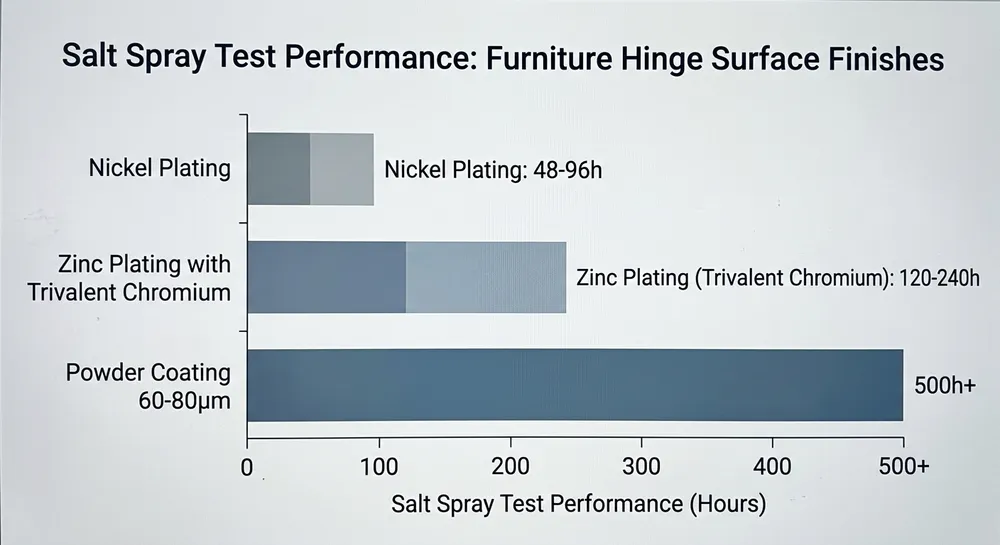
Comparison chart of furniture hinge surface finish options showing salt spray hours for nickel plating, zinc plating, and powder coating

OEM vs Catalog Hinges: When Standard Specs Work and When Custom Tooling Pays Off

Most buyers start with catalog hinges, and for most applications that's the right call. Standard 35mm cup hinges in full overlay, 110° opening, nickel finish cover the majority of residential and mid-range commercial cabinet applications. If your product line fits those parameters, there's no reason to pay for custom tooling.

Custom tooling makes sense in three situations.

First, when your door geometry doesn't fit standard cup bore positions. Some furniture designs use thinner panels, unusual overlay distances, or integrated soft-close requirements that standard hinge geometry can't accommodate cleanly. Forcing a standard hinge into a non-standard application creates visible gaps, binding, or adjustment limitations that your end customer will notice.

Second, when your brand requires a specific aesthetic. Concealed hinges, colored hinges, or hinges with custom arm profiles are OEM territory. We can develop the tooling in-house, which means faster sample iterations — a geometry change on a sample doesn't require going back to a third-party tooling shop and waiting three weeks for a revised tool.

Third, when your volume justifies the tooling investment. OEM tooling has an upfront cost that amortizes over production volume. For buyers ordering 5,000+ units per SKU annually, the per-unit cost of an OEM hinge is often lower than catalog pricing, and you get a spec that's locked to your product rather than a commodity item any competitor can source.

Our engineering team is 12 people working exclusively on mechanism hardware. When we take on an OEM hinge project, we review the brief for manufacturability before committing to tooling — if your spec has a geometry that will cause production problems or dimensional inconsistency, we'll tell you before the tool is cut, not after the first sample run.

MOQ for standard catalog hinges is 500 units. OEM tooling projects are quoted based on the spec — we give you the honest tooling amortization number, not a round figure.

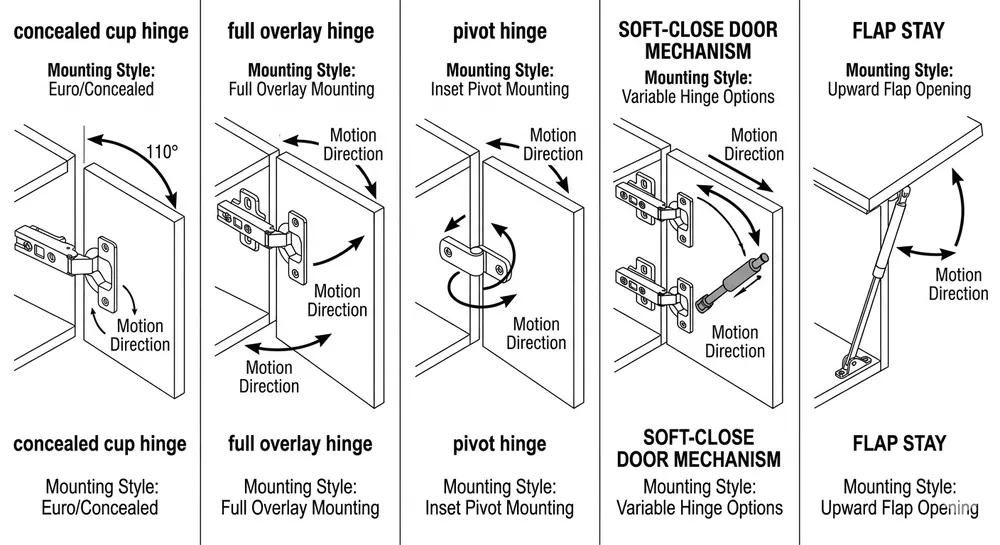
For buyers evaluating the full Door & Hinge Furniture Mechanism range, the catalog covers the standard configurations. If your brief falls outside those parameters, the OEM path is worth a conversation before you commit to a spec.

The Sourcing Checklist: What to Confirm Before You Lock the Order

Hinge specification errors are almost always preventable. They happen when buyers treat the RFQ as a price exercise rather than a spec confirmation exercise. Here's what to confirm with your supplier before the order is placed.

Dimensional confirmation:

  • Cup bore diameter and depth (standard is 35mm diameter, but confirm)
  • Arm length matched to your overlay distance
  • Mounting hole pattern and screw size
  • Finished dimensions after surface treatment (critical for powder-coated hinges)

Performance confirmation:

  • Load rating at your specified opening angle (not just nominal)
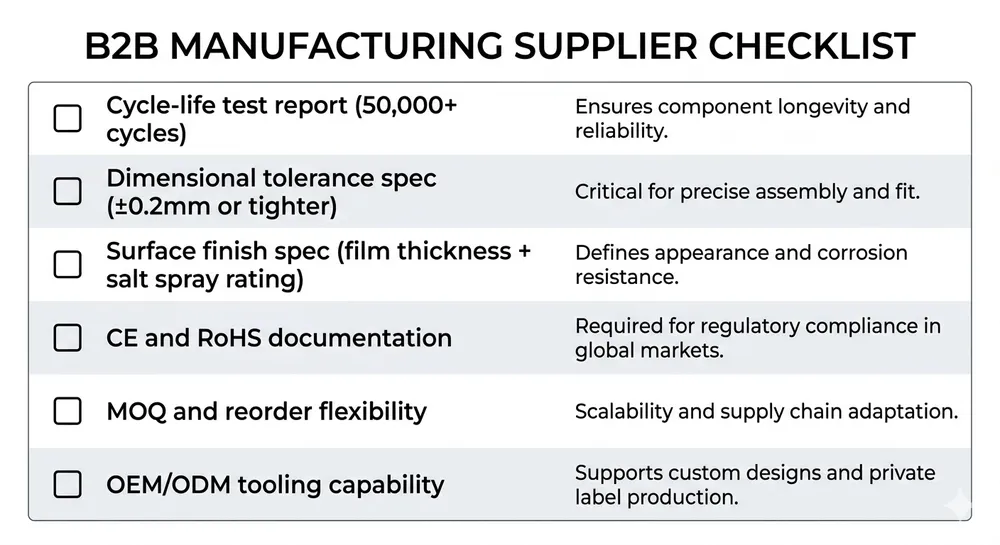
  • Cycle life test standard and tested value (ask for the test report, not just the spec sheet number)
  • Soft-close damper specification if integrated (damping force range, temperature stability)

Compliance confirmation:

  • Surface finish RoHS documentation if supplying into EU or California
  • CE declaration of conformity for European market
  • SGS or third-party test reports if your buyer requires third-party verification

Production confirmation:

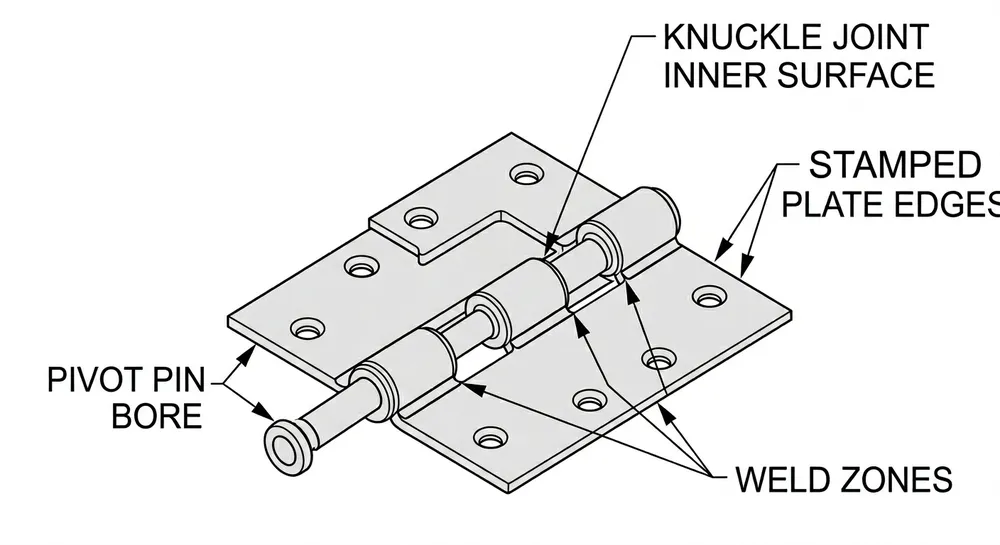
  • Stamping tolerance on structural components (our standard is ±0.15mm on mechanism plates and brackets)
  • Die-cast component dimensional consistency (adjustment components are a common failure point when die-casting is outsourced — confirm whether your supplier controls this in-house)
  • 100% functional testing or sampling protocol before shipment

The last point matters more than most buyers realize. A supplier running sampling inspection on outgoing product will ship a statistically predictable defect rate. A supplier running 100% functional testing catches every unit that passes dimensional checks but fails operationally — sticky adjustment, misaligned mounting, damper that doesn't engage. We run 100% functional on every hinge before packing. That's not a special arrangement; it's the standard process.

For buyers who want to go deeper on quality standards and what to look for in a hinge mechanism supplier, the furniture hinge mechanism quality guide covers the inspection and documentation side in more detail.
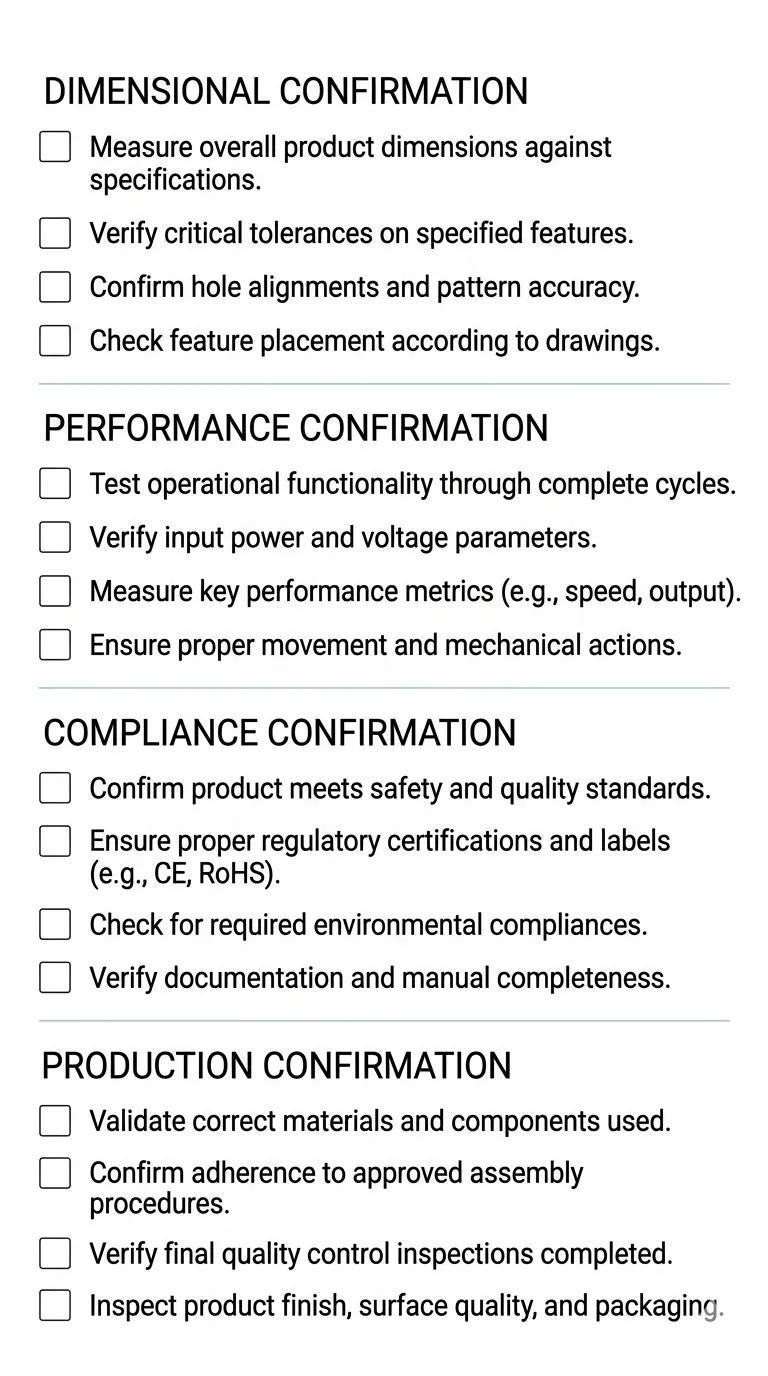
B2B sourcing checklist for furniture hinge mechanism specification covering dimensions, performance, compliance, and production verification

Frequently Asked Questions

What is the standard cup bore size for furniture hinges, and does it vary by overlay type?

The industry standard cup bore is 35mm diameter at 13mm depth. This is consistent across full overlay, half overlay, and inset configurations — the overlay type changes the arm length and mounting plate geometry, not the cup bore. Some European manufacturers use 26mm cup bores for thin-door applications (doors under 16mm), but 35mm is the global default for 18mm panel construction. If you're sourcing hinges for a product line that uses non-standard panel thickness, confirm the cup bore spec explicitly.

How do I interpret cycle life specs — is 50,000 cycles enough for commercial furniture?

For residential use, yes. For commercial, it depends on traffic. A hotel wardrobe in a busy property can see 50–100 open-close cycles per day. At 50 cycles/day, a 50,000-cycle hinge lasts under three years. Commercial furniture for hospitality, healthcare, or education should be spec'd at 100,000 cycles minimum. High-traffic applications — gym lockers, school storage, retail display — should go to 150,000+. Ask your supplier for the actual test report, not just the printed spec.

Does powder coating affect hinge fit and function?

Yes, and it's worth confirming before you finalize the spec. Powder coating at 60–80μm adds measurable thickness to the hinge body, cup exterior, and arm surfaces. On standard full overlay installations with normal clearances, this is not a problem. On inset configurations or tight-tolerance assemblies, the post-coat dimensions need to be confirmed against your cabinet carcass tolerances. Always request finished dimensions on powder-coated hinges, not pre-coat dimensions.

What certifications should I require from a hinge mechanism supplier for EU market entry?

At minimum: CE declaration of conformity and RoHS compliance documentation. If your buyer requires third-party verification, SGS test reports cover both performance and material compliance. For buyers supplying into Germany or Scandinavia specifically, some retail chains require additional documentation — confirm with your importer what their compliance checklist looks like before you finalize the supplier selection. ISO 9001:2015 certification on the supplier's quality management system is a baseline indicator that their QC process is audited, not self-declared.

When does OEM hinge tooling make financial sense versus sourcing from catalog?

The break-even depends on your volume and the tooling cost. As a rough guide: if you're ordering 5,000+ units of a single SKU annually and the catalog spec requires compromises in your product design, OEM tooling is worth evaluating. The per-unit cost advantage at volume typically offsets tooling amortization within 12–18 months. If your volume is below 2,000 units annually, catalog hinges almost always make more financial sense unless the design requirement genuinely can't be met with standard geometry.

If your brief includes specific overlay type, opening angle, load rating, target market, and annual volume, send it through our Request Quote page — we'll return a product recommendation or OEM quote with specific specs, not a generic catalog link.
Furniture Hinge Mechanism Quality: Cycle Life, Load Ratings, and What the Specs Mean for B2B Buyers

Most hinge spec sheets list a cycle life number and a load rating. Few explain what those numbers actually reflect — what test conditions produced them, whether they map to your application, or how to tell if a supplier's claim is backed by real batch testing or just copied from a catalog template.

That gap costs buyers. A hinge that passes a residential-grade test will fail early in a contract hotel project. A load rating measured on a static fixture doesn't tell you what happens after 30,000 open-close cycles under dynamic stress. If you're sourcing hinges for furniture that ships into commercial, hospitality, or high-turnover residential markets, the spec sheet is only useful if you know how to read it.

This article breaks down the numbers — what they mean, how they're generated, and what to ask a supplier before you commit to a production order.

What "furniture hinge mechanism quality" actually means

"Quality" on a hinge is not a single property. It's the intersection of three things: dimensional consistency (does the hinge fit and align correctly across a full batch?), mechanical durability (does it hold its load and motion performance over its rated cycle life?), and surface integrity (does the finish hold up in the target environment without corroding, flaking, or discoloring?).

A hinge can pass on two of those and fail on the third. We've seen batches with tight dimensional tolerances and good cycle life that had adhesion failures on the coating — fine for dry inland markets, a warranty problem for coastal distribution. The spec sheet rarely tells you which of the three the supplier actually tested rigorously and which they assumed.

For B2B buyers, the practical question is: which of these three failure modes is most likely to generate returns, warranty claims, or reorder friction in your specific market? That's where to focus your supplier evaluation.

Cycle life: what the number means and what it doesn't

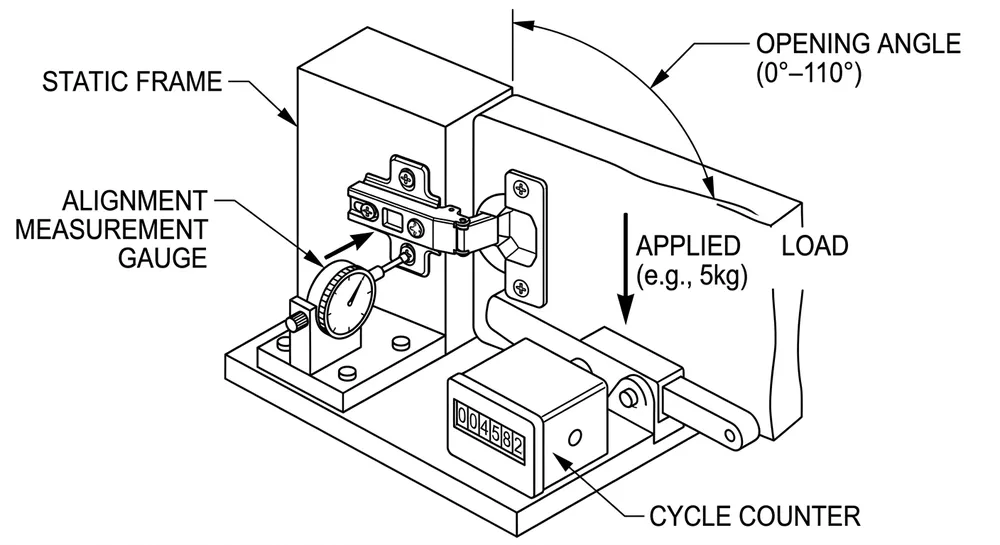
A hinge cycle life rating — typically expressed as 50,000, 80,000, or 100,000 cycles — means the hinge was opened and closed that many times under controlled test conditions without exceeding a defined failure threshold. The threshold usually covers: loss of alignment beyond a set tolerance, load capacity drop below a percentage of rated value, or visible structural failure.

What the number doesn't tell you: the test load, the test speed, the ambient conditions, and whether the test was run on production samples or pre-production prototypes.

Those variables matter more than the headline number. A 100,000-cycle rating tested at 60% of rated load under lab conditions is not the same as a 50,000-cycle rating tested at full rated load with realistic door weight and opening speed. The lower number from the harder test is the more useful spec.

Diagram showing furniture hinge cycle life test setup with load, speed, and alignment measurement points

The commercial-grade floor for most markets:

Application tier Typical cycle life requirement Notes
Residential (standard) 25,000–50,000 cycles Entry-level product, low-frequency use
Contract residential / mid-market 50,000–80,000 cycles Rental, multi-family, student housing
Commercial / hospitality 80,000–100,000+ cycles Hotels, offices, high-turnover environments
Heavy commercial / institutional 100,000+ cycles Healthcare, education, public buildings

The 50,000-cycle mark is the minimum we use as a batch qualification floor at MVMHardware — not a special test run for premium SKUs, but the standard pass/fail gate before any hinge batch ships. For buyers targeting contract or commercial segments, that's the right starting point, not the ceiling.

(We've had buyers come to us after a competitor's hinges failed at around 20,000 cycles in a hotel project. The supplier had listed "50,000 cycles" on the spec sheet. When we asked for the test report, it turned out the test was run at 30% of rated load. The number was technically accurate and practically useless.)

Load ratings: matching capacity to application

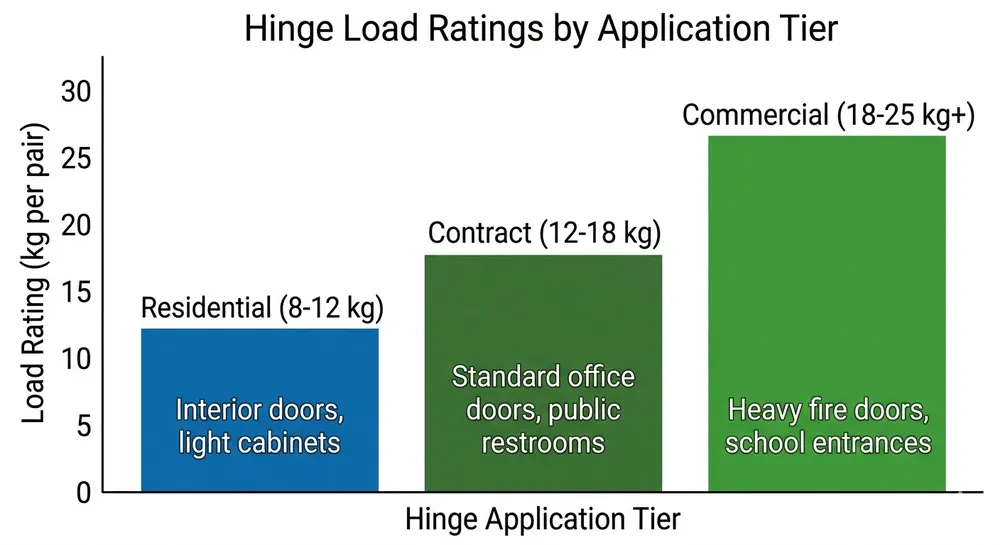
A hinge load rating tells you the maximum door weight the hinge is designed to support without deformation or premature wear. It's usually expressed in kilograms per pair or per hinge, and it should be accompanied by a door size range and a mounting configuration assumption.

The common sourcing mistake is treating load rating as a simple pass/fail against door weight. It's not. Load rating degrades over cycle life — a hinge rated at 20 kg/pair at installation may be down to 85% of that capacity at 40,000 cycles if the pivot geometry and material spec aren't right. For high-cycle applications, you need to know the load retention curve, not just the initial rating.

How to match load rating to your application:

  • Take the actual door weight and add 20–30% safety margin for dynamic load (the force of a door being pushed or pulled quickly is higher than static weight)
  • For doors over 600mm wide, check whether the rating was tested at that door width — wider doors create more torque at the hinge pivot
  • For overlay hinges on frameless cabinets, confirm the rating accounts for the full overlay distance, not just the door weight
Bar chart comparing furniture hinge load ratings across residential, contract, and commercial application tiers

Torque specs appear on some hinge data sheets, particularly for soft-close and damped mechanisms. Torque is the rotational resistance the hinge provides during closing — too low and the door slams, too high and it feels stiff and wears the damper faster. For soft-close hinges, ask for the torque range at both the start and end of the closing arc, not just a single figure.

Surface treatment durability: salt spray hours and what they mean for your market

Surface treatment on a furniture hinge does two things: it protects the base metal from corrosion, and it determines the visual finish your downstream customer sees. For B2B buyers, the first function is the one that generates warranty claims. The second is the one that drives initial purchase decisions.

The standard test for corrosion resistance is salt spray (also called neutral salt fog, per ISO 9227 or ASTM B117). The result is expressed in hours before the appearance of red rust on the base metal or white corrosion on zinc-based coatings. Common benchmarks:

Surface treatment Typical salt spray rating Suitable markets
Zinc plating (standard) 72–120 hours Dry inland markets, low-humidity environments
Zinc plating + chromate passivation 200–300 hours General export, moderate humidity
Nickel plating 200–400 hours Decorative applications, moderate corrosion resistance
Powder coating (60–80μm) 500+ hours Coastal markets, outdoor-adjacent applications
Zinc plating + powder topcoat 500–700 hours High-humidity, coastal, or marine-adjacent

We run our powder coating line at 60–80μm film thickness — that's the range that consistently passes 500-hour salt spray without adhesion failure. We tested thinner at 45–55μm for a period to reduce material cost. The salt spray results on coastal-market shipments told us that was the wrong trade-off. We moved back up.

For buyers supplying into Southeast Asia, the Middle East, or coastal North America, the 500-hour threshold is the practical minimum. Anything below that and you're accepting corrosion warranty risk on your downstream accounts.

Coating adhesion is a separate variable from thickness. A 70μm coating that wasn't properly pre-treated will fail adhesion before it fails salt spray. Ask for cross-cut adhesion test results (ISO 2409) alongside salt spray hours — the two together tell you whether the coating will actually stay on the part.

How to evaluate a hinge supplier's QC process

The spec sheet tells you what the supplier claims. The QC process tells you whether those claims apply to the batch you'll actually receive.

There are three checkpoints that matter for hinge mechanism quality, and you can ask about all three during RFQ:

1. Incoming material inspection Does the supplier check incoming steel and zinc alloy against mill certificates? Do they pull dimensional samples from the first stamped parts of each coil change? Suppliers who skip this step are the ones who end up with batch hardness variation that shows up as premature wear at 15,000 cycles.

2. In-process dimensional and functional checks At what stages does inspection happen? For hinges, the critical checkpoints are: after stamping (pivot hole diameter and position tolerance), after surface treatment (coating thickness and adhesion), and after assembly (opening angle, closing force, alignment under load). A supplier who only inspects finished goods is catching problems after the cost has already been incurred.

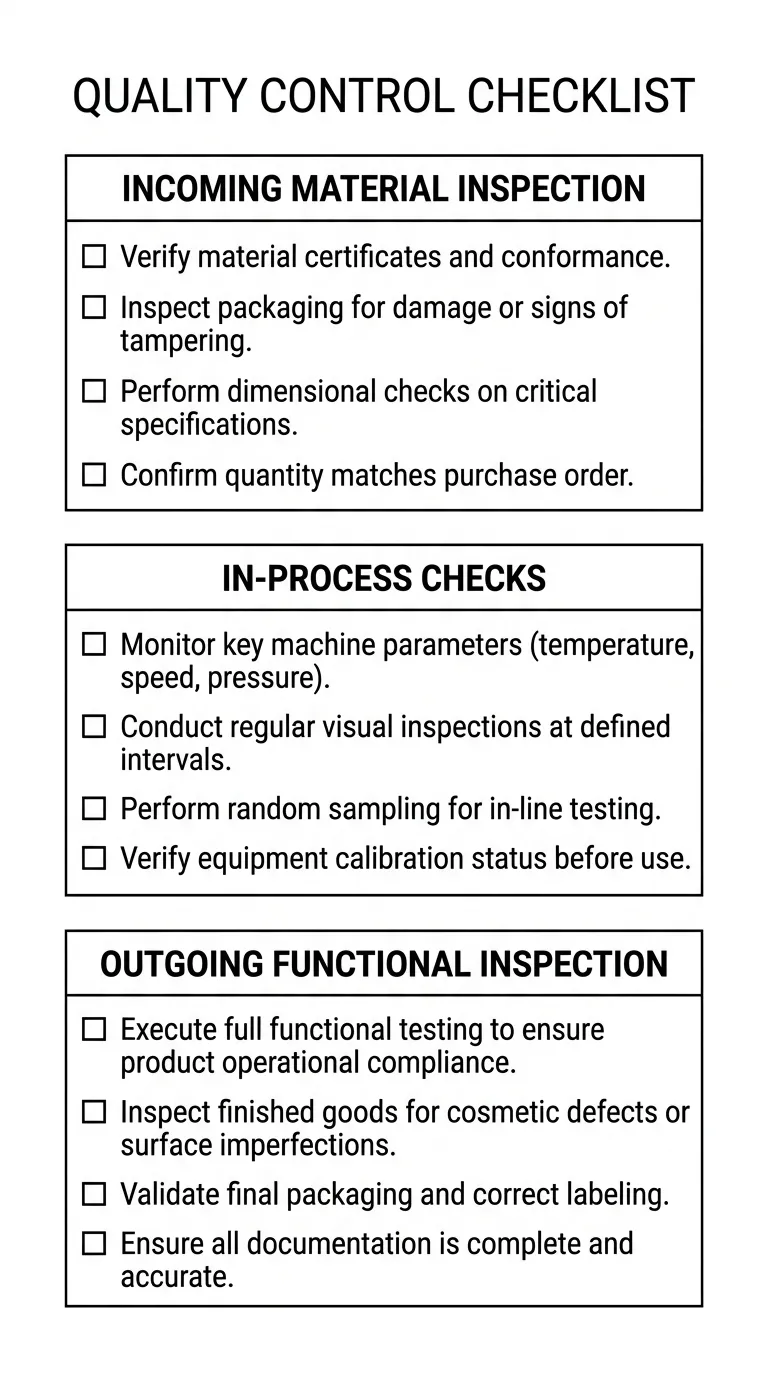
3. Outgoing inspection protocol Is outgoing inspection 100% functional or statistical sampling? Sampling catches systematic defects but misses random failures — a sticky pivot, a misaligned mounting hole, a damper that doesn't engage. For mechanisms, 100% functional testing before packing is the only way to ensure the unit your customer installs is the unit that was tested.

Sourcing checklist for evaluating furniture hinge supplier QC process with three inspection stages

Documents to request at RFQ stage:

  • Cycle life test report (with test load, speed, and failure criteria — not just the headline number)
  • Salt spray test report (ISO 9227 or ASTM B117, with hours and failure definition)
  • Dimensional inspection report for the specific SKU
  • ISO 9001:2015 certificate (scope should cover the product category, not just the company)
  • Material certification for steel and zinc alloy (mill report or equivalent)

If a supplier can't provide these on request, that's the answer to your quality question.

MVMHardware's quality baseline: what we test and why it matters for your order

We run 50,000-cycle load testing as the standard batch qualification floor — not a premium option, not a special request for large orders. Every production batch clears that gate before it ships. For buyers targeting contract or commercial segments, that baseline means you're not starting from zero when you need to justify your sourcing decision to a downstream customer or a compliance team.

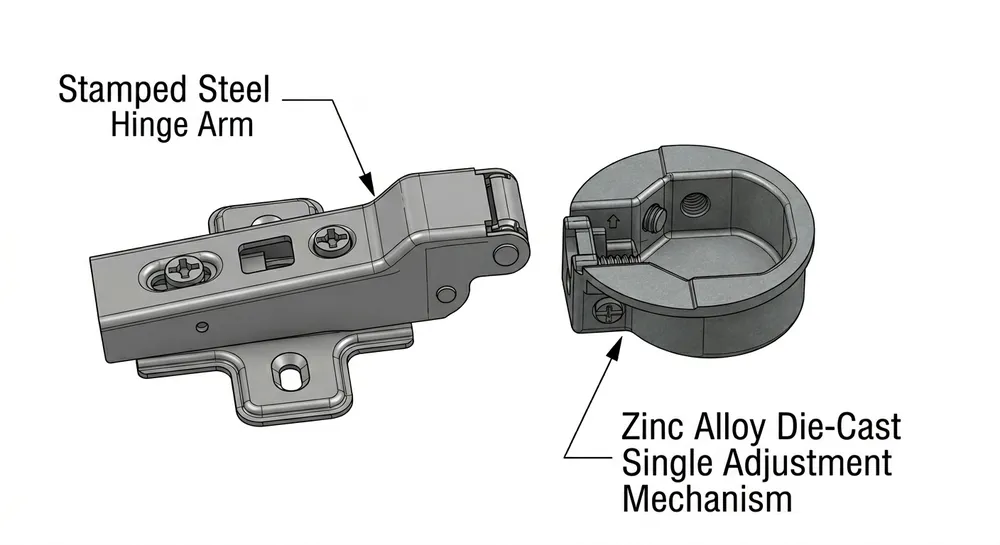
The in-house die-casting operation is the part of our process that most directly affects cycle life consistency. Most mechanism factories in this region outsource die-cast components — pivot housings, adjustment collars, damper bodies — to third-party foundries. That means they have no direct control over dimensional consistency on the parts that determine hinge alignment and pivot wear. We brought die-casting in-house around 2015. When a pivot housing comes out of our die-casting cell, we know the wall thickness, the alloy composition, and the dimensional tolerance. When it doesn't meet spec, the fix happens on our floor before it reaches assembly.

Dimensional inconsistency in die-cast pivot components is the leading cause of early cycle life failure in hinges that otherwise look fine on paper. The pivot wears unevenly, alignment drifts, and the hinge starts binding at 20,000–25,000 cycles instead of 50,000. Buyers who've experienced this from other suppliers usually can't trace it back to the die-cast component because the finished hinge looks identical. We can show you the dimensional data from our die-casting QC records if you want to verify the process.

Outgoing inspection at MVMHardware is 100% functional — every unit, not a sample. A mechanism that passes dimensional and cycle-life checks but has a sticky pivot or a misaligned mounting hole gets pulled before it reaches your container. That's not a marketing claim; it's a process step that adds time to the line. We keep it because the alternative — a container of hinges with a 2% random failure rate — costs your downstream customers more than it costs us.

Our Door & Hinge Furniture Mechanism range covers standard overlay, inset, and concealed configurations across residential and commercial load ratings. If you're evaluating whether a specific SKU meets your cycle life and load requirements, the fastest path is to send us your door weight, opening frequency estimate, and target market — we'll match you to the right spec and provide the test documentation with the quote.

For OEM/ODM furniture mechanism projects where you need a custom cycle life rating, load capacity, or surface treatment spec, our engineering team can develop the configuration and run qualification testing before production commitment.

Sourcing checklist: what to verify before you place a hinge order

Use this as a working reference when evaluating suppliers or writing procurement requirements:

Cycle life

  • [ ] Cycle life rating confirmed (minimum 50,000 for contract; 80,000+ for commercial)
  • [ ] Test load specified (should be at or near rated load, not a reduced percentage)
  • [ ] Test report available with failure criteria defined
  • [ ] Batch qualification testing confirmed (not just prototype testing)

Load rating

  • [ ] Load rating per hinge or per pair confirmed
  • [ ] Door width and overlay distance included in test conditions
  • [ ] Dynamic load factor accounted for (add 20–30% to static door weight)
  • [ ] Load retention at end-of-life cycle count confirmed or estimated

Surface treatment

  • [ ] Salt spray hours confirmed for target market (500+ hours for coastal/high-humidity)
  • [ ] Coating thickness specified (60–80μm for powder coat)
  • [ ] Adhesion test result available (ISO 2409 cross-cut)
  • [ ] RoHS compliance confirmed if supplying EU or California markets

Supplier QC

  • [ ] ISO 9001:2015 certificate with relevant product scope
  • [ ] Incoming material inspection process confirmed
  • [ ] In-process dimensional inspection at stamping and assembly stages
  • [ ] Outgoing inspection protocol: 100% functional or sampling (confirm which)
  • [ ] Cycle life and salt spray test reports available per batch, not just per SKU

Frequently asked questions

What cycle life rating do I need for a hotel furniture project?

For hotel casegoods — wardrobes, nightstands, bathroom vanities — 80,000 cycles is the practical minimum. High-traffic areas like wardrobe doors in a 200-room property can see 50–100 open-close cycles per day per door. At that rate, a 50,000-cycle hinge reaches end-of-life in under three years. Specify 80,000 cycles minimum, and ask for the test load to confirm it was run at full rated door weight.

How do I know if a supplier's cycle life claim is based on real batch testing?

Ask for the test report, not the spec sheet. A real test report includes: the test date, the sample quantity, the applied load, the opening speed, the failure criteria, and the result. If the supplier sends you a spec sheet with a cycle life number but no test report, the number is a catalog claim, not a verified batch result. Ask specifically whether the test was run on production samples or pre-production prototypes — the answer tells you a lot.

What's the difference between zinc plating and powder coating for hinge corrosion resistance?

Zinc plating provides moderate corrosion resistance (72–300 hours salt spray depending on passivation treatment) and is suitable for dry inland markets. Powder coating at 60–80μm provides 500+ hours salt spray and is the right choice for coastal markets, high-humidity environments, or any application where the furniture will be near water. For maximum protection, a zinc-plated base with powder topcoat can reach 500–700 hours. If your downstream customers are in Southeast Asia, the Gulf, or coastal North America, specify powder coating and ask for the salt spray test report.

Can I specify a custom cycle life or load rating for an OEM order?

Yes. For OEM projects, we develop the mechanism configuration to your performance requirements, run qualification testing before production commitment, and provide the test documentation with the production order. The starting point is your door weight, opening frequency, and target market — from there we can spec the pivot geometry, material gauge, and surface treatment to hit your cycle life target. Send your requirements through our Request Quote page and we'll come back with a specific recommendation.

What documents should I request before approving a hinge supplier?

At minimum: ISO 9001:2015 certificate (check the scope covers your product category), cycle life test report with test conditions, salt spray test report, and a dimensional inspection report for the specific SKU. For EU market supply, also request CE declaration of conformity and RoHS compliance documentation. If the supplier can't provide all of these on request, treat that as a quality signal.

Does hinge load rating degrade over time?

Yes. Load capacity at end-of-rated-cycle-life is typically 85–90% of initial rating for a well-designed hinge, but can drop faster if the pivot geometry is inconsistent or the die-cast components have dimensional variation. This is why in-house die-casting control matters — pivot housing dimensional consistency directly affects how evenly the load is distributed across the pivot bearing surface over the hinge's life. Ask suppliers whether their load rating is an initial value or an end-of-life value, and whether they have load retention data across the cycle life curve. “`

OEM Door Furniture Mechanism: Specification Checklist for Custom Cabinet Hardware Projects

Most sourcing problems on custom cabinet hardware don't start at production. They start at the RFQ stage, when a buyer sends a rough sketch or a sample photo and asks for a price. The factory quotes something. The buyer approves it. Tooling gets cut. Then the first samples arrive and nothing fits — wrong travel angle, wrong torque, finish doesn't match the rest of the cabinet line. Now you're three months in, tooling is paid for, and you're negotiating a revision.

We've been through this enough times to know where the gaps are. This checklist exists to close them before tooling starts.

OEM door furniture mechanism specification checklist diagram showing drawing, material, finish, cycle life, and tooling requirements

What "OEM" Actually Means for a Door Furniture Mechanism Project

Catalog sourcing and OEM sourcing are different supply chain decisions, not just different order sizes. When you source from a catalog, you're buying a mechanism the factory already makes — the tooling exists, the spec is fixed, and your only variables are quantity and finish. When you commission an OEM door furniture mechanism, you're buying a mechanism built to your drawing, your tolerances, and your brand requirements. The tooling gets cut for your spec. If the spec changes after tooling, you pay for the revision.

That distinction matters commercially. OEM gives you a mechanism your competitors can't easily replicate from the same catalog. It lets you control the torque profile, the travel angle, the mounting footprint, and the surface finish to match your cabinet line exactly. The trade-off is that the spec has to be right before production starts — there's no "we'll adjust it later" without cost and delay.

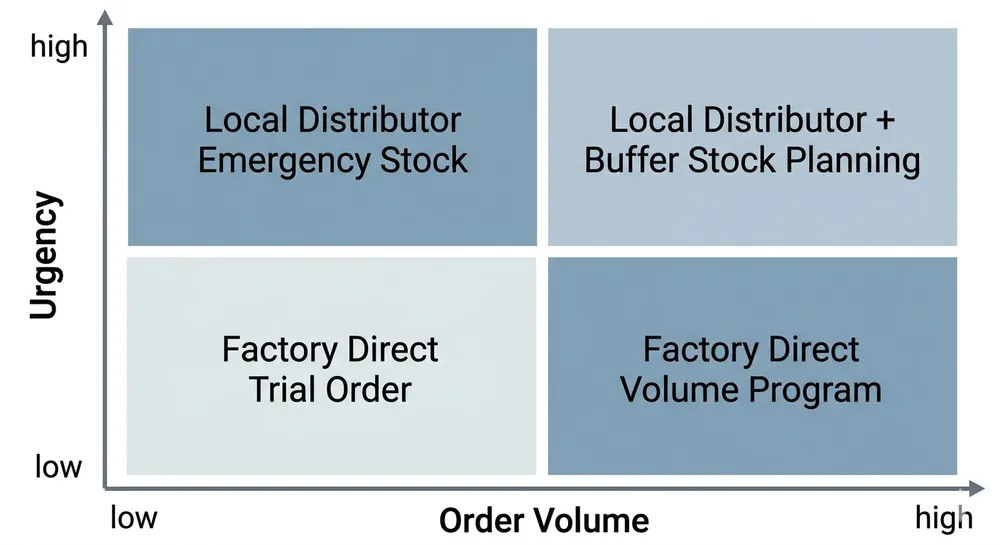
For buyers building a private-label cabinet hardware line or supplying custom furniture projects at volume, OEM is the right path. For buyers testing a new market or running below 500 units, catalog stock with custom packaging is usually the better starting point. (We tell buyers this directly — cutting tooling for a 200-unit trial order rarely makes financial sense for either side.)

The Specification Checklist: What to Lock Before You Send an RFQ

This is the core of the article. Every item below represents a decision point where ambiguity costs money. Work through each one before you brief a manufacturer.

1. Drawing Format and Dimensional Requirements

Send a 2D engineering drawing with GD&T tolerances, not a photo or a sketch. The drawing should specify:

  • Overall envelope dimensions (height × width × depth in mm)
  • Mounting hole pattern — hole diameter, spacing, and countersink depth if applicable
  • Travel angle — full open-to-close range in degrees
  • Pivot point location — distance from mounting face to hinge axis
  • Clearance requirements — overlay or inset configuration, door thickness range

If you're working from a physical sample, we can reverse-engineer a drawing from it, but expect one extra sample iteration to confirm dimensional accuracy. A clean 2D drawing with tolerances cuts that iteration out.

For zinc alloy die-cast components, specify critical dimensions with ±0.1mm tolerance or tighter where fit matters. For cold-rolled steel stampings, ±0.2mm is typical for non-critical features; tighten to ±0.1mm only where the part interfaces with another component.

2. Material Grade

The two primary material paths for door furniture mechanisms are cold-rolled steel (SPCC or equivalent) and zinc alloy die-casting (Zamak 3 or Zamak 5). They're not interchangeable — each has a different cost structure, weight profile, and surface finish compatibility.

Material Typical Application Weight Surface Finish Compatibility Tooling Cost
SPCC cold-rolled steel Structural arms, mounting plates, load-bearing pivots Higher Powder coat, zinc plate, nickel plate Lower (progressive die)
Zamak 3 zinc alloy Decorative housings, complex-geometry covers, knobs Lower Nickel plate, chrome plate, powder coat Higher (die-cast mold)
Zamak 5 zinc alloy Higher-load die-cast components, tighter tolerances Lower Same as Zamak 3 Higher

Most door furniture mechanisms combine both: a stamped steel structural core with a die-cast zinc alloy cover or decorative element. If your design calls for a complex external shape, specify which components are die-cast and which are stamped — this affects tooling cost, lead time, and the revision process differently for each.

We run in-house zinc alloy die-casting, which matters for OEM work. When die-casting is outsourced to a third-party shop, dimensional variation between the casting and the stamped assembly is the most common source of fit problems on first samples. Keeping both processes under one roof means we catch those gaps before the sample ships to you.

Side-by-side comparison of SPCC cold-rolled steel stamping and zinc alloy die-casting for door furniture mechanism components

3. Surface Finish Specification

Surface finish is where most OEM briefs are underspecified. "Chrome-look" or "matte black" is not a finish spec — it's a color reference. A manufacturer needs to know the process, the thickness, and the performance standard.

For door furniture mechanisms, the common finish options and their relevant specs:

Finish Process Typical Thickness Salt Spray Resistance Notes
Zinc plating Electroplating 8–12μm 72–96 hours Standard indoor use; cost-effective
Nickel plating Electroplating 10–15μm 120–200 hours Better corrosion resistance; decorative
Powder coating Electrostatic spray + cure 60–80μm 500+ hours Best for painted finishes; hides substrate
Chrome plating Electroplating 0.3–0.5μm (decorative) 96–200 hours Decorative only; requires copper/nickel undercoat

Specify the finish by process name, not by appearance. If your target market has compliance requirements — RoHS for Europe, REACH for certain coatings — state them in the RFQ. Our finishes are RoHS-compliant across the line, but if you need SGS test reports for a specific market, request them at the sample stage, not after bulk production.

For more detail on finish selection trade-offs, see our guide on surface finish options for door hinge mechanisms.

4. Cycle Life Rating

Cycle life is the number of open-close cycles the mechanism is rated to complete before functional failure. It's a sourcing spec, not a marketing claim — and it's the one spec most buyers forget to include in their RFQ.

For cabinet door mechanisms, typical cycle life tiers:

  • 50,000 cycles — standard residential cabinetry, light commercial
  • 100,000 cycles — mid-grade commercial furniture, hospitality projects
  • 150,000+ cycles — high-traffic commercial, contract furniture, institutional

The cycle life rating affects material selection, spring wire gauge, pivot pin diameter, and the load-bearing geometry of the arm. If you specify 100,000 cycles but the drawing calls for a spring gauge that only supports 50,000, we'll flag it before tooling. That's the manufacturability review our engineering team runs on every OEM drawing — it catches spec conflicts that would otherwise show up as premature failure in the field.

We run 100% functional testing on every OEM unit before shipment, not batch sampling. For cycle life verification on new tooling, we run an accelerated cycle test on the first production batch and provide the test report with the shipment documentation.

5. Compliance and Certification Requirements

State your target market's compliance requirements upfront. The most common ones for door furniture mechanisms:

  • CE marking — required for furniture hardware sold in the EU; covers mechanical safety and material compliance
  • RoHS — restricts hazardous substances in surface finishes; relevant for EU and UK markets
  • REACH — chemical substance compliance; relevant if your buyer or end customer is in the EU
  • CARB / California Prop 65 — relevant for North American market entry

We hold ISO 9001:2015, CE, SGS, and RoHS certifications. If your project requires specific test reports or third-party audit documentation, include that in the RFQ — some documentation requires lead time to arrange and shouldn't be a last-minute request before shipment.

Tooling Ownership, Revision Cycles, and What to Negotiate Before You Sign

Tooling is where OEM projects get complicated. A few things worth understanding before you commit:

Tooling ownership should be stated in the contract. Standard practice: the buyer pays for tooling, the tooling is stored at the factory, and the buyer owns it. If you move production to another factory, you can take the tooling. Some factories blur this — make sure the contract is explicit.

Tooling cost structure varies by component type. Progressive die tooling for stamped steel parts typically runs lower than die-cast mold tooling for zinc alloy components. A mechanism with both stamped and die-cast elements will have two separate tooling costs. Get an itemized tooling quote, not a bundled number.

Revision cycles are the hidden cost in OEM projects. Most tooling contracts include one or two free revisions on first samples. Beyond that, dimensional changes to a die-cast mold can cost $300–$800 per revision depending on the change scope. This is why the drawing needs to be right before tooling starts — not approximately right.

We keep tooling in-house. When a sample revision is needed, our tooling team makes the change here, not at a third-party shop across town. That typically cuts the revision-to-resample cycle from 3–4 weeks (outsourced) to 1–2 weeks. For buyers on a product launch timeline, that difference is real.

OEM door furniture mechanism tooling and sample revision cycle workflow from drawing submission to bulk production approval

MOQ, Amortization Logic, and How to Plan Your First OEM Run

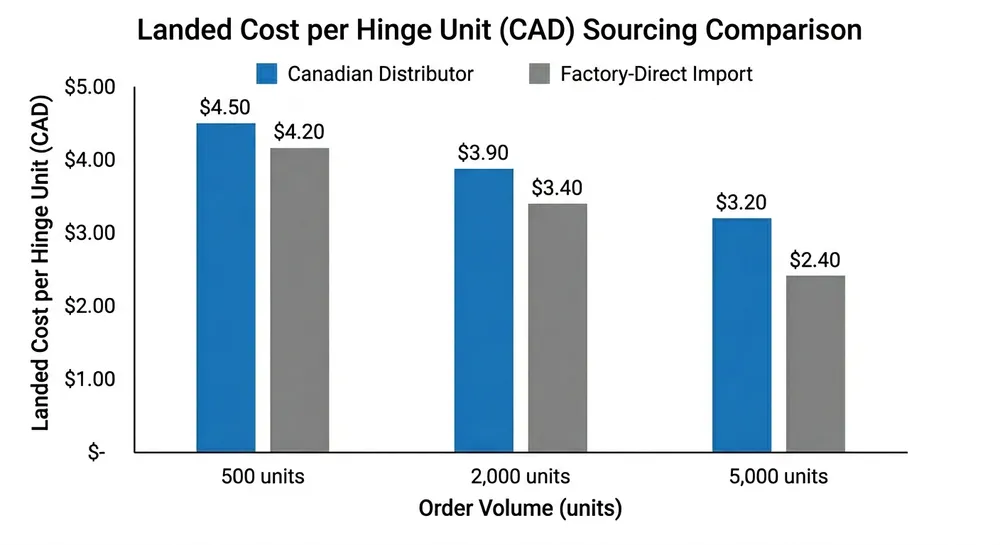
Our standard MOQ for OEM door furniture mechanisms is 500 units. That's the threshold where tooling amortization starts to make commercial sense — below 500 units, the tooling cost per unit gets high enough that catalog sourcing with custom packaging is usually a better margin decision.

Here's the basic amortization logic: if tooling costs $1,200 and your OEM run is 500 units, you're carrying $2.40/unit in tooling cost on the first order. At 2,000 units, that drops to $0.60/unit. At 5,000 units across two orders, the tooling is effectively paid off and your unit economics look like standard production pricing.

For buyers planning a new product line, we recommend structuring the first OEM order as a spec-lock run: minimum quantity to validate the mechanism in your market, with a committed follow-on volume that triggers the better unit price. We can structure the quote to show both tiers so you can plan your margin at each volume level.

(One thing we see regularly: buyers underestimate annual volume at the RFQ stage, then reorder at 3× the original quantity six months later. If you have any signal that demand will scale, build that into the initial tooling conversation — it affects spring selection, surface finish line capacity, and sometimes the structural geometry of the arm.)

How to Brief a Manufacturer: What Goes in the RFQ

A complete OEM RFQ for a door furniture mechanism should include:

  1. 2D engineering drawing with GD&T tolerances (PDF or DWG format)
  2. Material specification — steel grade or zinc alloy grade for each component
  3. Surface finish — process name, thickness spec, and performance standard (salt spray hours)
  4. Cycle life requirement — target cycles and test standard if applicable
  5. Compliance requirements — CE, RoHS, REACH, or market-specific certifications
  6. Annual volume estimate — helps the factory size tooling and quote the right unit price tier
  7. Target unit price range — optional but useful; lets the factory flag if the spec needs value-engineering to hit your margin

What you don't need to include: a full BOM, a manufacturing process spec, or a quality plan. Those are the factory's responsibility. Your job is to define what the mechanism needs to do and what it needs to look like — our engineering team handles the how.

If you're working from a physical sample rather than a drawing, send the sample with a brief description of what you want to change. We'll reverse-engineer the drawing, flag any manufacturability issues, and return a quote with a tooling cost breakdown.

Quality Verification Before Bulk Shipment

For OEM runs, quality verification happens at two stages: sample approval and pre-shipment inspection.

Sample approval is the gate before bulk production starts. We ship first samples with a dimensional inspection report showing actual vs. nominal measurements for all critical dimensions. You approve the sample, sign off on the spec, and that signed sample becomes the production standard. Any deviation from the approved sample in bulk production is a non-conformance.

Pre-shipment inspection covers 100% functional testing on every unit — open-close cycle verification, torque measurement, and visual finish inspection. For OEM orders, we also include a packing list with batch traceability so you can identify the production date and line for any unit in the shipment.

If your buyer or end customer requires third-party inspection (SGS, Bureau Veritas, Intertek), coordinate that at the order confirmation stage. Third-party inspectors need 3–5 days' notice before shipment, and scheduling conflicts are the most common reason for shipment delays on OEM orders.

Frequently Asked Questions

What is the typical lead time for a new OEM door furniture mechanism from drawing to first sample?

For a mechanism with stamped steel components only, tooling cut to first sample is typically 25–35 days. If the design includes zinc alloy die-cast components, add 10–15 days for mold fabrication. These timelines assume a clean drawing with no major manufacturability issues — our engineering review catches most problems in the first week, so the clock doesn't restart from scratch if a minor revision is needed.

Can I own the tooling and move it to another factory later?

Yes, provided the contract states tooling ownership clearly. We recommend buyers insist on this in writing before paying the tooling deposit. We store customer-owned tooling at our facility and maintain it at no charge for active accounts. If you decide to move production, we'll prepare the tooling for transfer.

What's the minimum order quantity for a custom surface finish on an OEM mechanism?

For powder coat color changes, 500 units is the practical minimum — below that, the line changeover cost makes the per-unit finish cost uncompetitive. For nickel or zinc plating, the MOQ is lower because the plating line runs continuously. If you need a custom RAL color in powder coat, send the color code at the RFQ stage so we can confirm availability before quoting.

How do I specify cycle life if I don't have a test standard?

State the application and the expected use frequency. "Kitchen cabinet door, residential, 20 opens per day" gives us enough to back-calculate a cycle life requirement and recommend the appropriate spring and pivot spec. We'll include the cycle life rating in the sample approval documentation so you have it for your own product spec sheet.

What certifications does MVMHardware hold for door furniture mechanisms?

ISO 9001:2015, CE, SGS, and RoHS. CE and RoHS documentation is available with shipment. SGS audit reports are available on request. If your market requires additional third-party certification, discuss it at the RFQ stage — some certifications require product-specific testing that adds lead time.

Ready to move from spec to quote? Submit your drawing, material grade, surface finish requirement, cycle life spec, and annual volume to our team via the Request Quote page. We'll return a tooling cost breakdown and unit price quote — no back-and-forth required if the brief is complete.

For a broader look at our Door & Hinge Furniture Mechanism range, including catalog options that may suit lower-volume or trial orders, visit the category page.