Germany's furniture manufacturing sector runs on precision and compliance. Whether you're producing office seating in Baden-Württemberg or importing contract furniture for commercial fit-outs, the chair mechanism sitting under every seat has to meet CE marking requirements, survive 50,000-cycle load testing, and arrive with documentation your customs broker can actually use. The supply chain question isn't just "who makes them" — it's "who makes them to spec, with the paperwork, at a price that leaves margin on the table."
This guide maps the real supplier landscape: European manufacturers, regional distributors, and factory-direct options from China. The goal is to help you understand what each supplier model delivers, where the trade-offs sit, and when factory-direct import becomes the financially smarter route for your procurement volume.

What the German Market Actually Demands from a Chair Mechanism Supplier
Before evaluating any supplier, it helps to be precise about what "qualified" means in this market. German furniture manufacturers and importers operate under EU product safety regulations, and their downstream customers — office furniture dealers, contract fit-out companies, public sector procurement — run their own compliance checks. A mechanism that ships without CE documentation doesn't just create a customs problem; it creates a liability problem for every party in the chain.
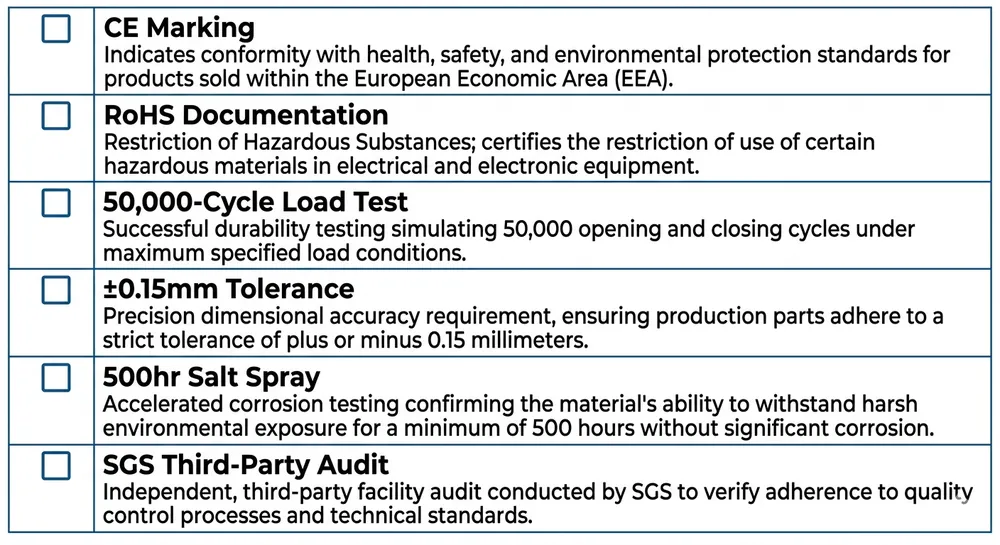
The non-negotiable technical floor for the German market:
- CE marking — required for mechanisms sold into EU markets under the Machinery Directive or General Product Safety Regulation
- RoHS compliance — restricted substances documentation, particularly relevant for surface-treated components entering EU customs
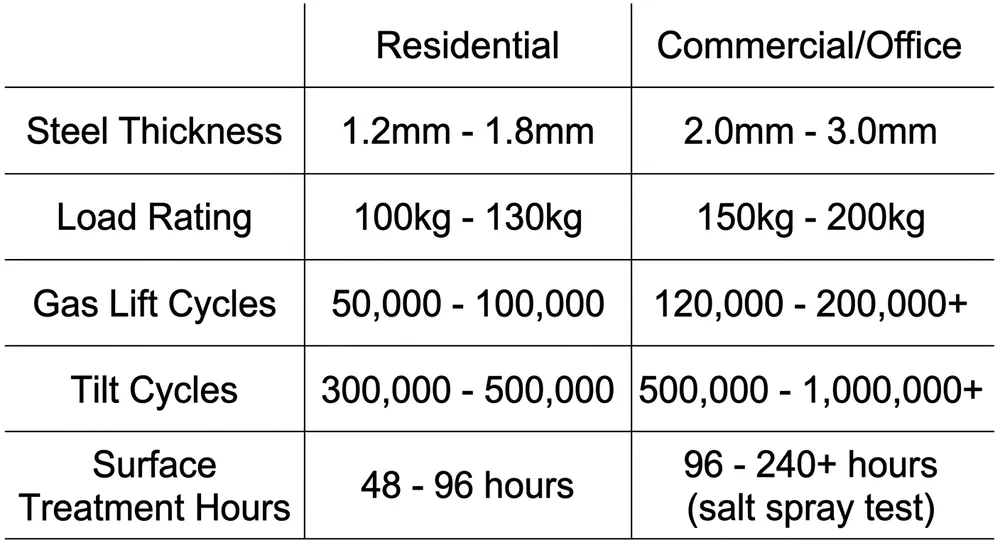
- 50,000-cycle load test minimum — the commercial office chair certification baseline; high-use environments (call centers, healthcare, education) typically specify higher
- ±0.15mm dimensional tolerance — the precision threshold that determines whether mechanisms assemble consistently at your production line
- 500-hour salt spray rating — the surface treatment benchmark for mechanisms going into coastal or high-humidity environments
- SGS or equivalent third-party audit — increasingly required by German procurement teams as a supplier qualification gate
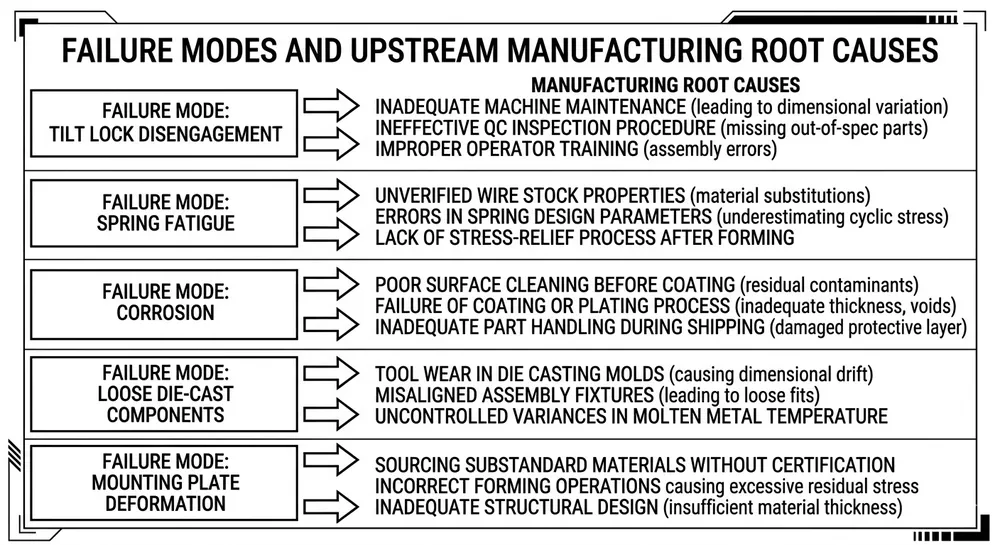
Beyond compliance, German buyers tend to evaluate on batch consistency rather than sample quality. A mechanism that performs perfectly on the sample but varies by 0.3mm batch-to-batch creates rework costs that erode the price advantage you thought you were buying. Ask any supplier candidate for their in-process inspection protocol, not just their certification documents.
10 Chair Mechanism Suppliers Serving the German and European Market
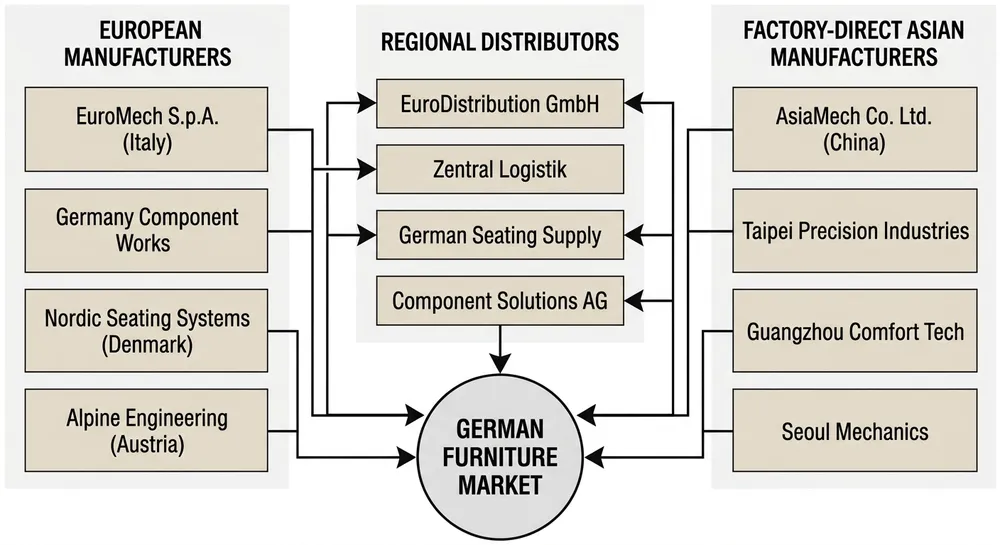
The supplier landscape breaks into three distinct tiers: European manufacturers with domestic production, regional distributors and trading companies, and factory-direct Asian manufacturers with EU certification. Each tier has a different cost structure, lead time profile, and compliance posture.
—
1. Hettich (Germany)
hettich.com
Hettich is one of Germany's most recognized furniture hardware manufacturers, headquartered in Kirchlengern, North Rhine-Westphalia. Their product range covers hinges, drawer systems, and sliding hardware — they are primarily known for cabinet and door hardware rather than seating mechanisms specifically. For buyers already running Hettich as a cabinet hardware supplier, they represent a consolidated sourcing relationship. Lead times and pricing reflect European manufacturing cost structures.
—
2. Häfele (Germany)
hafele.com
Häfele operates as both a manufacturer and a large-scale distributor of furniture fittings and architectural hardware, headquartered in Nagold, Baden-Württemberg. Their catalog includes chair and seating hardware components sourced from multiple manufacturers. For German buyers, Häfele's distribution network offers fast local replenishment and a single-invoice relationship across many hardware categories. The trade-off: you are buying through a distribution layer, not from the mechanism manufacturer, which affects both price and your ability to specify custom configurations.
—
3. Bimos (Germany)
bimos.com
Bimos, based in Schlierbach, specializes in industrial and ergonomic seating — their mechanisms are engineered for demanding workplace environments including cleanrooms, laboratories, and production floors. If your market is industrial or healthcare seating rather than standard office chairs, Bimos represents a specialist supplier with deep application knowledge in that segment. Their mechanisms are designed for high-cycle, high-load use cases where standard commercial mechanisms would fail prematurely.
—
4. Topstar (Germany)
topstar.de
Topstar is a German office chair manufacturer based in Straubing, Bavaria. They produce complete seating solutions and supply mechanisms as part of their OEM and contract manufacturing operations. For buyers looking to source mechanisms with German engineering provenance and local after-sales support, Topstar's supply relationships are worth investigating. Their primary business is finished chairs, so mechanism-only sourcing may require a direct conversation about their OEM supply terms.
—
5. Interstuhl (Germany)
interstuhl.com
Interstuhl, headquartered in Tieringen, is a mid-to-premium office chair manufacturer with a strong presence in the German contract furniture market. They develop proprietary mechanism systems for their own chair lines and have engineering depth in ergonomic tilt and synchronous mechanisms. As a mechanism-only supplier they are not a standard route, but their technical specifications are useful as a benchmark for what the German premium segment expects from mechanism performance.
—
6. Suspa (Germany)
suspa.com
Suspa, based in Altdorf bei Nürnberg, manufactures gas springs, dampers, and motion control components used extensively in office seating. If your chair mechanism design relies on gas spring height adjustment — which most do — Suspa is a primary European source for that component. They supply OEM to chair manufacturers across Europe. For buyers assembling mechanisms from components rather than sourcing complete assemblies, Suspa is a relevant specialist supplier.
—
7. Leggett & Platt (USA / European operations)
leggett.com
Leggett & Platt is a US-headquartered industrial manufacturer with significant European operations. Their furniture components division produces seating mechanisms, recliners, and motion hardware supplied to furniture manufacturers globally. They operate distribution and manufacturing presence in Europe, making them accessible to German buyers who need volume supply with Western compliance documentation. Pricing reflects a multi-tier corporate structure rather than factory-direct economics.
—
8. Febrü (Germany)
februe.de
Febrü, based in Herford, is a German office furniture manufacturer with a long history in the contract seating market. Like Interstuhl, their mechanism engineering is primarily directed at their own product lines, but their technical standards and the mechanisms they specify are useful reference points for buyers evaluating what German-market office seating requires at the component level.
—
9. Itoki (Japan / European distribution)
itoki.jp
Itoki is a Japanese office furniture manufacturer with European distribution channels. Their seating mechanisms reflect Japanese manufacturing precision standards and are CE-certified for European market entry. For German buyers who have worked with Japanese suppliers in other categories, Itoki represents a familiar quality posture. Lead times and minimum order quantities through European distribution channels vary by distributor relationship.
—
10. MVMHardware (China — Factory Direct)
mvmhardware.com
MVMHardware is a dedicated furniture mechanism manufacturer based in Guangdong, China, operating since 2008 under Foshan Jinruida Import And Export Co., Ltd. Unlike the trading companies and distributors that dominate the Asian mechanism supply chain into Europe, MVMHardware ships factory-direct — no intermediary markup, no third-party quality handoff. CE, SGS, and RoHS certifications are held in-house, and compliance documentation ships with every order. We cover this supplier in detail in the factory-direct section below, as it represents a structurally different sourcing option from the European suppliers listed above.
—
Where European Distributors Add Value — and Where They Don't
The German furniture hardware distribution network is genuinely useful in specific situations. If you need 200 units of a standard mechanism for an urgent project, a local distributor like Häfele can have stock on a truck within 48 hours. That speed has real commercial value when a production line is waiting. Emergency replenishment, small top-up orders, and situations where import lead time is simply incompatible with your project timeline — these are the cases where local distribution earns its premium.
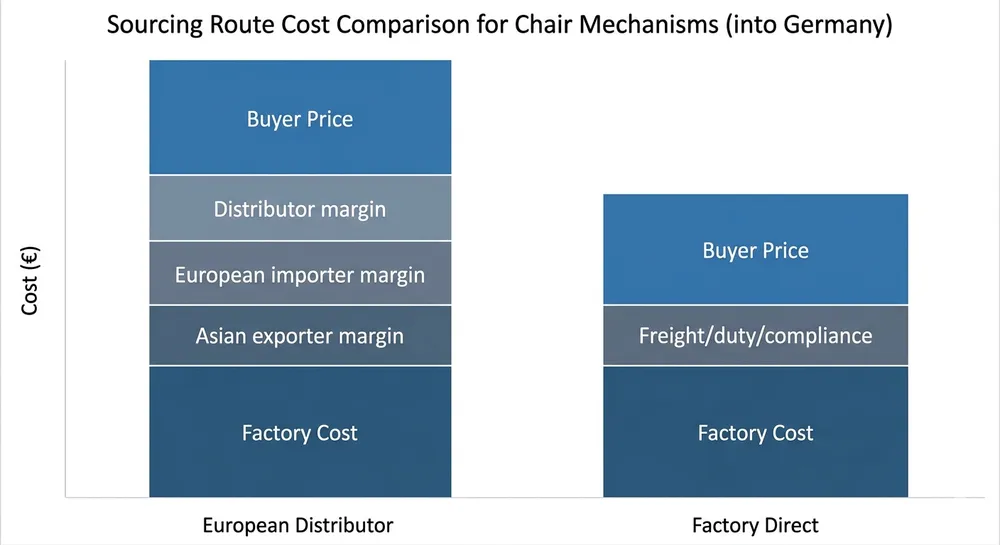
The problem is that many German buyers apply distributor sourcing logic to repeat-volume procurement, where the economics work against them. A distributor buying mechanisms from an Asian manufacturer and reselling into Germany typically carries a 40–80% markup over factory price, sometimes more depending on the distribution tier. On a 500-unit order that's a rounding error. On a 5,000-unit annual contract, that markup is a significant margin compression that compounds every reorder cycle.
(We've talked to German importers who were paying €18–22 per mechanism through a European trading company for a product that costs €8–11 factory-direct with equivalent CE documentation. The distributor's value-add was local stock and a German-language invoice. For repeat volume, that's an expensive convenience.)
The other limitation of distributor sourcing is customization. If your chair design requires a specific tilt resistance range, a non-standard mounting pattern, or a surface finish that matches your brand's hardware palette, a distributor can only offer what's in their catalog. Factory-direct sourcing opens OEM and ODM options that simply don't exist through a distribution layer.
Technical Evaluation Criteria: What to Verify Before You Commit
Supplier selection in this category is a technical decision, not just a commercial one. A mechanism that fails at 30,000 cycles instead of 50,000 generates warranty claims that cost more than the unit price savings. Here's the evaluation framework we'd apply if we were qualifying a new supplier:
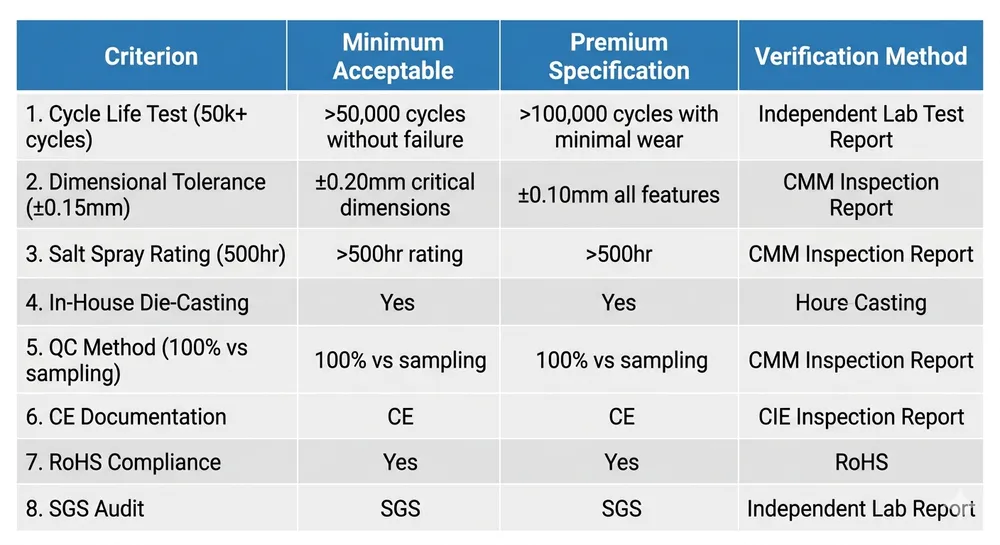
Cycle life verification Ask for the test report, not just the claim. The 50,000-cycle figure should come from a third-party test lab or an in-house test with documented methodology. For commercial office environments, 80,000–100,000 cycles is a more defensible specification. Ask what load was applied during testing — a 50,000-cycle test at 80kg is not the same as one at 120kg.
Dimensional tolerance documentation Request first-article inspection reports (FAIRs) from a recent production batch, not just from the sample run. The sample is made carefully. The production batch is made at speed. The gap between sample quality and batch quality is where most mechanism sourcing problems originate.
Surface treatment specification Specify the salt spray requirement in your RFQ, not just the finish type. "Zinc plated" covers a wide range of quality. "Zinc plated, trivalent chromium passivation, 240-hour salt spray minimum" is a specification a supplier either meets or doesn't. For mechanisms going into coastal markets or humid environments, 500 hours is the appropriate floor.
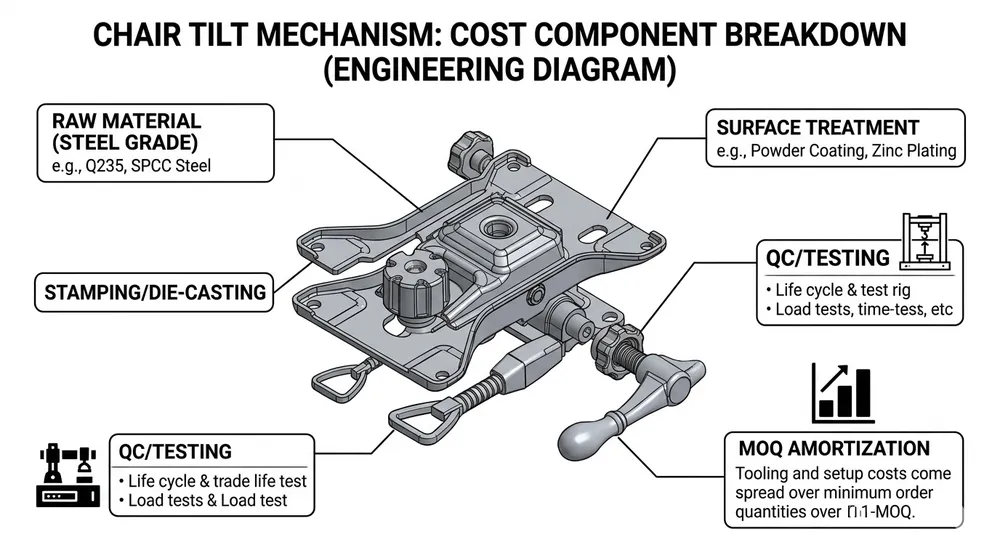
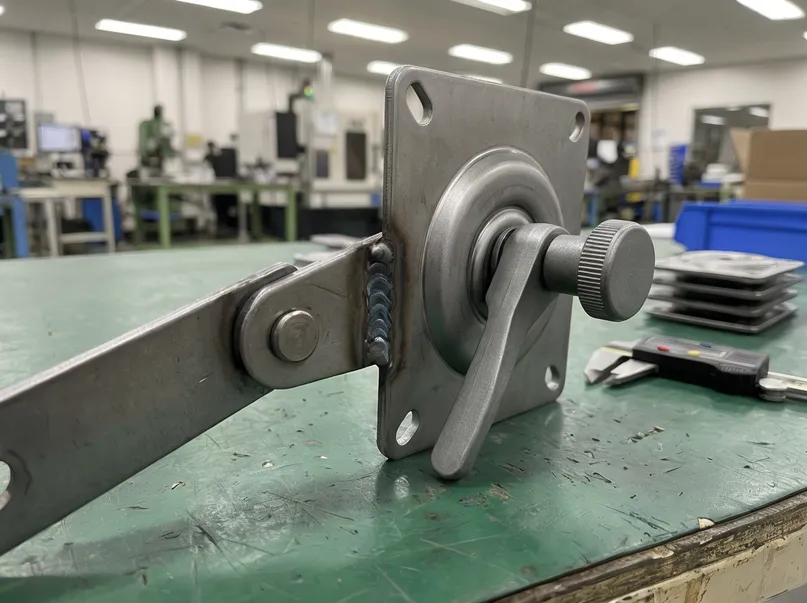
In-house vs. outsourced die-casting The die-cast components in a chair mechanism — tilt adjustment knobs, locking collars, decorative covers — are the most common source of batch-to-batch inconsistency. Ask whether the supplier produces these in-house or sources them from a third-party foundry. Outsourced die-casting means the supplier has limited control over dimensional consistency and surface quality on those parts.
QC methodology: sampling vs. 100% testing There is a meaningful difference between a supplier who samples 5% of outgoing units and one who functionally tests every unit before packing. For mechanisms, functional testing catches sticky tilt locks, misaligned mounting holes, and spring rate deviations that dimensional inspection alone won't find.
Export documentation readiness For German market entry, you need: CE declaration of conformity, SGS or equivalent test report, RoHS compliance statement, commercial invoice, packing list, and certificate of origin. Ask any supplier candidate to send you a sample documentation package from a recent European shipment. If they can't produce it quickly, that's the answer.
Factory-Direct from China: The Compliance and Cost Reality for German Importers
The objection we hear most often from German buyers considering factory-direct sourcing from China is compliance: "Can a Chinese manufacturer actually deliver CE-certified mechanisms with the documentation our customs team needs?" The honest answer is yes — but only from manufacturers who have invested in the certification infrastructure, not from trading companies reselling uncertified product with a CE sticker applied at the warehouse.
The distinction matters because the German market has seen both. Trading companies operating out of Yiwu or Guangzhou can source mechanisms from dozens of factories and consolidate orders, but they typically hold no certifications themselves and cannot provide a CE declaration of conformity that traces back to a tested product. When your customs broker or a downstream customer's compliance team asks for the technical file behind the CE marking, a trading company invoice is not an answer.
A factory that holds CE certification in-house has gone through the conformity assessment process, maintains a technical file, and can issue a declaration of conformity that names the manufacturer and the specific product. That document is what your EU customs entry requires and what your downstream customers' compliance teams will ask for.
For German importers, the landed cost calculation on factory-direct sourcing typically looks like this: factory price + ocean freight (roughly €0.80–1.20/kg for FCL from South China to Hamburg) + import duty (EU MFN rate for chair mechanisms is generally 2.7%) + customs clearance. On a 40HQ container of mechanisms, the freight and duty cost per unit is often €0.50–1.50 depending on mechanism weight and order volume. Compare that to the 40–80% distributor markup on the same product, and the economics of factory-direct sourcing at repeat volume become straightforward.
Lead time is the real trade-off. Factory-direct from China runs 25–35 days production plus 25–30 days ocean transit to Hamburg — call it 55–65 days from order to warehouse. That's not compatible with emergency replenishment. It is compatible with planned procurement cycles, which is how most volume buyers in this category should be operating anyway.
MVMHardware: Factory-Direct Supply for the German and EU Market
We've been manufacturing chair mechanisms and furniture motion hardware since 2008. The German and broader European market has been part of our export business since 2010, which means we've been navigating EU compliance requirements, container planning to Hamburg and Rotterdam, and the documentation expectations of German procurement teams for over a decade.
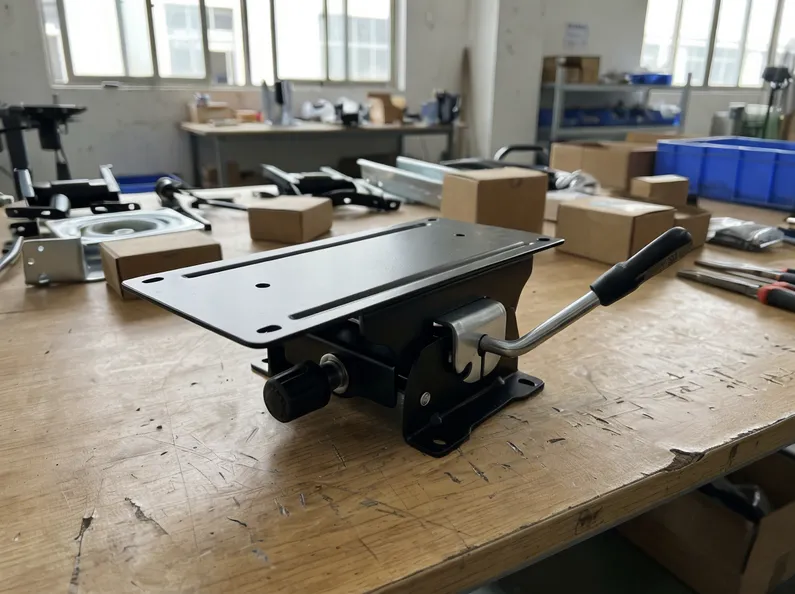
The factory runs 12,000 m² across stamping, die-casting, surface treatment, assembly, and QC. Six dedicated production lines handle 3,000,000 units per year at capacity. Chair mechanisms run on two dedicated lines — your order doesn't queue behind sofa bed hardware or table fittings.
What makes the compliance story straightforward for German buyers:
Our CE and SGS certifications are held in-house, not through a trading company. The CE declaration of conformity names MVMHardware as the manufacturer and traces to specific tested products. SGS audit reports are available on request. RoHS compliance documentation covers our surface treatment processes — we converted the zinc plating line to trivalent chromium passivation years ago, which is the specification EU customs and compliance teams require. Every shipment to European buyers goes out with the full documentation package: CE declaration, SGS report, RoHS statement, commercial invoice, packing list, bill of lading, and certificate of origin.
The die-casting advantage German QC auditors notice:
Most mechanism factories in the Guangdong region outsource their die-cast components — the tilt knobs, adjustment collars, and locking hardware — to third-party foundries. We brought die-casting in-house around 2015. The reason is straightforward: die-cast components are where batch-to-batch dimensional variation originates, and they're the first thing a German QC auditor flags when reviewing mechanism quality complaints. Owning that process means we control the tolerance on those parts, not a subcontractor we're negotiating with after the fact.
100% functional testing — not sampling:
Every mechanism is functionally tested before packing. Tilt range, lock engagement, load cycle, mounting hole alignment — checked on every unit. A mechanism that passes dimensional inspection but has a sticky lock or a misaligned hole gets pulled at this stage. For buyers whose downstream customers run their own incoming inspection, this matters: your reject rate on arrival should be zero, not "within acceptable AQL."
Capacity and MOQ for German import volumes:
Standard catalog mechanisms start at 500 units MOQ — a practical entry point for buyers running a trial order before committing to container volume. At 3,000,000 units annual capacity, a 10,000-unit order is a standard production run. We can schedule it without disrupting other customers' timelines. For OEM chair mechanism projects — custom tilt geometry, branded hardware, non-standard mounting patterns — our 12-person engineering team handles the tooling in-house, which means faster sample iterations and no third-party tooling delays when a geometry change is needed.
Production lead time for catalog items is 25–35 days from order confirmation. Full export documentation ships with the order.
When Local Supply Is the Right Answer
Factory-direct sourcing isn't the right answer for every situation, and a sourcing guide that pretends otherwise isn't useful.
Local or regional supply makes sense when:
- Order volume is low and urgency is high — a 100-unit top-up for a production line that can't wait 60 days belongs with a local distributor
- You're in a compliance timing crunch — if a product launch requires mechanisms already in a European warehouse with documentation in hand, local stock wins on speed
- You need a consolidated invoice relationship — some buyers value the administrative simplicity of a single European supplier across multiple hardware categories, even at a price premium
- You're testing a new mechanism specification — buying 50 units from a local distributor to validate a design before committing to a factory-direct MOQ is a reasonable risk management step
The pattern we see among buyers who use factory-direct sourcing well: they maintain a small local distributor relationship for emergency replenishment and use factory-direct for their planned procurement cycles. The two models aren't mutually exclusive — they serve different operational needs.
Sourcing Decision Guide: Which Route Fits Your Situation
| Situation | Recommended Route |
|---|---|
| Urgent order, <500 units, needed within 2 weeks | Local distributor |
| Planned procurement, 500–2,000 units, standard spec | Factory-direct trial order |
| Repeat volume, 2,000+ units/year, standard spec | Factory-direct contract |
| Custom mechanism, OEM spec, branded hardware | Factory-direct with OEM tooling |
| Emergency replenishment, production line waiting | Local distributor |
| New market entry, need CE documentation support | Factory-direct with full compliance package |
| Mixed hardware categories, single-invoice preference | Regional distributor |
The inflection point where factory-direct economics clearly outperform distributor sourcing is typically around 1,000–2,000 units per order, depending on mechanism weight and the specific distributor markup in your supply chain. Below that threshold, the freight and compliance overhead per unit narrows the advantage. Above it, the savings compound with every reorder.
RFQ Checklist: What to Include When Sourcing Chair Mechanisms for the German Market
A well-specified RFQ gets you a comparable quote from multiple suppliers and avoids the back-and-forth that delays sourcing decisions. Include:
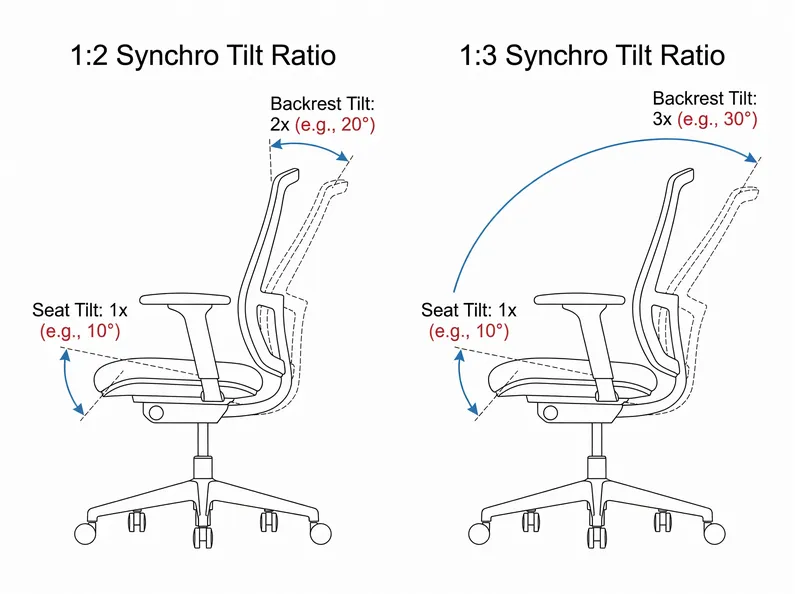
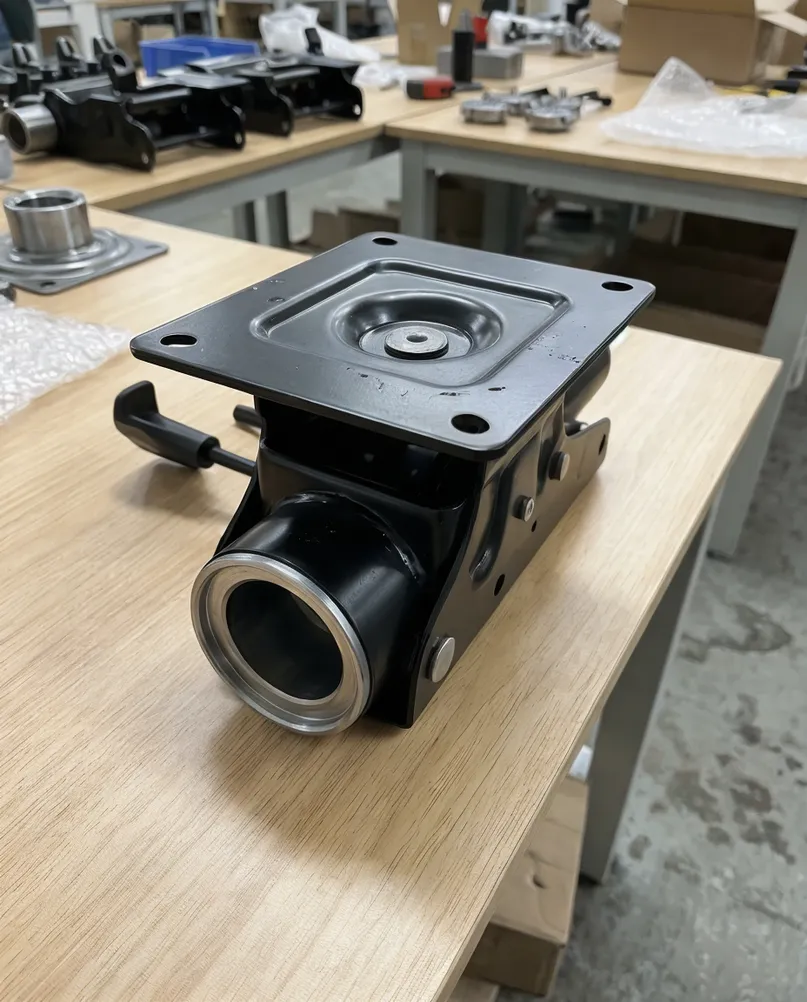
- Mechanism type — synchronous tilt, single-lever, multi-function, knee-tilt, or other
- Load rating — maximum user weight the mechanism must support (e.g., 120kg, 150kg)
- Cycle life requirement — 50,000 cycles minimum; specify higher for commercial/heavy-use environments
- Dimensional tolerance — specify ±0.15mm or tighter if your assembly process requires it
- Surface finish — zinc plated (specify trivalent chromium passivation for RoHS), nickel plated, or powder coated; include salt spray requirement
- Mounting pattern — provide a drawing or reference the standard pattern if applicable
- Annual volume — your expected order frequency and quantity per order
- Compliance requirements — CE declaration of conformity, SGS report, RoHS statement; specify if you need the technical file
- Packaging — standard export carton, retail-ready, or branded carton
- Target delivery port — Hamburg, Bremen, Rotterdam, or other; affects freight cost calculation
Sending this information upfront separates serious supplier candidates from those who will quote a generic price and adjust it later. A supplier who can respond to a fully specified RFQ with a detailed quote, test reports, and a sample timeline is demonstrating the operational capability you need for repeat procurement.
If you're evaluating MVMHardware as a factory-direct option for your German market sourcing, send your mechanism specifications to [email protected] — include your target volume, compliance requirements, and any existing sample or drawing. We'll respond with a specific quote, CE documentation package, and production timeline.