

Precision Chair
Mechanism Lock
Components
Tilt-lock, position-lock, and swivel-lock — manufactured to ±0.15mm tolerance. Available as standalone parts or integrated into complete mechanism assemblies.
100% functionally tested before shipment. OEM/ODM tooling supported. 500-unit MOQ.

Product Overview
What a Chair Mechanism Lock Is —
and Where It Fails
A chair mechanism lock is the component that holds a chair's tilt, recline, or swivel position once the user sets it. On a tilt mechanism, the lock engages a ratchet or cam against the tilt plate to prevent further rotation. On a swivel base, it's a friction or detent assembly that stops rotation at a defined point. On a multi-position recline mechanism, it's the indexed latch that clicks into one of several preset angles and holds under body weight.
The lock is a small component by weight and cost, but it's the one the end user interacts with every time they adjust the chair. A lock that slips under load, requires excessive force to engage, or develops play after 10,000 cycles generates warranty claims that land on your desk — not ours.
We've seen enough returned mechanisms from buyers who sourced locks from factories that treat them as commodity stampings to know that the tolerance and heat treatment on this part matter more than the unit price.

Locks tilt plate in current position via ratchet or cam engagement.
Indexed latch clicks into preset recline angles and holds under body weight.
Friction or detent assembly stops swivel rotation at a defined point.
Factories that treat locks as commodity stampings cut corners on both. The result: slippage under load, excessive engagement force, and play that develops after 10,000 cycles — all of which become your warranty problem, not theirs.
Technical Data
Lock Type Specifications
Three functional configurations with typical parameters for each. Contact us for exact drawings and dimensional data sheets.
Locks tilt plate in current position
Indexes into 3–5 preset recline angles
Stops swivel rotation at defined point
| Parameter | Tilt-Lock | Position-Lock (Multi-Angle) | Swivel-Lock |
|---|---|---|---|
| Function | Locks tilt plate in current position | Indexes into 3–5 preset recline angles | Stops swivel rotation at defined point |
| Base material | SPCC cold-rolled steel, 2.0–2.5mm | SPCC cold-rolled steel, 2.0mm | SPCC cold-rolled steel / zinc alloy |
| Actuation | Lever or paddle, user-operated | Lever-indexed ratchet | Friction collar or detent pin |
| Engagement force | 15–25 N | 10–20 N (indexed click) | 8–15 N (friction type) |
| Hold capacity | Up to 150 kg static | Up to 130 kg static | Up to 120 kg static |
| Cycle life | 60,000+ cycles | 60,000+ cycles | 50,000+ cycles |
| Surface treatment | Zinc or nickel plating | Zinc plating | Zinc plating or powder coat |
| Mounting | Integrated into mechanism plate | Integrated into mechanism plate | Collar-mount on swivel post |
| Custom options | Lever geometry, engagement force | Angle count and positions | Detent strength, collar diameter |
Specifications shown are industry-standard values for this product type. Actual specifications may vary by configuration. Contact us for detailed product data sheets and CAD drawings.
We supply full CAD drawings and dimensional data sheets for all three lock configurations. Available as standalone components or pre-integrated into complete mechanism assemblies.
How We Manufacture the Lock — and Why the Process Details Matter for Your Warranty Rate
The lock component sits at the intersection of two manufacturing disciplines that most factories treat separately: precision stamping and controlled heat treatment. Getting one right without the other produces a part that either wears out early or is too brittle to survive drop-shipping and installation handling. We run both on our floor.
Progressive Die Stamping
The lock plate and ratchet teeth are stamped from SPCC cold-rolled steel coil on progressive dies. The progressive die cuts the tooth profile, the pivot hole, and the spring anchor point in a single press stroke — which means the geometric relationship between the ratchet teeth and the pivot center is held to ±0.15mm across every part in a run.
That tolerance is what determines whether the lock engages cleanly at the same force across your entire batch. When the tooth geometry drifts — which happens on factories using CNC-punched individual blanks — you get engagement force variation that your assembly line can't compensate for, and your end users feel it as inconsistency in the chair's adjustment behavior.
Controlled Heat Treatment
After stamping, lock components that carry cyclic load go through a controlled heat treatment step — case hardening to increase surface hardness at the tooth contact faces while keeping the core tough enough to absorb impact.
We ran a batch without the heat treatment step once, early on, to test whether it was necessary for a lower-load application. The wear data from that trial settled the question permanently.

In-House Zinc Alloy Die-Casting
Zinc alloy die-cast components — levers, actuation paddles, and decorative covers on the lock assembly — are produced in-house on our die-casting line. We brought die-casting in-house in 2015 specifically because outsourced die-cast parts were the leading source of dimensional inconsistency in our mechanism assemblies.
The lever pivot bore and the engagement geometry on die-cast actuation parts need to hold ±0.2mm to mate correctly with the stamped lock plate. When that's controlled on our floor, your assembly fit is consistent batch to batch.
A lock that passes dimensional inspection but slips at 80% of rated load gets pulled at this stage.
Market Segments Where Chair Mechanism Lock Sourcing Drives Margin

Contract Office Furniture Manufacturing
Office furniture manufacturers running task chair and executive chair lines need lock components that hold consistent engagement force across production batches of 5,000–20,000 units. Your assembly line uses fixed jigs and torque-controlled tools — if the lock lever pivot varies by 0.5mm between batches, your line stops while operators adjust.
Consistent tolerance across runs is the commercial value here, not just the unit price. Buyers in this segment typically reorder quarterly on rolling contracts once the fit is confirmed.

Ergonomic Seating OEM
Ergonomic chair manufacturers at the $300–$600 retail tier use multi-position locks as a key feature differentiator — the number of recline positions and the precision of the indexed angles are part of the product's marketing story. A 5-position lock with clean, positive engagement at each angle supports a premium price point.
A lock that feels vague or requires excessive force undermines the ergonomic positioning regardless of what else the chair does. If you're building or importing an ergonomic line, the lock spec is part of your margin justification.

Replacement Parts Distribution
Hardware distributors and after-market parts suppliers stock chair mechanism locks as replacement components for commercial chair fleets. Office facilities managers replace locks on chairs that are otherwise in good condition — it's cheaper than replacing the whole chair.
The replacement parts market for commercial seating is more predictable than new-chair OEM demand, and the margins on components are better than on complete mechanisms.

Institutional Procurement
Schools, government offices, and healthcare facilities buy chair components through annual maintenance budgets. Tilt-lock and swivel-lock components for heavy-duty institutional chairs need to handle 100+ kg users in high-cycle environments.
Specifying 60,000-cycle tested locks for this segment protects your downstream customer from warranty claims and positions you as a supplier who understands institutional procurement requirements.
Customization Options for Chair Mechanism Locks
Standard catalog locks cover the most common configurations. For buyers with specific requirements, we support the following customization dimensions.
Geometry & Actuation
- ›Lever arm length and angle — affects mechanical advantage and ergonomic feel
- ›Engagement force — spring rate ±20% from standard within stamping tooling
- ›Indexed positions on multi-angle locks — standard 3 or 5; custom counts with tooling modification
- ›Pivot hole pattern — match your existing mechanism plate mounting geometry
Materials & Surface Treatment
- ›Steel grade upgrade to Q235 for higher-load applications (above 150 kg rated capacity)
- ›Nickel plating for corrosion resistance in humid or coastal market applications
- ›Custom RAL powder coat on die-cast lever components for branded chair lines (min. 500 units/color)
Integration
- ›Pre-assembled into complete tilt or recline mechanism units — eliminates a component sourcing step
- ›Private-label packaging for distributors selling under their own brand
MOQ & Lead Times
-
Standard Catalog500 units per type
-
Custom Tooling MOQBased on tooling amortization — quoted per spec
-
New Tooling Lead Time25–35 days from drawing approval to first sampleGeometry changes within existing tooling do not extend lead time.
Tell us your target configuration — we'll confirm feasibility and quote within 48 hours.
Compliance and Certification for Your Target Markets
Chair mechanism locks sold into commercial markets need to meet the same compliance standards as the complete mechanisms they're part of. Our lock components carry the following certifications.
European market compliance for mechanical safety.
Third-party load and cycle verification. Test reports available with shipment.
No restricted substances in surface treatments. Trivalent chromium passivation on zinc plating — no hexavalent chromium.
Quality management system governing the full production process.

Market-Specific Documentation
Material composition documentation available for HTS classification and CPSC compliance review.
Lock components are tested to BIFMA-equivalent cycle and load protocols. Test reports available on request.
If your market requires a certification not listed here, ask before assuming it's unavailable. We have an existing SGS relationship and can arrange additional third-party testing for specific market requirements.
Procurement Planning
Fitting Chair Mechanism Locks into Your Sourcing Strategy
If you're sourcing complete chair mechanisms from us, locks are already integrated — you don't need to manage them as a separate component. The relevant question is which lock configuration is built into the mechanism you're ordering.
If you're manufacturing your own chair mechanisms or assembling from components, standalone locks are available with the following practical notes:
Dimensional Drawings
Available on request before you commit to an order. We send DXF and PDF formats. Verify fit with your existing mechanism plate before placing production quantities.
Sample Order
2–5 units per lock type to test engagement feel, fit, and finish against your assembly. We ship samples within 7–10 days of order confirmation.
Mixed-Type Orders
You can combine tilt-lock, position-lock, and swivel-lock in a single order. Each type runs at its own 500-unit MOQ — they don't need to be combined to hit a total minimum.
Batch Consistency
We hold the same die tooling across reorders, so your second batch fits the same as your first. No re-qualification required unless you change the spec.
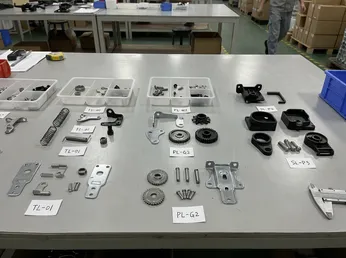
Complete Mechanism vs. Standalone Lock
When ordering complete mechanisms, the lock type is specified as part of the mechanism configuration — tilt-lock, position-lock, or swivel-lock. No separate component management required.
For component-level sourcing, standalone locks are the right path if you manufacture your own mechanism assemblies or need replacement parts for existing chair lines. Request drawings first, confirm fit with samples, then move to production quantities.
Buyer Guidance
Frequently Asked Questions — Chair Mechanism Lock Sourcing
Technical and procurement questions answered directly. These cover the decisions that affect your warranty rate, assembly fit, and reorder reliability.
What is the difference between a tilt-lock and a position-lock on a chair mechanism?
A tilt-lock holds the chair in whatever tilt position it's currently in — it's a binary lock/unlock. A position-lock (also called a multi-position or indexed lock) has preset angles — typically 3 or 5 — that the backrest clicks into. The position-lock gives the end user defined recline positions rather than a continuous range. For task chairs, tilt-lock is standard. For executive and conference chairs where users want to set a specific recline angle and stay there, position-lock is the appropriate spec.
What cycle life should I specify for a chair mechanism lock in a commercial office environment?
60,000 cycles minimum for standard commercial office use — that covers roughly 3–5 years of daily adjustment by a single user. For high-use environments (call centers, 24/7 operations, shared workstations), specify 100,000 cycles. We test to these thresholds using BIFMA X5.1 equivalent protocols. Specifying cycle life in your purchase order gives you a documented performance standard to reference if warranty claims arise.
Can I order chair mechanism locks as standalone components, or only as part of a complete mechanism?
Both. Standalone locks are available at 500-unit MOQ per type. They're common for buyers who manufacture their own mechanism assemblies, or who need replacement parts for existing chair lines. If you're ordering complete mechanisms, the lock is already integrated — you specify the lock type (tilt-lock, position-lock, or swivel-lock) as part of the mechanism configuration.
How do I verify that a chair mechanism lock will fit my existing mechanism plate?
Request dimensional drawings before ordering. We provide DXF and PDF drawings for all standard lock configurations. Check the pivot hole diameter, the mounting hole pattern, and the lever clearance envelope against your plate geometry. If you're unsure, order 2–5 samples first — it's the fastest way to confirm fit without committing to production quantities.
What causes chair mechanism locks to slip or lose holding force over time?
Two root causes cover most field failures. First, insufficient tooth hardness on the ratchet — if the lock teeth aren't case-hardened to 45–55 HRC, they wear under cyclic load and the engagement becomes sloppy. Second, spring fatigue — the return spring that holds the lock engaged loses tension after repeated cycling if it's undersized for the application. Both are manufacturing decisions, not use-pattern issues. When evaluating a lock supplier, ask specifically about heat treatment spec and spring rate selection for your load rating.
What is the MOQ for custom chair mechanism lock configurations?
Standard catalog locks: 500 units per type. Geometry modifications within existing tooling (lever angle, engagement force adjustment): same 500-unit MOQ, no tooling charge. New tooling for non-standard configurations: MOQ depends on tooling amortization — typically 1,000–3,000 units depending on tooling complexity. We'll give you the specific number during quoting, not a round figure.
Continue Sourcing
Related Chair Mechanism Components
If you're sourcing lock components, you may also need these complementary parts — commonly specified together for complete recline and articulation assemblies.
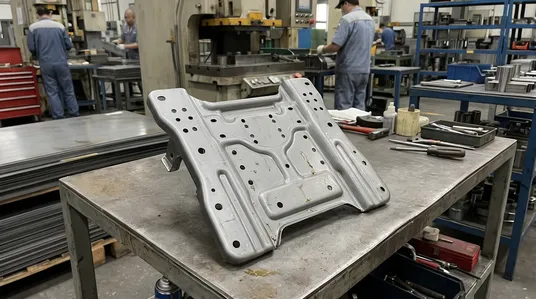
Chair Mechanism Plate
Stamped steel mounting plates in standard and custom hole patterns. The structural base that the lock mounts to.
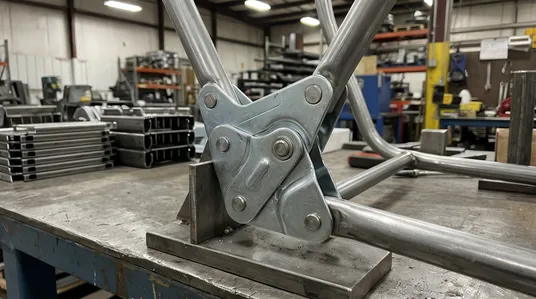
Chair Mechanism Hinge
Pivot hinges for folding and articulating chair joints. Often specified alongside locks for multi-position recline assemblies.
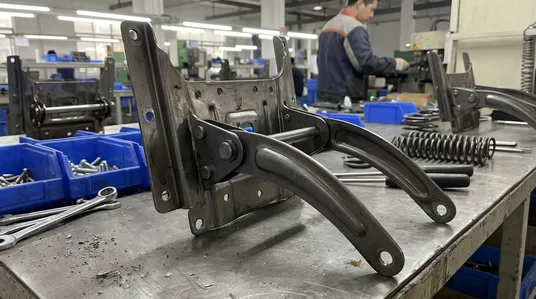
Chair Mechanism Backrest
Backrest brackets and tilt arms. If you're building a complete recline assembly, backrest hardware and lock components are typically sourced together.
For complete mechanism assemblies with locks integrated, see the full chair mechanism line.
Request a Quote
Get a Quote for Chair Mechanism Locks
Most buyers in this category start with a sample order — 2–5 units per lock type — to verify fit and engagement feel against their own chair frames or mechanism plates. We ship samples within 7–10 days of order confirmation.
If you already have a spec, send us the drawing or a reference sample and we'll quote the exact configuration. If you're evaluating lock options for a new chair line, tell us your target load rating, cycle life requirement, and end-use environment — we'll recommend the configuration and send back a quote with dimensional drawings.
