

Sliding Furniture
Mechanism
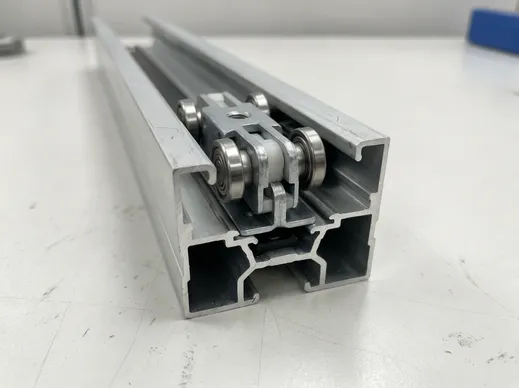
Precision sliding furniture mechanism — factory-direct from a dedicated motion hardware manufacturer with 17 years in the category. Track straightness held to within 0.3mm per 500mm of travel. 100% functional testing before shipment.

Engineering Insight
What Makes a Sliding Mechanism Fail —
and How We Prevent It
Linear slide hardware looks simple from the outside. A track, a carriage, some mounting hardware. The problems hide in the tolerances.
Track straightness that's off by half a millimeter produces a slide that feels precise in the sample but develops a perceptible bind after six months of use. Carriage fit that's too tight seizes in temperature swings; too loose and there's play in the closed position that your downstream customers will notice immediately.
We hold track straightness to within 0.3mm per 500mm of travel on our standard sliding furniture mechanism range. That spec is loose enough to allow for thermal expansion across the temperature range your furniture will see in transit and in use — but tight enough that there's no perceptible play when the mechanism is closed.
We arrived at that number after seeing what happens at both ends: tighter than 0.2mm and you get binding complaints from buyers in markets with significant seasonal temperature variation; looser than 0.4mm and you get play complaints from buyers whose downstream customers are comparing the feel against European-made hardware.
The carriage-to-track fit is held to a running clearance of 0.05–0.10mm on standard catalog items. That's the range where the slide moves smoothly under load without developing rattle. We check this at the assembly stage with a go/no-go gauge on every carriage before it goes to the functional test station — not a sample pull, every unit.

The Most Common Defect from Other Sources
Track straightness variation within a batch — the first 200 units feel fine, the next 300 have a subtle bow that causes binding. Our progressive die stamping process holds the track profile consistent across the full run because the tooling geometry doesn't change between pieces.
Track Straightness
Held to ≤0.3mm per 500mm of travel. Tight enough to eliminate play; loose enough to accommodate thermal expansion across transit and use environments.
Carriage-to-Track Fit
Running clearance of 0.05–0.10mm. Go/no-go gauge check on every carriage at assembly — not a sample pull. Eliminates rattle without causing bind under load.
100% Functional Testing
Every unit passes functional test before shipment. Batch qualification includes 50,000-cycle life testing. ISO 9001:2015, CE, SGS, and RoHS certified.
Standard Catalog Range
Sliding Mechanism Specifications
Standard parameters for our catalog sliding furniture mechanism range. Custom configurations — extended travel lengths, higher load ratings, alternative finishes — are available; contact us with your spec.
| Parameter | Standard Specification |
|---|---|
| Track material | Cold-rolled steel (SPCC), 1.5–2.5mm thickness |
| Carriage material | Cold-rolled steel (SPCC) or zinc alloy die-cast |
| Track straightness | ≤0.3mm per 500mm travel |
| Carriage-to-track clearance | 0.05–0.10mm running fit |
| Travel length range | 300mm – 1,200mm (standard catalog) |
| Load rating | 30kg – 150kg depending on configuration |
| Cycle life testing | 50,000 cycles standard batch qualification |
| Surface treatment | Powder coat (60–80μm), zinc electroplate, nickel electroplate |
| Salt spray rating | 500 hours standard; 800-hour option available |
| Mounting hole pattern | Standard and custom patterns available |
| Certifications | ISO 9001:2015, CE, SGS, RoHS |
| Standard MOQ | 500 units |
| Lead time (catalog) | 25–35 days from order confirmation |
Specifications shown are standard values for this product range. Actual specifications may vary by configuration. Contact us for detailed product data sheets and custom spec options.
Market Intelligence
Where Sliding Furniture Mechanisms Sell: Market Segments Worth Targeting
The commercial logic is straightforward: furniture that extends, pulls out, or slides open commands a price premium over static furniture, and the mechanism is what justifies that premium. Your margin on a sliding dining table is higher than on a fixed one. The mechanism is the reason.

Extending Dining Tables
The highest-volume application for sliding furniture mechanisms in the residential import market. A standard extending table uses one or two synchronized slide tracks — the mechanism must carry the full weight of the extended leaf while maintaining alignment so the table surface sits flush.
- Extended length range: 1,200–2,400mm
- Key variables: load rating and track length per SKU
- Typical order: 500–2,000 units per SKU per season

Pull-Out Shelving & Drawer Extension
Kitchen furniture, office storage, and retail display represent a different commercial profile: higher SKU count, lower per-SKU volume, but strong reorder frequency because these are consumable components in furniture manufacturing.
- Active buyers: cabinet manufacturers and kitchen furniture OEMs in Southeast Asia and the Middle East
- Consolidating slide hardware supply simplifies inventory and compliance documentation
Sliding Door Fittings
Wardrobe systems, room dividers, and barn-door style interior hardware have grown significantly as a segment. The mechanism requirements differ from table slides: load is primarily lateral rather than compressive, and the aesthetic finish matters more because the hardware is visible in the installed product.
- Travel length: typically 1,500–2,400mm for door applications
- We supply both track and carriage hardware
- Nickel plating: most common finish spec for exposed installations

Contract & Hospitality Furniture
Hotel room storage, restaurant service stations, commercial kitchen pull-outs — requires higher cycle life than residential. We spec and test higher for commercial applications.
Important: Hotel room furniture that gets daily use needs a different spec than a dining table that extends twice a year for holiday dinners — the mechanism is the same category, but the engineering requirements are not.
Tell us the use environment when you inquire and we'll quote the appropriate load rating and cycle life spec.
Tell Us Your Target Segment — Get a Matched Spec Quote
Manufacturing Process
How We Make the Track: Progressive Stamping and Why It Matters for Your Batch
The track profile is the critical component in a sliding furniture mechanism. Everything else — the carriage, the end stops, the mounting hardware — is secondary to whether the track is straight, consistent, and dimensionally stable across your full order quantity.
Progressive Die Stamping from Cold-Rolled Steel Coil
The die geometry is fixed — each stroke produces the same profile to ±0.15mm dimensional tolerance. The 500th unit in your batch has the same track straightness as the first, because the tooling hasn't changed between them.
Roller Leveler Straightening Pass
After stamping, tracks go through a straightening pass on a roller leveler before surface treatment. This removes residual stress-induced bow — it's a step that adds time but is what gets us to the 0.3mm straightness spec consistently rather than occasionally.
Surface Treatment by Application
Powder coat for components where appearance matters and dimensional tolerance after coating is not critical. Zinc electroplate for tight-clearance assemblies where coating thickness needs to be controlled precisely.
In-House Die-Casting for Carriage Components
Carriage components use either stamped steel or zinc alloy die-cast construction depending on load rating and geometry. We run die-casting in-house — dimensional consistency is controlled on our floor. Batch-to-batch variation in die-cast parts is the failure mode hardest to catch at incoming inspection if you're buying from a factory that outsources this process. We eliminated that variable when we brought die-casting in-house in 2015.
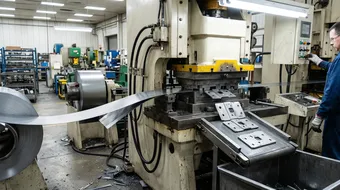
Tracks produced on brake presses or roll-forming lines without progressive die tooling introduce operator-dependent variation that shows up as batch-to-batch inconsistency. You might qualify a sample that's excellent and receive a production run where 15% of units have a subtle bow in the track.
We've had buyers come to us specifically after that experience with other suppliers.
Customization: What You Can Specify, What Affects MOQ
Standard catalog sliding mechanisms cover the most common travel lengths, load ratings, and mounting patterns. Most buyers find a catalog item that's close to their requirement and confirm it with a sample order. But custom configurations are common in this category — furniture designs don't always fit standard hardware dimensions.
What Can Be Customized
What Affects MOQ
What Can't Be Customized Without Tooling Investment
The track cross-section profile is fixed by the die tooling. If your application requires a profile that doesn't match our catalog, that's an ODM tooling project. Our engineering team can review your requirement and give you a tooling cost and MOQ before you commit.
Practical Note on Custom Travel Lengths
If you're evaluating a custom travel length, check whether your requirement falls within the range achievable by cutting a longer standard track rather than producing a new length. For many applications, a 750mm travel requirement can be met by a cut-to-length 800mm track — same tooling, no MOQ premium. We'll tell you if that's an option for your spec.
Cycle Life, Load Testing, and What the Numbers Mean for Your Warranty Exposure
We run 50,000-cycle load testing on sliding furniture mechanisms as standard batch qualification. That number is worth understanding in context.
20–30 extension cycles per year. At 50,000 cycles, that's roughly 1,500–2,500 years of residential use. Warranty exposure is effectively zero.
730 cycles per year. 50,000 cycles represents approximately 68 years of service life — well beyond any residential warranty period.
~700 cycles per year. 50,000 cycles is about 70 years of service. For high-frequency commercial applications under extended load, we can spec and test to 80,000 or 100,000 cycles.

How the Load Test Works
The load test runs the mechanism through its full travel under rated load for the specified cycle count, then checks dimensional stability and functional performance. A mechanism that passes dimensional inspection but develops binding, increased operating force, or play at the end stops during cycle testing gets pulled. We don't ship mechanisms that pass the dimensional check but fail the functional endurance test.
Certifications & Compliance Documentation
Covers the product range for European market compliance.
Reports available with shipment for buyers whose customers or import requirements need third-party verification rather than self-declaration.
Available for EU and California market requirements. Trivalent chromium passivation on all zinc plating — no hexavalent chromium in our process.
Packaging, Container Loading, and Landed Cost
Sliding mechanisms pack efficiently — the track and carriage components nest or stack in standardized cartons sized for 40HQ container loading. We've worked out the pallet configurations for the main slide hardware SKUs so your freight forwarder has the CBM per carton and loading quantity before the shipment arrives at the warehouse.
Standard export packaging uses double-wall corrugated cartons with EPE foam inserts for precision components. Track sections are bundled and wrapped to prevent surface contact during transit — powder-coated tracks in particular need protection against abrasion damage that shows up as finish defects on arrival. We've had buyers receive slide hardware from other sources with coating damage from inadequate transit packaging; it's a warranty claim that's entirely preventable at the packing stage.
E-Commerce & Drop-Ship Ready
For buyers distributing into e-commerce channels — Amazon, Wayfair, independent furniture stores with direct-to-consumer shipping — we can discuss retail-ready packaging and blind drop-ship labeling as part of an OEM arrangement. Sliding mechanism hardware for extending tables and pull-out systems is an active category in online furniture retail; if you're building a product line for this channel, the packaging spec is part of the product spec.

Get Your Landed Cost Estimate
Container loading data and freight estimates are available before you confirm the order. Send us your target order volume and destination port — we'll give you the CBM, estimated container utilization, and any relevant documentation requirements for your market.
Request Freight DataFrequently Asked Questions
What is the minimum order quantity for sliding furniture mechanisms?
500 units for standard catalog items. Custom configurations using existing tooling with minor modification are typically the same MOQ — confirm with us based on your spec. New tooling projects are quoted based on tooling amortization; we give you the honest number, not a round figure.
What track straightness tolerance should I specify for extending dining table applications?
For extending dining tables, specify ≤0.3mm per 500mm of travel — this is the tolerance range where the table leaf sits flush in the extended position without visible misalignment.
Sliding mechanism vs. drawer slide: what's the difference for furniture sourcing?
A subset of sliding mechanisms optimized for vertical-load, short-travel applications (typically 250–600mm) in cabinetry. If your application is standard kitchen or office drawer hardware, drawer slides are the right category.
Cover a broader range: longer travel lengths for extending tables, higher load ratings for structural applications, and configurations designed for horizontal or lateral loads in sliding door systems. If travel exceeds 600mm or loads exceed 50kg, you're in furniture sliding mechanism territory.
How do I prevent a sliding mechanism from developing binding after installation?
Binding after installation is almost always one of three causes:
Specify track straightness ≤0.3mm per 500mm and request dimensional verification with shipment.
Ensure the mounting surface is flat and the two parallel tracks are installed at exactly the same height — a 0.5mm height difference between parallel tracks is enough to cause binding under load.
The 0.05–0.10mm running clearance in our standard carriage fit accommodates normal indoor temperature variation. For extreme temperature swings, contact us about the appropriate clearance spec.
What surface finish should I specify for sliding mechanisms going to high-humidity markets?
| Finish Option | Salt Spray Rating | Best For | Notes |
|---|---|---|---|
| Standard Powder Coat | 500-hour (60–80μm) | Normal indoor environments | Standard offering |
| High-Build Powder Coat | 800-hour | Southeast Asia, Gulf region, coastal North America | Higher-build primer coat under topcoat |
| Zinc Electroplate | Comparable to 800-hr | Tight-clearance assemblies where dimensional tolerance after coating is critical | Thinner, more dimensionally consistent. RoHS trivalent chromium passivation standard. |
Can you integrate soft-close dampers into sliding furniture mechanisms?
Yes — soft-close damper integration is available on request for extending table and pull-out shelving applications. The damper is integrated at the end-stop position to decelerate the carriage in the last 50–80mm of travel.
MOQ for damper-integrated configurations is 500 units, as the damper component is sourced to order. Send us your travel length and load rating and we'll spec the appropriate damper force.
Product Range
Other Motion Mechanisms in This Range
Sliding is one motion type. If your product line covers multiple furniture categories, you may need hardware from adjacent families.
Folding Furniture Mechanism
Fold-flat and fold-down hardware for folding tables, wall-mounted desks, and collapsible frames. Adjacent category if your extending table line includes a fold-down option.
View RangeTransformable Furniture Mechanism
Multi-position conversion hardware for sofa beds, dining-to-desk conversions, and lift-top storage. Sliding mechanisms are often a component within a larger transformable assembly.
View RangeRotating Furniture Mechanism
Swivel bases and rotation hardware. Some extending table designs combine sliding extension with a rotating top — we can supply both mechanism types.
View RangeFull Motion Mechanism Range
View all seven product families. Sourcing multiple motion types from one factory means one compliance document set, one shipping relationship, and one quality standard across your SKU range.
Browse AllMost buyers who start with sliding mechanisms expand to adjacent categories once they've run a trial order. Sourcing multiple motion types from one factory means one compliance document set, one shipping relationship, and one quality standard across your SKU range.
Get Started
Start Your Sliding Mechanism Sourcing
Tell us where you are in your process — we'll match the right next step.
Already Have a Spec?
Send us your travel length, load rating, surface finish requirement, and target order volume. We'll come back with a matched catalog item or a custom configuration quote, whichever fits your requirement.
Request a QuoteEvaluating Suppliers?
Most buyers in this category start with a sample order of 2–5 units to verify track straightness and carriage fit against their own furniture frame before committing to a production run. We can ship samples for your evaluation.
Request SamplesBuilding a New Product Line?
Not sure which slide spec fits your furniture design? Send us a sketch or drawing of your furniture frame and the motion requirement. Our engineering team will recommend the configuration and flag any installation considerations before you finalize the design.
Send Your DrawingContact Us Directly
Reach our sales team by email or WhatsApp for the fastest response.