

Couch Mechanism — Modular Sectional & Reclining Sofa Hardware
Factory-direct couch mechanism from a dedicated furniture hardware manufacturer — modular sectional brackets, reclining linkages, and power-ready frames built to ±0.15mm stamping tolerance.
Designed for multi-seat sofa configurations where dimensional consistency across a batch is what determines whether your customer's sectional aligns correctly at the end.

Product Category Overview
What a Couch Mechanism Actually Covers — and Where It Fits in Your Sourcing
"Couch mechanism" is a broad term in the trade, and it's worth being precise about what we're talking about here. This product covers the hardware that goes into multi-seat sofa configurations: the connecting brackets that join sectional modules, the reclining linkages inside individual sofa seats, the chaise adjustment fittings, and the power-ready frames for motorized reclining sections.
It's the hardware category that sits between standalone recliner chair mechanisms (single-seat, self-contained) and sofa bed frames (full folding structure for sleeping). If your product is a sectional sofa, a modular couch with reclining seats, or a chaise configuration, this is the mechanism category you're sourcing from.
The distinction matters commercially because the failure modes and the spec requirements are different from the other products in this category. A recliner chair mechanism lives or dies on its pivot geometry. A sofa bed frame lives or dies on its structural tube gauge. A couch mechanism lives or dies on dimensional consistency — specifically, whether the connecting brackets and reclining linkages hold the same dimensions batch-to-batch so that a sectional assembled from your production run actually aligns.
The Number That Matters
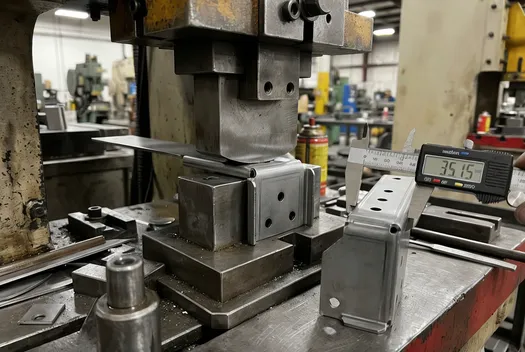
We hold ±0.15mm on structural bracket stamping. That's the number that determines whether your customer's three-piece sectional fits together or has a 4mm gap at the connector.

How This Category Sits in the Range
Engineering Data
Technical Specifications
Standard catalog configurations are shown below. OEM dimensions and custom configurations are available — contact us with your frame drawings for a specific quote.
Standard Catalog Specifications
Specifications shown are standard catalog values. Actual specifications may vary by configuration. Contact us for detailed product data sheets and custom spec confirmation.
Key Spec Highlights
Buyer Segments
Market Segments: Where Couch Mechanisms Generate Repeatable Volume
Four active buyer segments drive the majority of couch mechanism volume. Each has distinct spec requirements, order patterns, and qualification criteria.

Residential Sectional Furniture Manufacturing
OEM supply to sofa brands producing sectional configurations — L-shapes, U-shapes, modular systems — where the mechanism is sourced separately from the upholstery and frame. Order patterns run 2,000–8,000 units per SKU on quarterly replenishment cycles.
Dimensional consistency requirement is highest in this segment — sectional alignment is visible to the end consumer immediately on assembly.

Furniture Importers — North American & European Retail
Buyers in this channel work to a retail price point and a specific sofa design — they need a mechanism spec'd to fit their frame geometry and hit their landed cost target, not a catalog selection. We've developed custom couch mechanism configurations where the standard catalog bracket geometry didn't match the sofa frame's connector spacing.
In-house tooling means a geometry change on a sample goes back to our tooling team the same week — not to a third-party shop with its own queue.

E-Commerce Furniture Brands — DTC Sectional Lines
This segment has specific packaging requirements — mechanisms need to be packed for end-user assembly, with mounting hardware included and installation steps that don't require a professional. We handle that as part of the OEM arrangement.
This segment has grown meaningfully over the past three years. Modular sectional sofas are one of the stronger-performing DTC furniture categories — and the mechanism spec for DTC differs from traditional retail in ways that matter for your sourcing brief.

Hospitality and Contract Furnishing
Hotels and serviced apartments specifying modular lounge seating at volume. The spec here differs from residential: higher cycle life, simpler actuation, and surface finishes that hold up to housekeeping chemicals. We've supplied into this segment for Southeast Asia and Middle East projects.
If specifying for hospitality, cycle life and surface treatment requirements are the two parameters to confirm upfront.
OEM & Custom Configuration
What We Can Build to Your Spec
A significant share of couch mechanism orders we fulfill are OEM — built to a buyer's frame drawings rather than selected from the standard catalog. Sectional sofa designs vary enough in connector spacing, seat depth, and reclining arc that a catalog mechanism often doesn't fit without modification.
How OEM Work Proceeds
You supply frame drawings or a physical sample reference. We review for manufacturability before tooling starts.
If your connector spacing requires a bracket geometry that will cause stamping problems, or your reclining arc spec creates binding at full extension, we flag it at the review stage — not after tooling is cut.
Tooling is built in-house. A geometry change on a sample goes back to our tooling team — not to a third-party shop with its own queue. Revision cycles are faster as a result.

Customization Parameters
| Dimension | Standard Range | Custom Range |
|---|---|---|
| Connecting bracket width | 60–120mm | To drawing |
| Connector pin spacing | 80–200mm | To drawing |
| Reclining arc | 90°–150° | To drawing |
| Seat frame tube gauge | 1.5–2.5mm wall | To spec |
| Power actuator mounting | 24V DC standard | Custom voltage on request |
| Surface finish color | Standard RAL colors | Custom RAL on 500+ unit runs |
Power-Ready Frames
We produce actuator-ready couch mechanism frames compatible with standard 24V DC linear actuators. The actuator mounting bracket and wiring harness routing are built into the frame design — your upholstery team doesn't need to modify the frame to fit the actuator.
Developing a power reclining sectional? Send us the brief and we'll develop the mechanism and actuator integration spec together.
MOQ Structure
For OEM tooling projects, MOQ depends on tooling amortization — we give you the specific number based on your spec.
Logistics & Export
Packaging, Container Loading, and Export Documentation

Couch mechanisms ship in standardized cartons sized for 40HQ container efficiency. Connecting brackets and smaller components are packed in inner cartons within the master carton — the packing configuration is worked out for each SKU so your freight forwarder isn't improvising at the warehouse.
KD (knocked-down) configurations typically increase 40HQ loading quantity by 25–35% versus assembled — reducing your landed cost per unit directly. Available on configurations where assembly requires no specialized tooling.
Standard catalog couch mechanisms: 25–35 days from order confirmation and deposit. OEM projects with new tooling run on a milestone schedule with production timeline broken into stages.
Export Documentation Included with Every Order
CE declaration and SGS reports included. Test reports ship with every order.
Material and compliance documentation for HTS classification available on request.
Buyer FAQ
Frequently Asked Questions
Technical and sourcing questions answered directly — no round figures, no vague answers.
What is the MOQ for couch mechanisms?
500 units for standard catalog configurations. For OEM projects with custom tooling, MOQ depends on tooling amortization — we give you the specific number based on your spec, not a round figure.
What stamping tolerance do you hold on connecting brackets, and why does it matter for sectional furniture?
We hold ±0.15mm on structural bracket stamping. For sectional furniture, the connecting bracket's pin hole position controls whether the sectional modules align when assembled. A bracket that's 2–3mm off on pin hole position produces a visible gap or misalignment at the connector — which is a return from your customer.
The ±0.15mm tolerance keeps connector alignment within the range where sectional assembly is clean. We check this at first-article and at periodic in-process pulls throughout each run, not just at the start.
What's the difference between a couch mechanism and a recliner chair mechanism — which do I need?
A recliner chair mechanism is a self-contained single-seat assembly — footrest linkage, backrest recline, and the coordination between them, designed for a standalone recliner chair.
A couch mechanism covers the hardware for multi-seat sofa configurations: connecting brackets for sectional modules, reclining linkages for individual sofa seats, and chaise/power-frame hardware.
If your product is a sectional sofa or a multi-seat couch with reclining sections, you need a couch mechanism. If it's a standalone recliner chair, see our recliner chair mechanism.
Can couch mechanisms be spec'd for power reclining sections?
Yes. We produce actuator-ready frames compatible with standard 24V DC linear actuators, with the actuator mounting bracket and wiring harness routing built into the frame design.
If you're developing a power reclining sectional, send us the brief — we can spec the mechanism and actuator integration together so your upholstery team is connecting a pre-terminated harness, not routing wire through a frame.
What surface finish is right for humid-climate markets?
Powder coating at 60–80μm. That film thickness passes 500-hour salt spray without adhesion failure — the spec that protects your warranty exposure in Southeast Asia, coastal Middle East, and coastal North America.
Nickel or zinc plating is used on fit-critical components where powder coat thickness would affect assembly clearance. Zinc plating uses trivalent chromium passivation for RoHS compliance.
How do I prevent reclining seat binding after 6–12 months of use?
Binding at full footrest extension is almost always a pivot geometry issue — the linkage arms drift out of the correct angular relationship when stamping tolerances are loose.
Specify a supplier holding ±0.15mm or tighter on stamping, with periodic in-process dimensional checks throughout the production run. Also confirm that pivot pins are hardened steel — mild steel pivot pins wear oval under load cycles and introduce play that causes binding.
We run 100% functional testing on every unit before packing, so a mechanism with binding at full extension doesn't reach your container.
Browse the Category
Related Products in This Category
If the couch mechanism doesn't match your specific sofa configuration, the other products in this category may be a better fit:
Recliner Chair Mechanism
Self-contained single-seat recliner linkage, manual and wall-hugger configurations. Right choice for standalone recliner chairs rather than multi-seat sectionals.
Sofa Bed Mechanism
Full folding frame system for sofas with 90cm+ seat depth that need to deploy a complete sleeping surface. Structural tube gauge and weld design for static sleeping loads.
Sleeper Sofa Mechanism
Compact bi-fold or tri-fold linkage for shallower sofa profiles (75–85cm seat depth) where the full sofa bed frame geometry doesn't fit.
Get Started
Source Your Couch Mechanism Here
Most buyers developing a new sectional line start with a sample order to test fit and function against their sofa frame before committing to a production run. Send us your frame drawings or a photo of what you're currently sourcing — our engineering team will come back with a specific configuration recommendation, a quote, and CAD drawings if the project moves forward.
If you're switching suppliers and need to match an existing mechanism spec, send us the sample or the drawing. We'll confirm whether our standard catalog covers it or whether a short OEM tooling run makes more sense for your volume.