

Simple Chair Mechanism
Fixed and minimal-adjustment chair mechanisms built for high-volume, cost-sensitive seating lines.
Low unit cost without the quality compromises that generate warranty claims. 100% functionally tested, CE and SGS certified, 500-unit MOQ with mixed-order flexibility.

Product Overview
What a Simple Chair Mechanism Is — and Where It Fits Your Line
A simple chair mechanism is a fixed or single-function motion unit: it connects the seat plate to the chair base, provides a stable mounting point for the backrest, and in most configurations offers one adjustment — typically a tilt-lock or a basic spring-tension control. No synchro ratio, no seat slide, no multi-axis adjustment. The design is intentionally minimal, and that's the point.
This is the mechanism that goes into sub-$100 retail seating — budget task chairs, visitor chairs, stacking chairs with a fixed back angle, and institutional seating where durability and low unit cost matter more than ergonomic feature count. If you're building or importing a volume seating line where the mechanism cost needs to land under a specific threshold, this is the product.
The simple mechanism sits at the entry point of our full chair mechanism line. It's not a stripped-down version of a more complex unit — it's a purpose-built design for its price tier, with the same stamped steel construction and surface treatment standards we apply across all 25 mechanism types.
Purpose-Built for the Price Tier
Not a stripped-down premium unit. Engineered from the ground up for sub-$100 retail seating with the same stamped steel construction and surface treatment standards applied across all 25 mechanism types.
Institutional & Volume Seating
Budget task chairs, visitor chairs, stacking chairs with fixed back angle, and institutional seating where durability and low unit cost matter more than ergonomic feature count.
Single-Function Simplicity
One adjustment — typically a tilt-lock or basic spring-tension control. No synchro ratio, no seat slide, no multi-axis adjustment. Intentionally minimal by design.

Engineering Data
Technical Specifications
Industry-standard parameters for this mechanism type. Contact us for exact product data sheets and configuration-specific values.
Specifications shown are industry-standard values for this product type. Actual specifications may vary by configuration. Contact us for detailed product data sheets.
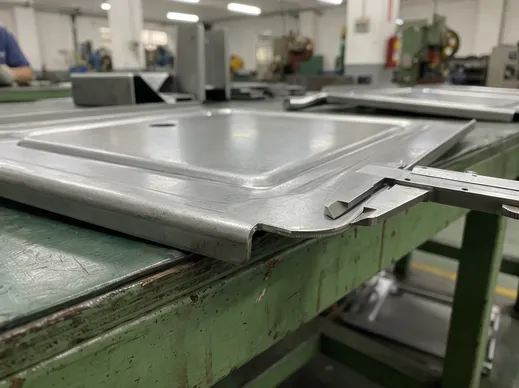
Plate Thickness Rationale
The 1.5–2.0 mm SPCC plate range is the commercial sweet spot. Below 1.5 mm, plate deformation under cyclic load appears in institutional environments — competitor mechanisms at 1.2 mm have failed tilt-pivot fatigue tests before 30,000 cycles. Above 2.0 mm adds weight and cost without meaningful performance gain for this mechanism type.
Targeting correctional facilities or industrial canteens? Ask us about the reinforced-gauge option.
Buyer Segments
Market Segments: Where Simple Mechanisms Generate Volume
Simple mechanisms aren't a compromise — they're the right specification for the highest-volume seating categories globally. Here's where they fit and why buyers in each segment source them at scale.

Institutional and Education Seating
Schools, universities, government offices, and healthcare facilities buy seating on annual procurement budgets — 200 to 2,000 units per order, repeat annually. These buyers specify durability and low maintenance, not adjustability. A simple mechanism with a fixed back angle and a robust tilt-lock is exactly what an institutional spec calls for.
Predictable reorder cycles make this segment reliable recurring revenue for distributors on the approved vendor list.

Budget Office and Task Seating
The sub-$100 task chair segment is the highest unit-volume tier in office seating globally. Mechanism cost is a direct input to your landed cost per chair, and a simple mechanism keeps that number where it needs to be. Your downstream buyers — office supply chains, e-commerce sellers, small business furniture dealers — are moving these chairs on price.
Your margin depends on sourcing the mechanism at the right cost without generating warranty returns.

Visitor and Guest Seating
Fixed-back visitor chairs for reception areas, waiting rooms, and conference rooms use simple mechanisms or no mechanism at all. When a mechanism is specified, it's typically for a slight recline or a fixed tilt angle — exactly what this product provides. Contract furniture dealers supplying commercial fit-outs order these in project quantities: 50–300 units per project, with repeat orders as clients expand or refurbish.

OEM Budget Seating Lines for Export
Furniture manufacturers in Southeast Asia, the Middle East, and Eastern Europe building chairs for local or regional markets often need a reliable, low-cost mechanism source. Simple mechanisms are the highest-volume component in these lines. If you're manufacturing chairs for export to price-sensitive markets, the mechanism unit cost and consistency across production runs are your two primary sourcing criteria — both of which we address directly.
Manufacturing Standards
Why Mechanism Simplicity Doesn't Mean Quality Compromise
The most common problem with budget mechanisms sourced from low-tier suppliers isn't the design — it's the execution. Thin plate stock that deforms under load. Weld cracking at the tilt pivot after 15,000–20,000 cycles. Powder coat that flakes within months because the pre-treatment step was skipped to cut cost. These failures don't show up in the factory. They show up in your customer's warranty queue six months after delivery.
We build simple mechanisms on the same production infrastructure as our synchro and ergonomic units. The same progressive die presses, the same phosphate pre-treatment before powder coat, the same 100% functional test before packaging. The design is simpler; the manufacturing standards aren't.

Tilt Pivot Welding
MIG-welded with verified penetration depth. The tilt pivot is the highest-stress point on any chair mechanism — we don't spot-weld it and hope. Representative units from each production run complete 60,000-cycle fatigue testing at rated load before the batch ships.
Plate Stamping
Progressive die stamping from SPCC coil stock. Mounting hole patterns hold ±0.15 mm across a production run, so your assembly line uses fixed jigs without per-piece adjustment.
Surface Treatment
Zinc plating standard on this mechanism type. For buyers who need powder coat — coastal markets, humid climates, or branded color requirements — we run full phosphate pre-treatment before coating. The pre-treatment step is what separates a coating that survives 500-hour salt spray from one that fails at 150 hours.
Functional Testing
Every unit actuated, locked, and load-checked before packaging. Not batch sampling — every unit.
A simple mechanism from our line gives you a clean warranty record, not a cost saving that turns into a returns problem. Our full manufacturing process is covered on the category page.
Logistics
Packaging, Loading, and Landed Cost
Simple mechanisms are compact and relatively light — this works in your favor on container economics.
Standard Packaging
Individual poly bag + inner carton, 10–20 units per carton depending on configuration.
Carton Dimensions
Approximately 35 × 30 × 15 cm per 10-unit carton. Varies by configuration — confirm during quoting.
Container Loading
A 40HQ container typically holds 8,000–12,000 simple chair mechanisms depending on carton configuration. Confirm exact loading count during quoting.
Palletization
Available on request for buyers receiving at warehouse facilities with forklift access.
E-Commerce & FBA Fulfillment
The compact form factor makes simple mechanisms well-suited for e-commerce fulfillment channels. If you're supplying Amazon FBA or similar warehouse programs, we can discuss FBA-compliant labeling and packaging on runs over 1,000 units.
Buyer Questions
Frequently Asked Questions
What is the difference between a simple chair mechanism and a standard tilt mechanism?
A standard tilt mechanism pivots the seat and backrest together with spring-tension adjustment — the user can set resistance to their body weight. A simple mechanism typically offers a fixed back angle or a single-position tilt lock with no tension adjustment. The functional difference is one adjustment feature; the cost difference is meaningful at volume. For seating lines where the end user doesn't need to tune the tilt resistance — visitor chairs, institutional seating, budget task chairs — the simple mechanism is the right spec. If your market expects tension adjustment, step up to the standard tilt.
What load rating should I specify for institutional use?
For standard commercial and institutional environments (schools, offices, healthcare), a 100–120 kg static load rating covers the vast majority of end users and meets typical procurement specs. For environments with above-average physical demands — industrial canteens, correctional facilities, some healthcare applications — specify the reinforced 2.0 mm plate option and confirm the load rating in writing during quoting. We test to 1.5× rated load on a statistical sample basis, so the structural margin is documented.
Can I mix simple chair mechanisms with other mechanism types in one order?
Yes. We produce on dedicated lines, so different mechanism types run in parallel. A mixed order — say, 1,000 simple mechanisms and 500 standard tilt mechanisms — doesn't extend your lead time compared to ordering each type separately. Mixed orders are common for distributors building out a multi-SKU inventory position. MOQ applies per type: 500 units minimum per mechanism type.
What's the typical warranty claim rate on simple chair mechanisms?
We don't publish a specific figure, but the design and testing protocol is built to prevent the failure modes that generate claims: tilt pivot fatigue cracking (addressed by MIG welding with penetration verification and 60,000-cycle testing), surface treatment failure (addressed by phosphate pre-treatment), and mounting hole drift (addressed by progressive die stamping at ±0.15 mm). If you're currently seeing warranty returns on mechanisms from another supplier, tell us what's failing — we can usually identify the root cause and confirm whether our process addresses it.
What is the MOQ and lead time for simple chair mechanisms?
500 units minimum. 20–30 days from order confirmation. Sample orders (2–5 units) are available before committing to production quantities — samples ship within 7–10 days of order confirmation.
Custom mounting patterns or non-standard surface treatments: 1,000 units minimum, 25–35 days from order confirmation.