Australia's furniture import market runs on a tight margin. Motion mechanisms — recliner linkages, sofa bed frames, lift-top table fittings, chair tilt hardware — are a specialized sub-category where most importers either source through a local distributor or go direct to a Guangdong factory. Both routes work. The question is which one works for your volume, your timeline, and your margin target.
This article maps the real supplier landscape: who the serious local players are, what they're good for, where the convenience premium shows up in your landed cost, and when a factory-direct relationship starts making more financial sense than a local account.

What Serious Buyers Check Before Placing a Mechanism Order
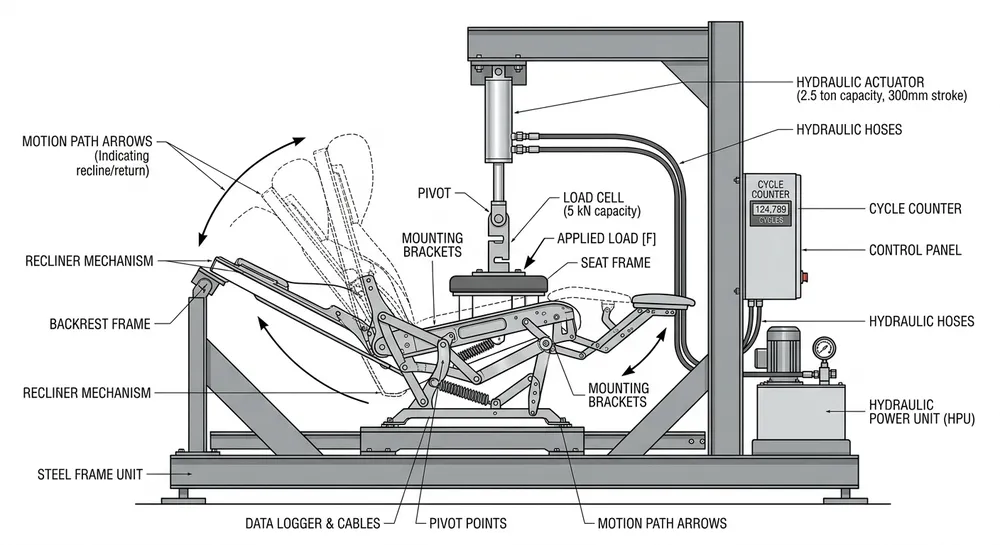
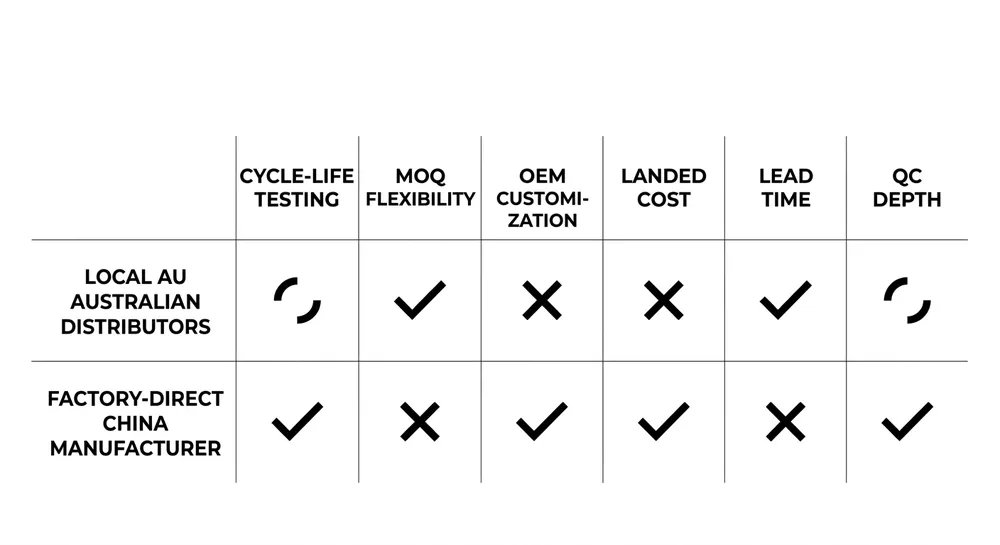
Before the supplier list, the evaluation criteria. Motion mechanisms fail in ways that are expensive downstream — a recliner linkage that binds after 8,000 cycles, a sofa bed frame that develops lateral play after six months of retail floor use, a lift-top fitting that loses its gas-spring tension in Queensland humidity. Your supplier's QC process is the only thing standing between your container and a warranty claim wave.
The criteria that separate reliable suppliers from the rest:
- Cycle-life testing: Mechanisms should be tested to rated cycle counts before shipment — 20,000 cycles minimum for recliner linkages in residential use, 50,000+ for commercial. Ask for test reports, not just spec sheets.
- Material traceability: Cold-rolled steel grade, zinc alloy composition for die-cast components, spring wire tensile rating. A supplier who can't tell you the steel grade is sourcing from whoever is cheapest that week.
- Surface treatment consistency: Powder coat adhesion at weld seams is the most common failure point. Nickel and zinc plating thickness should be specified and verified, not assumed.
- MOQ flexibility: If you're building a product line, you need a supplier who can run 500-unit batches on standard SKUs without forcing you into 5,000-unit commitments.
- OEM tooling capability: Custom bracket geometry, modified travel range, private-label packaging — these require in-house tooling, not outsourced fabrication.
Keep these criteria in front of you as you read through the supplier profiles below.
The Local Supplier Landscape
These are the real companies operating in the Australian furniture hardware and mechanism space. Most are distributors or importers rather than manufacturers — which matters when you're evaluating quality control depth and customization capability.
—
1. Häfele Australia hafele.com.au Häfele is the most established furniture hardware distributor in Australia, with a broad catalogue covering hinges, drawer systems, and motion fittings. Their local warehousing means fast replenishment on standard SKUs. For motion mechanisms specifically, their range is solid for residential-grade applications. The trade-off: you're buying from a distributor's catalogue, not specifying to a factory — customization is limited and pricing reflects the distribution margin.
—
2. Sugatsune Australia sugatsune.com/en-au Japanese-origin precision hardware, distributed locally. Sugatsune's motion fittings — lid stays, flap fittings, soft-close mechanisms — are well-regarded for tight tolerances and consistent finish quality. Strong choice for premium furniture lines where the mechanism spec is a selling point. MOQs and pricing sit at the higher end; not the right fit for volume commodity orders.
—
3. Blum Australia blum.com/au Blum is the dominant name in soft-close and motion hardware for kitchen and cabinet furniture in Australia. Their AVENTOS lift systems and SERVO-DRIVE range are widely specified by cabinet makers. For sofa and seating mechanisms, Blum's catalogue is narrower — they're a cabinet hardware specialist, not a full motion mechanism supplier. Worth knowing for the overlap category, not a primary source for recliner or sofa bed hardware.
—
4. Hettich Australia hettich.com/en-au Another German-origin hardware brand with strong local distribution. Hettich covers drawer systems, hinges, and some motion fittings. Similar profile to Blum — strong in cabinet and storage hardware, thinner in seating and sofa mechanism categories. Local stock availability is a genuine advantage for cabinet hardware projects on tight timelines.
—
5. Hardware & General (H&G) hardwareandgeneral.com.au A broad-line Australian hardware distributor supplying furniture manufacturers and joiners. Their motion mechanism range is more general-purpose — functional for standard applications, less suited to buyers who need specific cycle-life ratings or custom geometry. Useful for emergency replenishment and small-batch orders where speed matters more than specification depth.
—
6. Kethy Australia kethy.com.au Kethy supplies furniture hardware to the Australian trade, including some motion fittings and lift systems. Their catalogue covers both European-brand products and more cost-accessible alternatives. A practical option for furniture manufacturers who need a single-source local account across multiple hardware categories.
—
7. Doorware Australia doorware.com.au Primarily a door and cabinet hardware supplier, but their range extends into furniture motion fittings. Useful for buyers who are already sourcing door hardware locally and want to consolidate suppliers. Not a specialist motion mechanism source.
—
8. Allegris (formerly Grass Australia) allegris.com.au Austrian-origin motion hardware, distributed in Australia. Grass/Allegris is known for precision drawer and hinge systems. Their TIOMOS hinge range and some motion fittings are specified in premium cabinetry. Similar positioning to Blum and Hettich — strong in cabinet hardware, limited in seating mechanism categories.
—
9. Demmler Hardware demmler.com.au An Australian hardware supplier with a trade focus, covering furniture fittings including some motion hardware. Useful for local trade accounts needing mixed hardware orders with fast local delivery.
—
10. Richelieu Hardware Australia richelieu.com Canadian-origin hardware distributor with Australian operations. Richelieu carries a wide furniture hardware catalogue including some motion and lift fittings. Their strength is catalogue breadth and local stock depth across multiple hardware categories. For motion mechanisms specifically, they're a generalist distributor rather than a specialist supplier.
—
What Local Distribution Actually Costs You
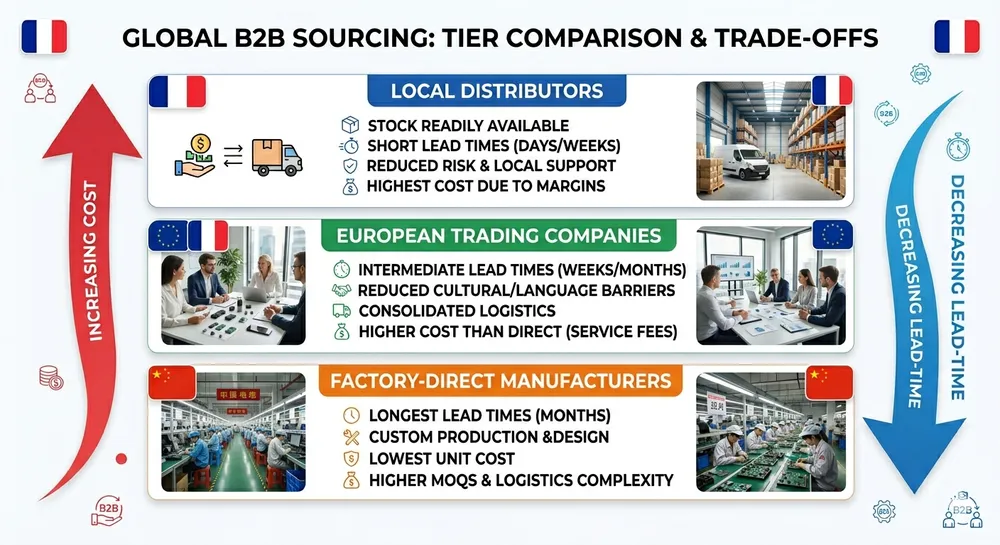
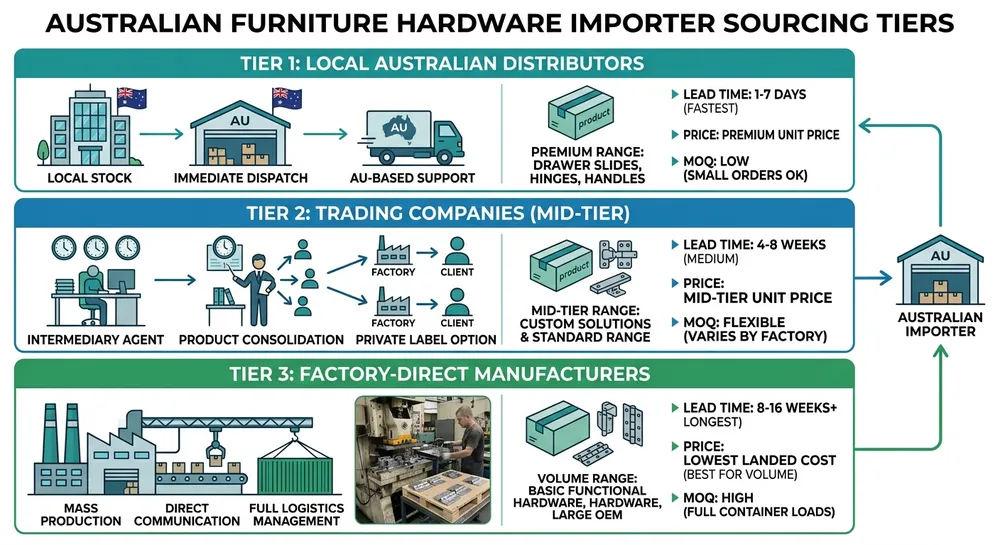
The suppliers above are real businesses with genuine advantages. Local warehousing means you can replenish a 200-unit shortfall in days, not weeks. Familiar communication, local invoicing, no customs complexity — these are real operational benefits, especially for smaller orders or urgent project timelines.
But the cost structure is worth understanding clearly.
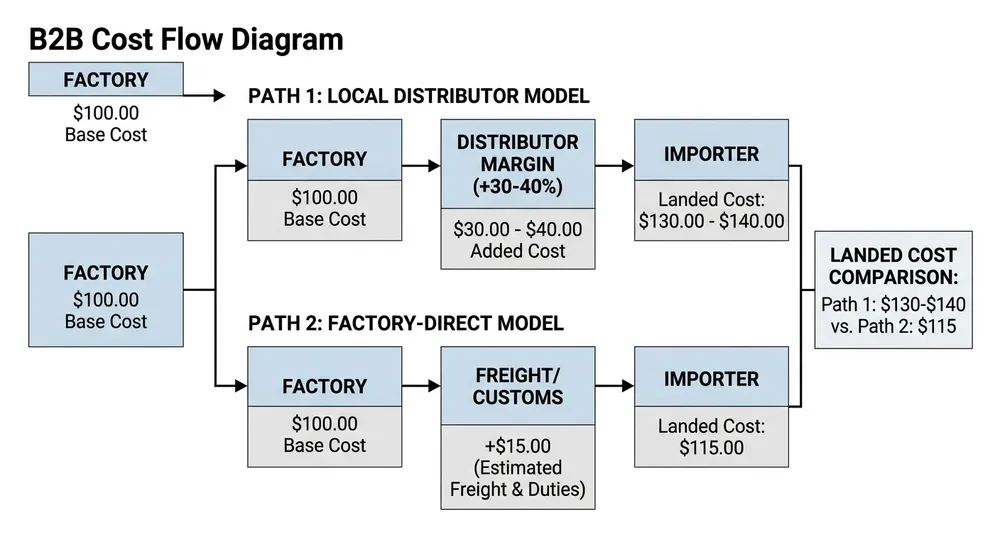
Every local distributor is buying from a manufacturer — usually in Europe or China — and adding their margin before it reaches you. For commodity mechanism SKUs, that distribution layer typically adds 25–45% to the ex-factory price. On a container-scale order, that's a significant number. On a 3,000-unit annual program, it can represent the difference between a competitive landed cost and a margin problem.
The other constraint is customization. When you're buying from a distributor's catalogue, you're buying what they stock. Custom bracket geometry, modified travel range, specific surface finish, private-label packaging — these require a direct factory relationship. A distributor can't tool a custom component for you; they can only offer what their supplier already makes.
(We've had Australian buyers come to us after years of local sourcing, not because the local supplier was bad, but because their product line had evolved past what a catalogue could support. That's a natural transition point.)
For urgent small orders, emergency replenishment, or projects where local compliance timing is the constraint — local distribution is often the right answer. The economics only shift when volume and specification depth start to matter.
When Factory-Direct Import Changes the Calculation
At repeat volume — typically 500+ units per SKU per order — the economics of factory-direct sourcing become hard to ignore. You're removing the distribution margin, specifying directly to the production line, and building a supplier relationship that can support product development, not just replenishment.
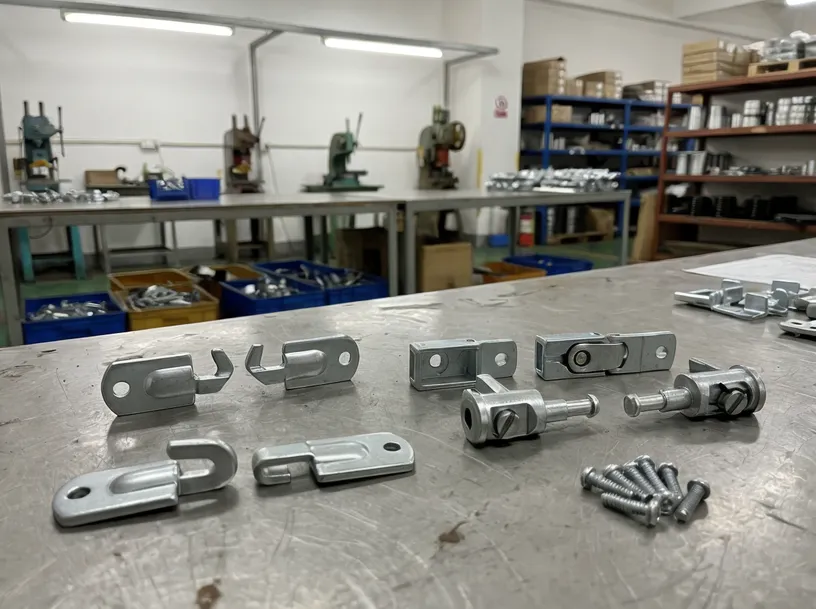
We've been manufacturing furniture motion mechanisms in Guangdong since 2008. Our facility runs 6 production lines across 12,000 square meters, with an annual capacity of 3,000,000 units. That scale means your 2,000-unit order doesn't queue behind a larger customer's run — we have the line capacity to schedule it properly.
The capabilities that matter most for Australian importers:
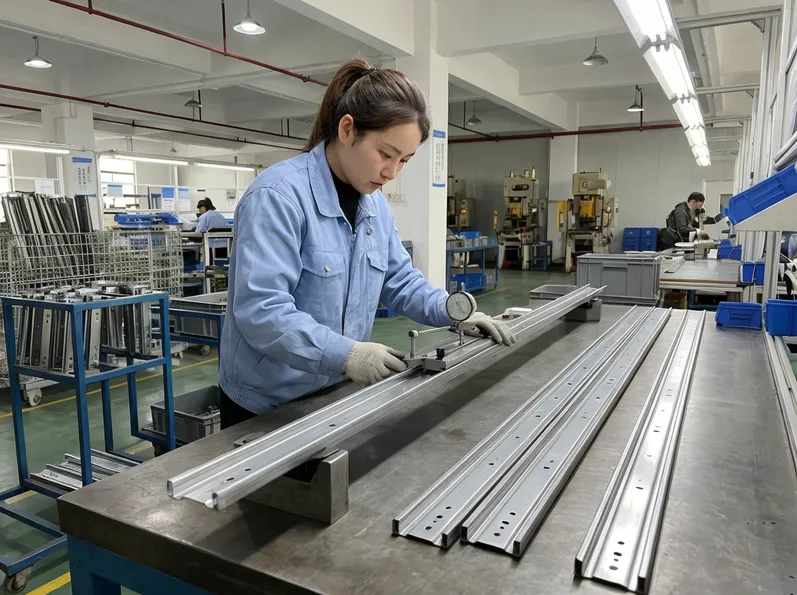
Precision stamping and zinc alloy die-casting — the two processes that determine whether a mechanism holds tolerance across its rated cycle life. We run progressive die stamping in-house, which means tighter dimensional consistency than outsourced stamping and faster tooling turnaround for custom components. Die-cast zinc alloy brackets are produced on-site with composition verification — we don't accept mill substitutions on structural components.
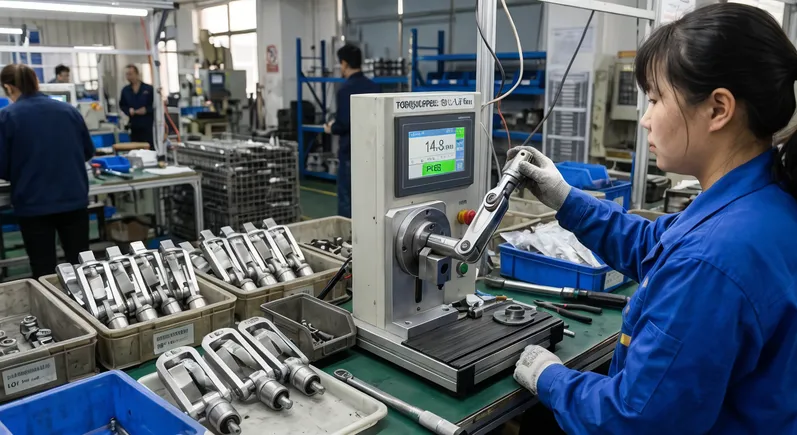
100% functional testing before shipment — every mechanism is tested for smooth operation, load capacity, and cycle function before it's packed. We also run load-cycle verification on batch samples: recliner linkages are tested to 25,000 cycles as standard, with extended 50,000-cycle testing available for commercial-grade specifications. (This is the test that catches spring fatigue and pivot wear before your customer does.)
Surface treatment lines — nickel plating, zinc plating, and powder coating all run in-house. Powder coat thickness is held at 60–80μm with pre-treatment at every weld seam — the adhesion failure point that most contract coaters skip. Salt spray testing to 500 hours is standard on plated components.
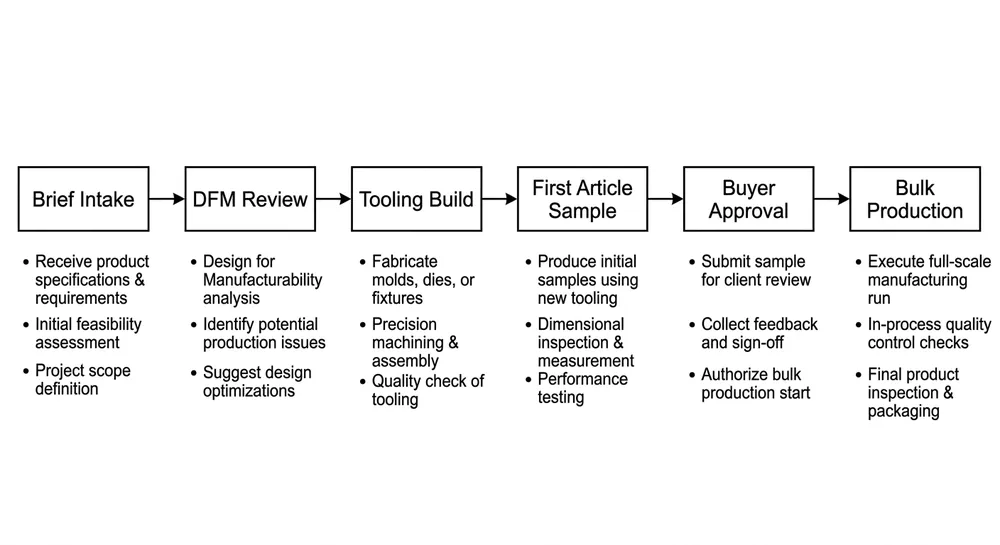
MOQ at 500 units for standard mechanisms — low enough to trial a new SKU without a full container commitment. OEM tooling is available for custom components, with tooling costs that amortize quickly at modest annual volumes.
ISO 9001:2015, CE, SGS, and RoHS certifications — the compliance documentation your retail and commercial customers will ask for. CE marking is particularly relevant for Australian importers selling into commercial furniture specifications where European standards are referenced.
Our 12-person R&D team means we can support product development, not just production. If you're developing a new recliner model or need a modified lift-top fitting for a specific frame geometry, we can work from your drawings or from a sample — and turn around prototype tooling faster than most factories in this category.
Matching Your Sourcing Route to Your Order Profile
Neither route is universally better. Here's how to think about it:
Use local distribution when:
- You need replenishment in under 2 weeks
- Your order is under 200 units and doesn't justify freight economics
- You're in a project with a fixed compliance deadline and no time for import lead time
- You're trialling a new mechanism category before committing to a direct supplier relationship
Consider factory-direct when:
- You're ordering 500+ units of the same SKU on a repeating basis
- You need custom geometry, modified specifications, or private-label packaging
- Your current local supplier can't provide cycle-life test reports or material traceability documentation
- Your landed cost is compressing your margin on a competitive product line
- You're building a product range that needs consistent batch quality across multiple orders
The transition point for most Australian importers we work with is around 1,000–2,000 units annually per SKU. Below that, local convenience often wins on total cost when you factor in freight, lead time, and working capital. Above it, the factory-direct economics become compelling — and the customization capability starts opening product development options that a distributor catalogue can't offer.
Sourcing Criteria Checklist for Your Supplier Evaluation
Before you commit to any supplier — local or direct — run through this:
- [ ] Can they provide cycle-life test reports for the specific mechanism, not just a generic spec sheet?
- [ ] What steel grade and zinc alloy composition are used in structural components?
- [ ] What is the powder coat or plating thickness specification, and how is it verified?
- [ ] What is the actual MOQ for your target SKU, and what happens at reorder?
- [ ] Can they support OEM tooling if your product line evolves?
- [ ] What certifications are current and available for documentation (ISO, CE, SGS, RoHS)?
- [ ] What is the realistic lead time from order confirmation to container loading?
- [ ] Have you seen a sample batch, not just a showroom sample?
(The last point matters more than most buyers realize. A showroom sample is the best unit the factory has ever made. A production batch sample tells you what your container will actually contain.)
Frequently Asked Questions
What is the minimum order quantity for furniture motion mechanisms from a China factory? For standard catalogue mechanisms — recliner linkages, sofa bed frames, lift-top fittings — 500 units per SKU is a workable MOQ with most serious Guangdong manufacturers. Below 500 units, the production scheduling economics don't work well for either side. For custom OEM components requiring new tooling, the MOQ conversation is separate from the tooling cost conversation — ask for both numbers upfront.
How do I verify cycle-life ratings for recliner and sofa mechanisms? Ask for the test report, not the spec sheet. A credible manufacturer will have documented cycle-life test results — typically 20,000–50,000 cycles depending on the mechanism type and intended use. The test should specify load weight, cycle speed, and the pass/fail criteria. If a supplier can only provide a spec sheet with a cycle-life number but no test documentation, treat that number as unverified.
What certifications should furniture motion mechanisms have for the Australian market? CE marking is the most commonly referenced standard in Australian commercial furniture specifications, particularly for mechanisms used in contract or hospitality furniture. ISO 9001:2015 covers the manufacturer's quality management system. SGS and RoHS are relevant for buyers whose downstream customers have environmental compliance requirements. For residential furniture, the compliance bar is lower — but having CE-certified mechanisms gives you documentation headroom if your retail customers ask.
What causes recliner mechanisms to fail prematurely? Three failure modes account for most warranty claims: spring fatigue (under-spec wire tensile rating), pivot wear (insufficient hardness on bearing surfaces), and powder coat delamination at weld seams (inadequate pre-treatment before coating). A supplier who tests to 25,000+ cycles before shipment and uses pre-treated weld seams eliminates the first and third failure modes. Ask specifically about pivot surface hardness treatment — this is where cheaper mechanisms cut corners.
When does it make sense to switch from a local Australian supplier to factory-direct import? The economics typically shift at 500–1,000 units per SKU per order. Below that, local warehousing and short lead times often offset the price premium. Above it, the distribution margin you're paying starts to represent real money — and the customization limitations of a catalogue supplier start to constrain your product development. The clearest signal is when you find yourself repeatedly asking your local supplier for a specification they can't provide.
—
If your current mechanism sourcing is hitting a ceiling — on cost, on specification depth, or on customization — the furniture motion mechanism category page covers our full product range. If you're ready to compare landed costs against your current supplier, send us your requirements with your target SKU, annual volume, and any custom specifications. We'll come back with a detailed quote and, if it's useful, a sample shipment so you can test the product before committing to a full order.