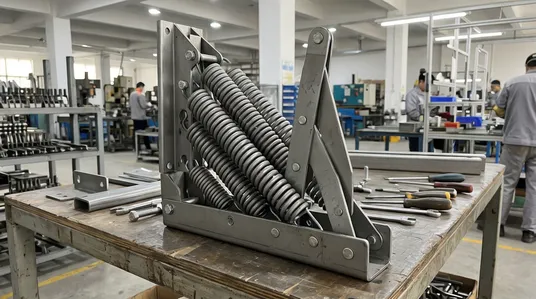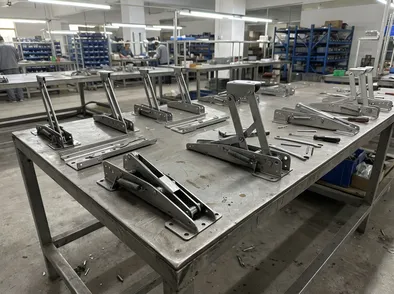
The mechanism is the part of the furniture that fails. Not the fabric, not the frame finish — the tilt lock that stops engaging, the recliner linkage that binds at 120 degrees, the sofa bed hinge that develops play after six months of daily use. When that happens, the warranty claim lands on your desk, not the factory's.
US importers sourcing furniture motion hardware face a specific problem: quality is invisible until the container arrives. You can't feel the tilt resistance on a spec sheet. You can't hear a sticky lock engagement in a product photo. And most of the sourcing channels available to US buyers — Alibaba listings, trading company catalogs, industry directories — are optimized for discovery, not for the kind of technical evaluation that separates a 50,000-cycle mechanism from one that fails at 8,000.
This guide covers 10 real suppliers active in the furniture motion mechanism space, explains what separates supplier models from each other, and gives you a framework for evaluating any supplier before you commit to a container.

How to Evaluate a Furniture Motion Mechanism Supplier Before You Order
Most supplier evaluation in this category stops at price and MOQ. That's the wrong filter. A mechanism priced 18% lower than market is irrelevant if it generates a 4% RMA rate on your first container — the warranty cost and customer relationship damage will exceed the unit savings inside six months.
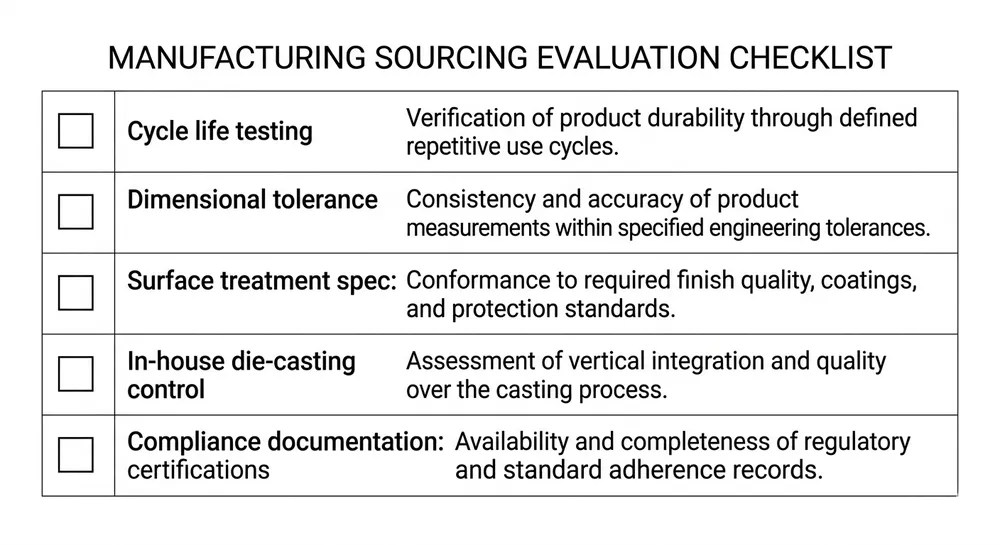
Here are the five criteria that actually separate reliable suppliers from the rest:
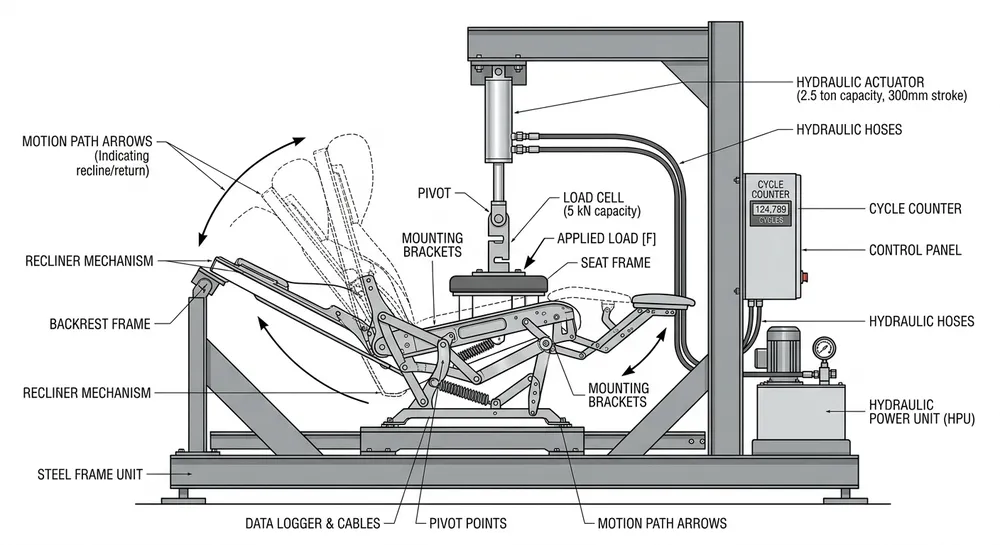
1. Cycle-life testing standard The minimum credible benchmark for commercial furniture mechanisms is 50,000 cycles for chair tilt mechanisms and 30,000 cycles for recliner linkages. Ask for the test report, not just the claim. A supplier who can't produce a third-party or in-house cycle-life test report is telling you something important about their QC infrastructure. (Some trading companies will send you a test report from a different product or a different batch — ask for the report to reference the specific model number you're ordering.)
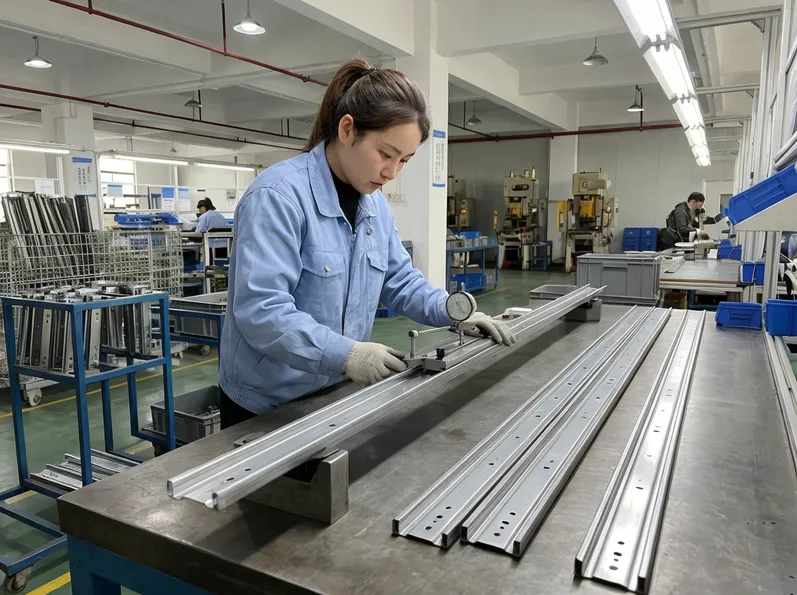
2. Dimensional tolerance on stamped components Mechanism plates and linkage arms formed to loose tolerances cause assembly variation — the kind that shows up as inconsistent tilt feel across a production batch, or mounting holes that don't align with your chair base. Specify ±0.15mm or tighter on structural stamped parts and ask how the supplier verifies it. First-article inspection reports and periodic in-process dimensional checks are the answer you want.
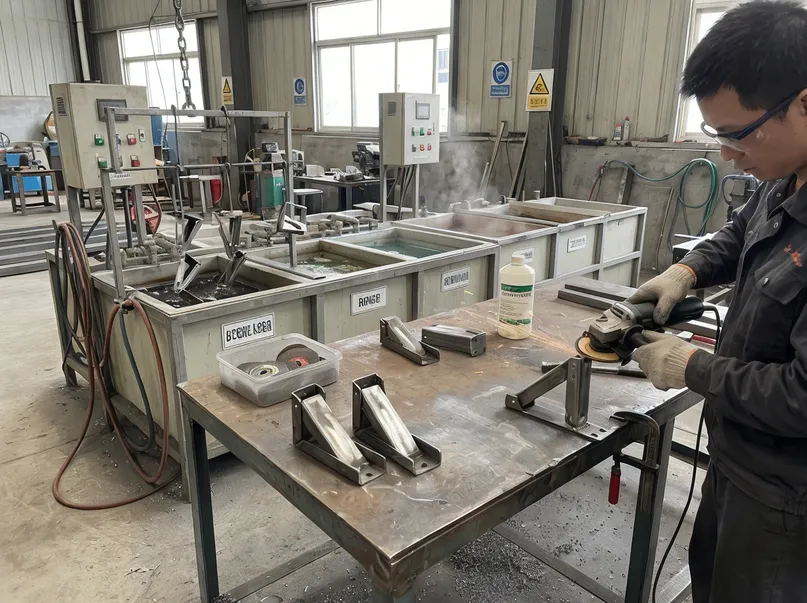
3. Surface treatment specification Powder coating at 45–55μm film thickness will fail salt spray testing above 300 hours. For coastal US markets — Florida, California, the Gulf Coast — that means rust complaints within the first year. Specify 60–80μm minimum and ask for salt spray test results. Nickel and zinc plating on tight-clearance components is a separate question: plating adds dimensional thickness, and a supplier who doesn't account for that in their tolerance stack-up will give you fit problems on assembled mechanisms.
4. In-house die-casting vs. outsourced The die-cast components in a furniture mechanism — adjustment knobs, tension collars, decorative covers — are where most quality complaints originate. Dimensional inconsistency and surface defects on die-cast parts are harder to control when the process is outsourced to a third-party foundry. A supplier with in-house die-casting owns the fix when something goes wrong. A supplier who outsources it has to negotiate with their own vendor on your timeline.
5. Compliance documentation readiness CE declaration of conformity, SGS test reports, and RoHS compliance documentation are not just European requirements. US retailers with EU cross-listing need them. California Prop 65 compliance is a separate question for surface treatment chemicals. Ask whether these documents ship with the order or require a post-shipment chase — the answer tells you how organized the supplier's export operation actually is.
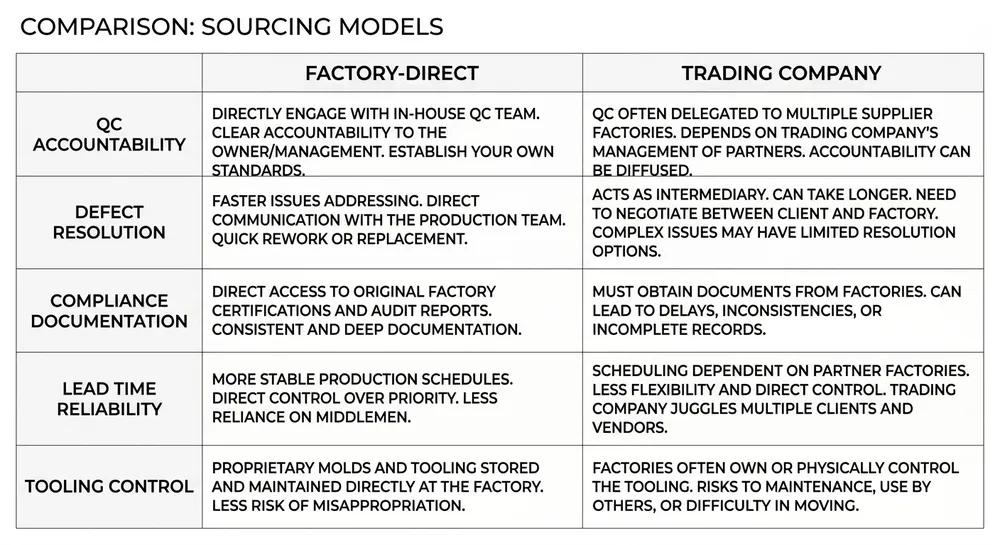
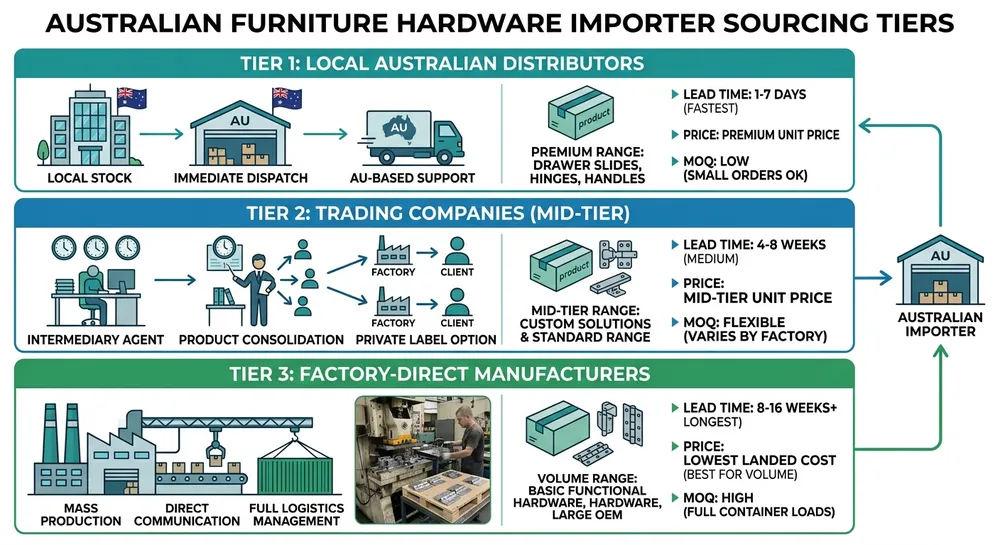
Factory-Direct vs. Trading Company: What the Difference Costs You
This distinction matters more in mechanism hardware than in most furniture categories, because the failure modes are technical and the accountability chain is short.
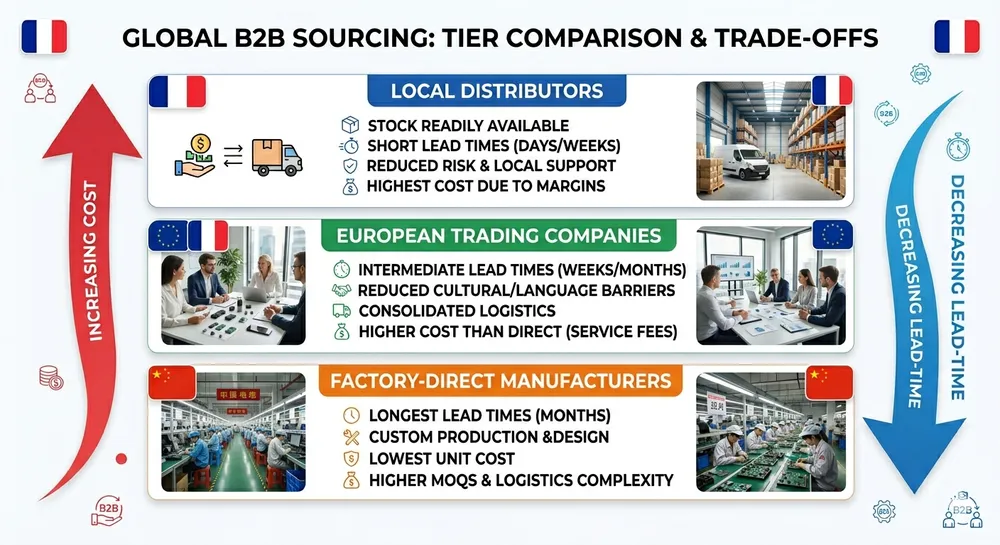
A trading company sources from one or more factories, marks up the price, and manages the commercial relationship. They may have good supplier relationships and genuine category knowledge. What they don't have is control over the production floor. When a batch of recliner linkages arrives with inconsistent pivot geometry, the trading company's resolution path runs through their factory contact — who may or may not prioritize a replacement run for a mid-size US importer. Your leverage in that conversation is limited.
A factory-direct supplier owns the process from raw material to outgoing container. When something is wrong, the fix is on their floor. They can pull the in-process inspection records, identify which stamping run the defective parts came from, and tell you exactly what changed. That traceability is what makes defect resolution fast instead of circular.
The cost difference is real but often misread. Trading companies typically add 15–25% margin on top of factory price. On a $4.50 mechanism, that's $0.68–$1.13 per unit — which sounds small until you're ordering 20,000 units per quarter. At that volume, the factory-direct saving funds a meaningful portion of your freight cost. The more important number, though, is the cost of a defect resolution cycle: air freight for replacement samples, production delay on your customer's order, and the relationship cost with your downstream buyer. Factory-direct accountability reduces that risk structurally, not just economically.
There are scenarios where a trading company makes sense: you need a small mixed order across multiple product categories, you're testing a new market with low initial volume, or you need a local US-based inventory buffer for emergency replenishment. Acknowledge those cases honestly — and then evaluate whether your repeat-volume procurement should stay on that model.
10 Furniture Motion Mechanism Suppliers Worth Knowing
The suppliers below represent the realistic landscape for US importers sourcing motion hardware. They span different supplier models — dedicated mechanism factories, broad hardware manufacturers, and US-based distributors — so you can see the full range of options and trade-offs.
—
1. MVMHardware (Foshan Jinruida Import & Export Co., Ltd.) Website: mvmhardware.com Supplier type: Dedicated mechanism factory, factory-direct
17 years manufacturing exclusively furniture motion hardware — chair tilt mechanisms, recliner linkages, sofa bed frames, lift-top table fittings, and hinge systems. 12,000 m² facility in Guangdong with 6 dedicated production lines and 3,000,000 units/year capacity. In-house zinc alloy die-casting, progressive die stamping to ±0.15mm, and 100% functional testing per unit before shipment. CE, SGS, RoHS, and ISO 9001:2015 certified. MOQ 500 units for standard catalog items; OEM/ODM with in-house tooling. Standard lead time 25–35 days to US ports. Ships factory-direct with full HTS-ready documentation.
—
2. Leggett & Platt Website: leggett.com Supplier type: US-based diversified manufacturer
One of the largest furniture component manufacturers in North America, with a long history in recliner mechanisms, motion sofa hardware, and seating components. Supplies major US furniture brands directly. Strong for buyers who need domestic supply chain, US-based account management, and established compliance documentation for the North American market. Lead times and MOQ structures reflect a large industrial supplier — less flexible for smaller importers or custom configurations.
—
3. Seatcraft / Seatcraft Components Website: seatcraft.com Supplier type: US-based motion furniture brand and component supplier
Known primarily as a finished home theater and recliner brand, Seatcraft also operates in the motion hardware supply space for OEM customers. Relevant for buyers targeting the home theater seating and power recliner segment in the US market. Useful reference point for understanding US market mechanism specifications and consumer expectations in the premium recliner category.
—
4. Hettich Website: hettich.com Supplier type: German precision hardware manufacturer, global distribution
Hettich is a major European furniture hardware manufacturer with strong US distribution. Their product range covers hinge systems, drawer runners, and lift mechanisms — relevant for lift-top table and cabinet motion hardware rather than seating mechanisms. Strong compliance documentation (CE, REACH) and consistent dimensional quality. Higher price point than Asian-sourced alternatives; relevant for buyers whose customers require European-origin hardware or premium brand association.
—
5. Sugatsune (Lamp) Website: sugatsune.com Supplier type: Japanese precision hardware manufacturer, US distribution
Sugatsune manufactures precision motion hardware including lid stays, flap fittings, and specialty hinge mechanisms. US distribution through their American subsidiary. Relevant for buyers sourcing high-tolerance motion hardware for premium furniture applications — not a volume mechanism supplier, but a credible source for specialty motion components where dimensional precision and finish quality are the primary criteria.
—
6. Blum Website: blum.com Supplier type: Austrian hardware manufacturer, global distribution
Blum is the dominant supplier in soft-close hinge and drawer runner mechanisms globally, with strong US distribution and a well-established dealer network. Relevant for buyers sourcing cabinet and storage furniture motion hardware. Their AVENTOS lift system covers a range of cabinet door motion applications. Like Hettich, Blum sits at a premium price point — the trade-off is consistent quality, strong US after-sales support, and compliance documentation that satisfies most retail buyers without additional verification.
—
7. Foshan Nanhai Baina Furniture Hardware Co., Ltd. Website: bainahardware.com Supplier type: Chinese furniture hardware manufacturer
Foshan-based manufacturer covering a range of furniture hardware including sofa mechanisms and recliner components. Active on Alibaba and Made-in-China with export history to multiple markets. Relevant as a volume-oriented option for buyers sourcing sofa motion hardware at competitive price points. Standard due diligence applies: request cycle-life test reports, dimensional inspection records, and compliance documentation before committing to a container.
—
8. Guangdong Dongli Hardware Co., Ltd. Website: donglihardware.com Supplier type: Chinese furniture hardware manufacturer
Guangdong-based manufacturer with a product range covering chair mechanisms, recliner linkages, and sofa hardware. Exports to North America and Europe. Representative of the mid-tier Foshan cluster supplier — competitive pricing, reasonable product range, variable QC documentation depth. Buyers should verify cycle-life testing standards and surface treatment specs directly before ordering.
—
9. Zhongshan Rongsheng Hardware Co., Ltd. Website: rongsheng-hardware.com Supplier type: Chinese furniture hardware manufacturer
Zhongshan-based hardware manufacturer covering motion furniture components including sofa bed mechanisms and recliner hardware. Active in export markets. Useful as a comparison point for buyers building a supplier shortlist — evaluate against the five-point criteria above before advancing to sample stage.
—
10. King Slide Co., Ltd. Website: kingslide.com Supplier type: Taiwanese precision hardware manufacturer, global distribution
King Slide is a major Taiwanese manufacturer of drawer slides and motion hardware with strong US distribution and OEM relationships with major furniture brands. Relevant for buyers sourcing drawer runner and linear motion hardware for furniture applications. Their precision manufacturing standards and compliance documentation are well-established. Less relevant for seating mechanism categories, but a credible source for storage and case goods motion hardware.
—
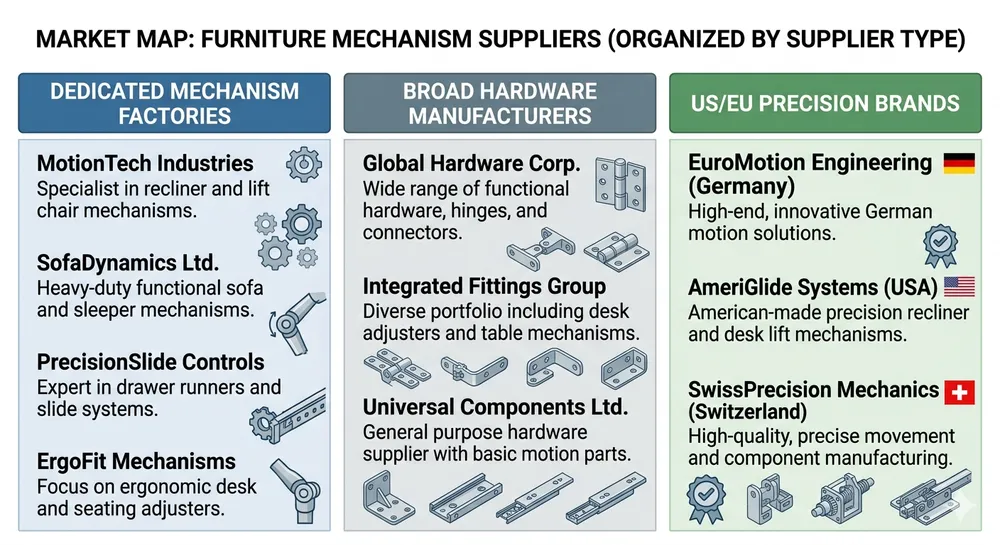
What the Local Supply Landscape Actually Offers
US-based and US-distributed suppliers — Leggett & Platt, Blum, Hettich, Sugatsune, King Slide — offer real advantages that factory-direct China sourcing doesn't replicate easily:
Inventory availability. A US distributor can ship replacement parts within days. If you're running a furniture repair or warranty service operation, that speed has direct commercial value. A 25–35 day ocean freight lead time from China doesn't serve an emergency replacement need.
Domestic account management. English-language communication, US business hours, and a local sales rep who can visit your warehouse — these reduce friction in the sourcing relationship, especially for buyers who are new to importing or who manage complex multi-SKU programs.
Compliance pre-qualification. European brands like Blum and Hettich arrive with CE and REACH documentation already in order. For buyers supplying into retail chains with strict compliance requirements, that pre-qualification reduces your internal compliance workload.
The honest trade-off: US-distributed hardware from European or Japanese manufacturers carries a significant price premium over factory-direct Chinese sourcing — typically 40–80% higher landed cost on comparable mechanism specifications. For buyers whose customers are price-sensitive or whose margins are thin, that premium compresses profitability on every unit sold.
The Foshan cluster suppliers (Baina, Dongli, Rongsheng, and dozens of similar factories) offer competitive pricing but require more active QC management from the buyer's side. Without in-house die-casting, documented cycle-life testing, and 100% functional testing, the quality consistency risk is real — and it's the buyer who absorbs it when a container arrives with a 3% defect rate.
When Factory-Direct from a Dedicated Manufacturer Changes the Economics
The scenario where factory-direct sourcing from a dedicated mechanism manufacturer makes clear financial sense:
- Repeat volume above 2,000 units per order. Below that threshold, the per-unit savings from factory-direct may not offset the logistics management overhead. Above it, the economics shift decisively.
- Consistent SKU program. If you're sourcing the same 3–5 mechanism types on a recurring basis, a factory-direct relationship with a dedicated manufacturer gives you production scheduling priority, locked pricing, and a supplier who knows your spec without re-briefing every order.
- OEM or private-label requirements. Trading companies and distributors can't give you tooling ownership or custom engineering. A factory with an in-house R&D team and in-house tooling can develop a mechanism to your specification, build the tooling, and produce it under your brand — with the tooling owned by you after amortization.
- Compliance documentation depth. If your retail customers require CE, SGS, RoHS, and HTS classification support, a factory that ships these documents with every order reduces your compliance overhead to near zero. A trading company that has to request these from their factory on your behalf introduces delay and uncertainty.
We've shipped to US importers who came to us after two or three container cycles with trading companies — not because the trading company was dishonest, but because the accountability gap on QC issues was too slow and too expensive to manage at scale. The pattern is consistent: the first container is fine, the second has a batch issue, and the resolution cycle takes longer than the buyer's customer relationship can absorb.
(The most common defect we see on mechanisms sourced through trading companies isn't a catastrophic failure — it's dimensional drift on die-cast components that causes inconsistent tilt feel across a batch. It's subtle enough to pass a casual inspection but obvious enough that end users notice. Because the trading company doesn't own the die-casting process, the fix requires a full production re-run, not a process adjustment.)
The Furniture Motion Mechanism Category: What You're Actually Buying
Motion hardware is a precision category. The tolerances that determine whether a recliner feels smooth or notchy, whether a sofa bed deploys cleanly or binds, whether a chair tilt mechanism holds position under load — these are set at the stamping press and the die-casting machine, not at the assembly table.
The rotating furniture mechanism and folding furniture mechanism categories each have their own failure modes and testing standards. A supplier who manufactures both well is running tight process control across different mechanism geometries — that's a meaningful capability signal, not a catalog breadth claim.
When you're evaluating suppliers, ask about the specific mechanism type you're sourcing, not the general product range. A factory that makes excellent chair tilt mechanisms may have weaker process control on sofa bed frames if those run on a shared line with different tooling setups. Dedicated production lines by mechanism category are a structural quality advantage, not a marketing point.
HTS Classification and US Customs Documentation
This is a gap in most sourcing guides for this category, so it's worth addressing directly.
Furniture motion mechanisms typically classify under HTS Chapter 83 (miscellaneous articles of base metal) or Chapter 94 (furniture and parts thereof), depending on whether the mechanism is imported as a component or as part of a finished furniture assembly. The correct classification affects your duty rate and your customs broker's documentation requirements.
A factory-direct supplier with export experience in the US market should be able to provide:
- Material composition documentation (steel grade, zinc alloy spec, surface treatment chemistry)
- Country of origin certification
- Test reports referencing the specific HTS-relevant standards
- RoHS compliance documentation if your downstream customers require it
Ask for these documents before you place your first order, not after the container ships. A supplier who can produce them quickly and accurately has an organized export operation. A supplier who needs two weeks to compile them is telling you something about how your future orders will be managed.
Sourcing Decision Guide: Which Route Fits Your Situation
| Situation | Recommended Route |
|---|---|
| Emergency replacement, <500 units, needed within 2 weeks | US distributor (Blum, Hettich, King Slide depending on mechanism type) |
| First-time import, testing a new mechanism SKU | Small factory-direct trial order (500–1,000 units) with sample verification first |
| Repeat program, 2,000+ units/order, consistent SKU | Factory-direct dedicated manufacturer — lock pricing, production slot, and documentation |
| OEM / private-label mechanism development | Dedicated factory with in-house R&D and tooling — trading companies cannot serve this need |
| Premium retail customer requiring EU compliance docs | Factory with CE/SGS/RoHS documentation ready to ship with order |
| Price-sensitive market, commodity mechanism spec | Foshan cluster factory — apply full 5-point evaluation checklist before committing |
The right answer depends on your order cadence, your customers' compliance requirements, and how much QC management bandwidth you have internally. A buyer with a dedicated sourcing team and the ability to do factory audits has more flexibility than a small importer managing supplier relationships part-time.
For OEM furniture motion mechanism development specifically, the factory-direct route isn't just economically better — it's the only route that gives you tooling ownership, engineering iteration speed, and production accountability on a custom specification.
What to Bring to an RFQ Conversation
The quality of the quote you receive is directly proportional to the specificity of what you send. A vague RFQ ("I need recliner mechanisms, 5,000 units") will get you a vague quote that's useless for comparison.
Send the following:
- Mechanism type and application — chair tilt, recliner linkage, sofa bed frame, lift-top table, etc.
- Target cycle life — 30,000, 50,000, 80,000 cycles? This determines the material spec and testing requirement.
- Load rating — maximum static load and dynamic load if known
- Surface treatment requirement — powder coat color/spec, plating type, or bare steel if downstream painting
- Compliance requirements — CE, RoHS, California Prop 65, or specific retail chain requirements
- Order quantity and frequency — first order volume and expected reorder cadence
- OEM requirements — custom geometry, private label, branded packaging
With that information, a serious factory can come back with a specific product recommendation, a production schedule, and a price that reflects your actual spec — not a catalog price that will change when you add your requirements.