Pick the wrong mechanism type and you'll find out at the worst possible time — after the furniture is upholstered, after it's in the container, after your customer's end-user calls with a complaint. The mechanism is the one component in a recliner that determines whether the whole piece works or doesn't. Everything else is cosmetic.
We've been manufacturing Recliner & Sofa Mechanism hardware since 2008. What follows is how we actually think about mechanism types when a buyer sends us a spec request — the distinctions that matter for sourcing, not the ones that matter for a product brochure.

The Mechanism Taxonomy: Six Types, Real Differences
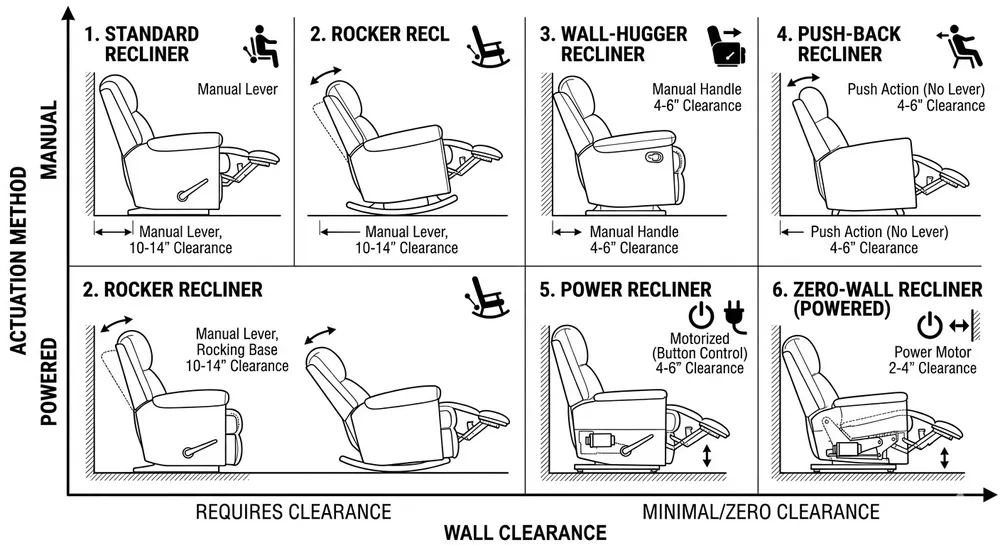
Most consumer-facing content lumps recliner mechanisms into two or three vague categories. From a manufacturing and sourcing standpoint, there are six distinct types with meaningfully different geometry, clearance requirements, load paths, and production tooling. Here's the working taxonomy we use internally:
| Mechanism Type | Actuation | Wall Clearance Required | Typical Load Rating | Cycle Life (typical) |
|---|---|---|---|---|
| Standard (3-position) | Pull-tab / handle | 300–400 mm | 120–150 kg | 50,000+ cycles |
| Wall-hugger | Pull-tab / handle | 80–120 mm | 120–150 kg | 50,000+ cycles |
| Zero-wall (zero-gravity) | Pull-tab / power | 0–50 mm | 130–160 kg | 50,000+ cycles |
| Push-back (no footrest) | Body pressure | None | 100–130 kg | 80,000+ cycles |
| Rocker-recliner | Pull-tab | 250–350 mm | 120–150 kg | 50,000+ cycles |
| Power / electric | Motor actuator | Varies by type | 130–180 kg | 30,000–50,000 cycles |
A few things worth noting in that table. Push-back mechanisms have the longest cycle life because the linkage geometry is simpler — fewer pivot points, less cumulative wear. Power mechanisms carry the highest load ratings but shorter cycle life because the motor and drive screw introduce their own wear variables. We'll come back to both of those.
Standard and Wall-Hugger: The Volume Workhorses
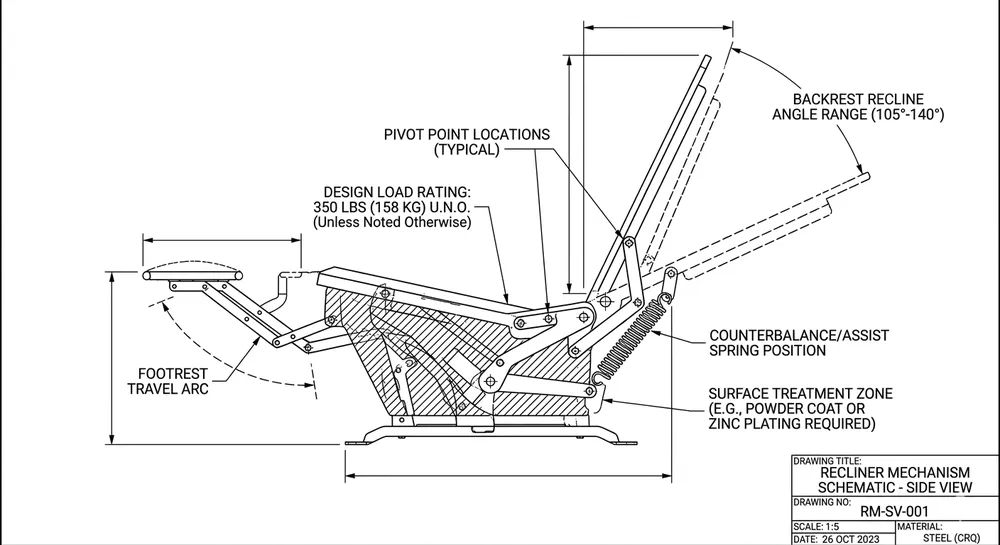
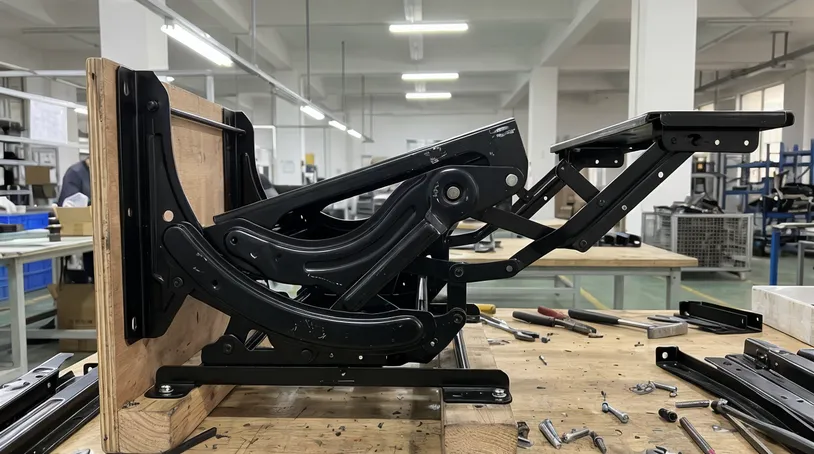
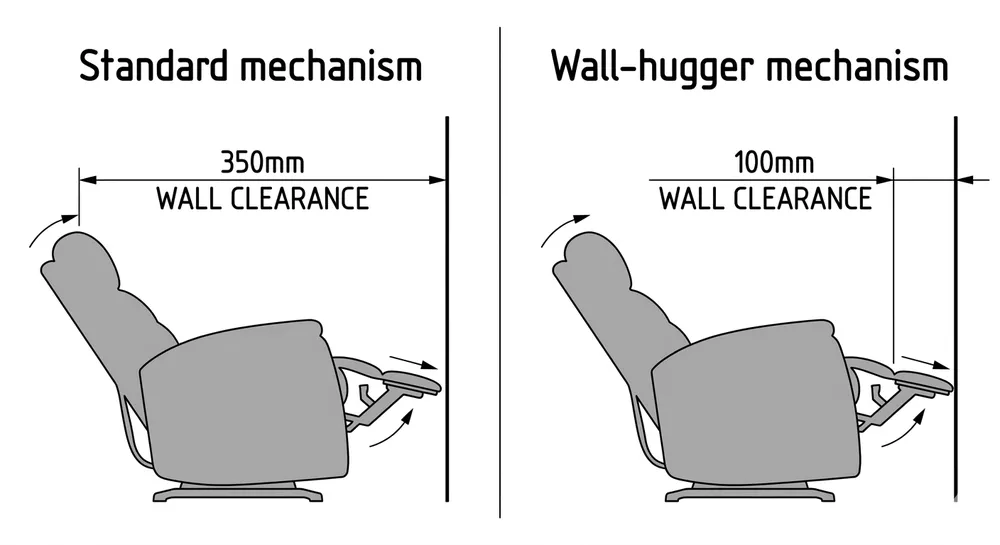
Standard three-position mechanisms are what most of the market runs on. The linkage extends the footrest while the backrest reclines, driven by a side-mounted pull-tab or handle. Wall clearance of 300–400 mm is the main constraint — the chair needs room behind it to recline without hitting the wall.
Wall-hugger mechanisms solve that constraint by reversing the seat's travel direction. As the chair reclines, the seat slides forward rather than the backrest moving backward, so the chair's rear footprint barely changes. The 80–120 mm clearance requirement opens up apartment-scale floor plans that a standard mechanism can't fit.
From a sourcing standpoint, both types share similar steel grades and stamping geometry. We run both on the same production lines using 2.0–2.5 mm cold-rolled steel (SPCC/Q195) for the main linkage arms, with 8–10 mm pivot pins in carbon steel. The difference is in the slide rail assembly on wall-hugger units — that's where quality variation shows up between suppliers. A loose-tolerance slide rail will develop lateral play within 6–12 months of use, which your end customer will feel as a wobble before the mechanism actually fails.
(We switched to a tighter rail tolerance spec — ±0.15 mm on the slide channel — after seeing field returns from a European buyer whose previous supplier had been running ±0.4 mm. The difference in tooling cost is minimal; the difference in warranty claims is not.)
Zero-Wall and Push-Back: Niche Specs with Growing Demand
Zero-wall mechanisms take the wall-hugger concept further. The seat travels far enough forward that the chair can be placed directly against a wall with no clearance at all. The linkage geometry is more complex — typically a four-bar or six-bar linkage with a longer slide rail travel — and the tooling cost reflects that. These are not the right choice for a price-sensitive mass-market SKU, but for hospitality, senior living, and premium residential segments, the space efficiency justifies the cost premium.
Push-back mechanisms are a different animal entirely. There's no footrest extension — the user reclines by pushing back against the backrest, which pivots on a spring-loaded linkage. The simplicity is the point. Fewer moving parts means lower production cost, easier upholstery (no footrest cutout), and the longest cycle life in the category. We see strong demand for push-back mechanisms from buyers targeting the mid-market sofa segment where a reclining function is wanted but a full footrest extension isn't practical for the furniture's proportions.
For buyers sourcing Recliner Chair Mechanism components specifically, push-back is often underspecified relative to its actual market fit. If your target retail price point is under $600 for the finished chair, push-back gives you the reclining feature at a mechanism cost that protects your margin better than a full footrest linkage.
Rocker-Recliner Mechanisms: The Combination Constraint
Rocker-recliner mechanisms combine a rocking base with a standard recliner linkage. The engineering challenge is that the rocking motion and the reclining motion share the same frame, so the pivot geometry has to accommodate both without interference. Get the geometry wrong and the chair rocks unevenly when reclined, or the footrest doesn't clear the floor properly during the rocking arc.
We machine the rocker base brackets to ±0.2 mm tolerance on the pivot bore — tighter than what most stamped-only suppliers can hold — because the cumulative error across the rocking and reclining pivots compounds. A 0.5 mm error at each of three pivot points adds up to visible misalignment in the finished chair.
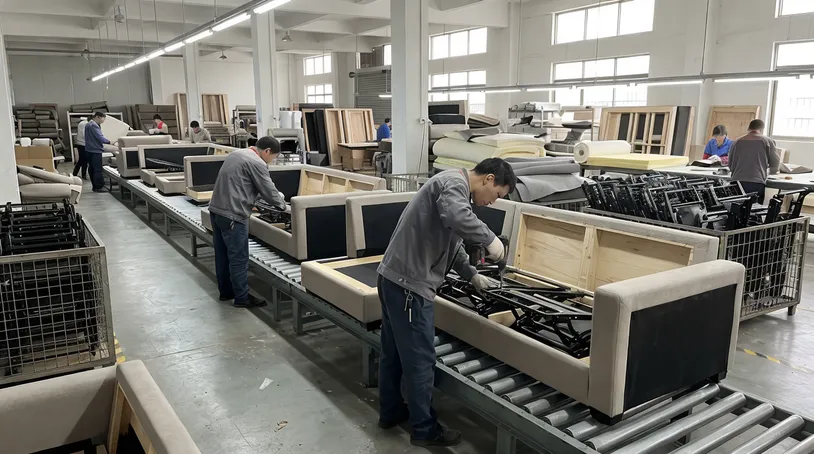
Wall clearance for rocker-recliners is similar to standard mechanisms (250–350 mm), so they carry the same floor plan constraints. The main buyer consideration is whether the rocker base is included in the mechanism assembly or sourced separately. We supply the complete assembly — rocker base, recliner linkage, and footrest — as a single unit, which simplifies your upholstery shop's assembly process and eliminates the fitment risk of mixing components from different suppliers.
Power Recliner Mechanisms: Specs That Actually Matter for Sourcing
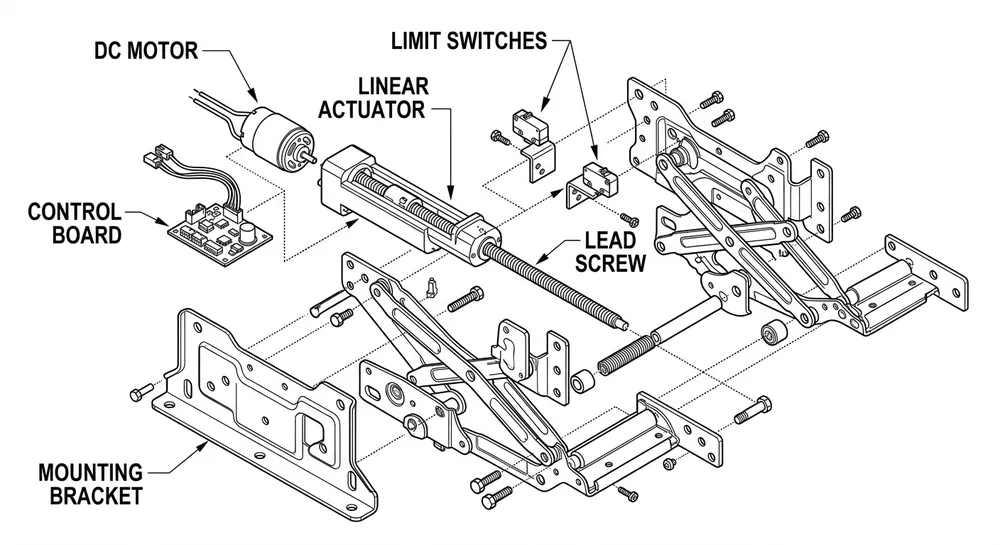
Power mechanisms are where the most sourcing confusion happens, because buyers often focus on the motor spec and underweight the drive system and control electronics. The motor wattage is almost never the failure point. The failure points are the drive screw (thread wear under repeated load cycling), the limit switches (contact fatigue), and the control board (moisture ingress in humid climates).
Our power mechanism assemblies use a 24V DC motor with a 6,000 N linear actuator — sufficient for the 130–180 kg load ratings in the table above. The drive screw is a rolled-thread lead screw rather than a cut-thread, which extends service life significantly under cyclic loading. Control boards are conformal-coated for humidity resistance, which matters for buyers shipping to Southeast Asia, the Middle East, or coastal North American markets.
(Power mechanisms also have the most variation in cycle life claims across suppliers. 50,000 cycles is achievable with a quality actuator; 30,000 is more realistic for budget-tier components. Ask for the actuator brand and model number, not just the cycle life claim.)
CE and RoHS certification on the electrical components is non-negotiable for EU market entry. Our power mechanism assemblies carry both, with SGS audit documentation available for your compliance file.
Structural Specs for RFQ: What to Put in Your Inquiry
Generic RFQ submissions slow everything down. When you send us a mechanism inquiry, the faster path to a useful quote is to include these parameters upfront:
Steel grade and gauge: Most standard mechanisms run on SPCC or Q195 cold-rolled steel at 2.0–2.5 mm for main linkage arms, 1.5–2.0 mm for secondary brackets. If your market requires a specific standard (EN 10130 for Europe, ASTM A1008 for North America), specify it — we can supply mill test certificates.
Load rating: State the intended user weight capacity for the finished furniture, not just "standard." 120 kg, 150 kg, and 180 kg are meaningfully different tooling specs.
Cycle life requirement: 50,000 cycles covers most residential applications. Contract furniture (hotels, senior living, healthcare) typically requires 80,000–100,000 cycles, which changes the pivot pin diameter and bearing material.
Stroke length: For footrest mechanisms, the extended footrest length relative to the seat front edge. Typical range is 380–480 mm. This affects the linkage arm geometry and needs to match your upholstery pattern.
Mounting pattern: Seat frame width and the bolt pattern for mechanism attachment. We can work from your existing frame drawings or supply standard patterns for common frame widths (560 mm, 600 mm, 640 mm).
Surface finish: Nickel plating, zinc plating, or powder coat. Nickel is standard for visible components; powder coat for concealed structural parts where corrosion resistance matters more than appearance.
| Spec Parameter | Typical Range | Why It Matters for RFQ |
|---|---|---|
| Steel gauge (main arms) | 2.0–2.5 mm SPCC | Affects load rating and tooling |
| Pivot pin diameter | 8–12 mm | Determines cycle life under load |
| Footrest stroke | 380–480 mm | Must match upholstery pattern |
| Frame mounting width | 560–640 mm | Determines compatibility with your frame |
| Load rating | 120–180 kg | Drives material and geometry spec |
| Cycle life | 50,000–100,000 | Determines bearing and pin spec |
OEM and ODM: What Can Actually Be Customized
We get a lot of inquiries that treat mechanism hardware as a commodity — same spec, lowest price. Some of it is commodity. But the buyers who build defensible product lines usually want at least one or two custom elements that their competitors can't easily replicate.
For standard and wall-hugger mechanisms, the most common OEM customizations are mounting pattern, stroke length, and surface finish. These are tooling-level changes that we can accommodate on runs of 500+ units with standard MOQ. No new die required for most mounting pattern variations — we adjust the punch tooling.
For zero-wall and power mechanisms, ODM work is more involved. Custom linkage geometry (different recline angle, different seat travel distance) requires new progressive die tooling, which we develop in-house. Our 12-person engineering team handles the CAD work and tolerance stack-up analysis before we cut steel. Tooling lead time is typically 30–45 days for a new die set; production lead time follows from there.
The most commercially useful ODM request we see is custom recline angle combined with a specific footrest height at full extension — this is what senior living and healthcare buyers need to match clinical positioning requirements. We've done several of these for buyers supplying aged care facilities in Australia and the UK, where the positioning spec is part of the procurement contract.
(One thing we're honest about: ODM tooling is an investment that makes sense when you have volume behind it. If you're testing a new SKU at 200 units, start with our standard geometry and confirm the market before committing to custom tooling. We'll tell you the same thing.)
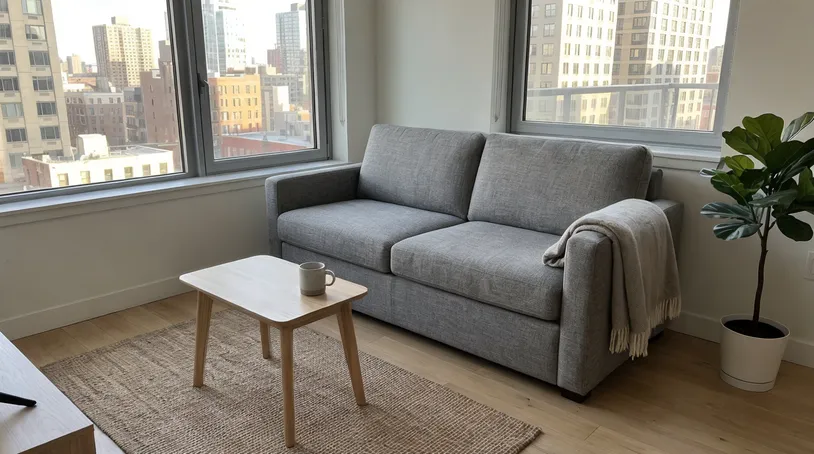
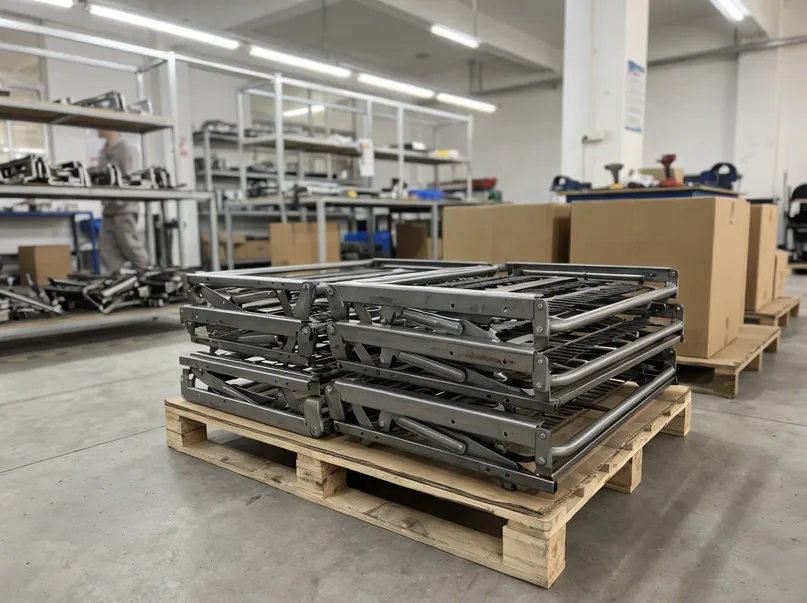
For the Sofa Bed Mechanism category, similar OEM logic applies — frame width, folding geometry, and gas spring force rating are the three variables most buyers want to adjust.
How to Choose the Right Mechanism Type for Your Market
The decision isn't complicated once you know what your buyer's end customer actually needs. Here's how we frame it:
Space-constrained residential (apartments, urban markets): Wall-hugger or zero-wall. The floor plan constraint is real and your retail buyer will ask about it. Wall-hugger covers 90% of cases at lower cost; zero-wall for premium positioning.
Mid-market sofa with reclining feature: Push-back. Lower mechanism cost, simpler upholstery, longest cycle life. The right choice when the reclining function is secondary to the sofa's overall design.
Mass-market residential recliner chair: Standard three-position. Proven geometry, lowest tooling cost, widest supplier base for comparison. Compete on surface finish and load rating, not mechanism type.
Contract / hospitality / senior living: Zero-wall or power, with 80,000+ cycle life spec. These buyers have procurement specs — match them exactly or you won't get past the first review.
Premium residential or direct-to-consumer brands: Power mechanism with USB charging port integration and hand control options. The feature set is what justifies the retail price premium, and the mechanism is where that feature set lives.
The rocker-recliner sits across several of these segments — it's a style choice as much as a function choice, and it works in both mid-market and premium positioning depending on the frame design around it.
Sourcing Quality Checks: What to Verify Before You Commit
The mechanism spec on paper and the mechanism spec in production are not always the same thing. Here's what we recommend verifying before placing a production order with any supplier:
Request a load cycle test report. Not a claim — a report. The test should specify the load applied (in kg), the cycle count, and the pass/fail criteria (typically: no structural failure, no more than X mm of play at the footrest tip). We run 100% functional testing on every unit before shipment, not sampling. That's a meaningful difference when you're importing a container.
Check the pivot pin diameter and material. Pull a sample mechanism apart (or ask the supplier to do it on video). An 8 mm carbon steel pin is not the same as a 10 mm alloy steel pin under 100,000 cycles of load. The difference won't show up in the first year of use.
Verify the steel mill certificate. For buyers importing into the EU or North America, an MTC (Mill Test Certificate) confirming the steel grade is standard documentation. If a supplier can't produce it, the steel grade claim is unverified.
Test the surface finish. For nickel-plated components, a 48-hour salt spray test is a reasonable baseline for residential applications. For coastal markets or humid climates, ask for 96-hour results. Our standard nickel plating passes 72-hour salt spray; we can spec 96-hour for buyers who need it.
For power mechanisms: ask for the actuator brand. The motor and actuator are the most variable components in a power mechanism assembly. A named brand with published cycle life data is verifiable; a generic "24V motor" claim is not.
Frequently Asked Questions
What steel grade should I specify for a recliner mechanism going into a 150 kg load-rated chair?
For 150 kg load rating, specify 2.5 mm SPCC or Q195 cold-rolled steel for the main linkage arms, with 10 mm carbon steel pivot pins. If the mechanism will see contract use (hotel, senior living), move to 2.5 mm with 12 mm alloy steel pins and request a 80,000-cycle test report. The steel grade itself is less variable than the gauge and pin spec — that's where load capacity actually lives in the design.
What's the real difference between wall-hugger and zero-wall mechanisms for a buyer?
Wall-hugger needs 80–120 mm of clearance behind the chair. Zero-wall needs essentially none — the chair can sit against the wall. The price difference is real: zero-wall linkage geometry is more complex, tooling cost is higher, and the slide rail travel is longer. For most residential buyers, wall-hugger is the right call. Zero-wall makes sense when you're selling into a segment where "fits against the wall" is a marketing claim you can charge for.
What MOQ does MVMHardware require for standard recliner mechanisms?
500 units for standard mechanism types with no tooling changes. For OEM modifications (custom mounting pattern, stroke length, surface finish), 500 units is still the standard MOQ — the tooling adjustment cost is absorbed into the unit price at that volume. Custom ODM geometry (new linkage design) requires a tooling investment discussion before MOQ applies.
How do I specify cycle life for a contract furniture application?
State the intended use environment and the procurement spec if you have one. For hotel and hospitality, 80,000 cycles is a common procurement requirement. For healthcare and senior living, 100,000 cycles is more typical. We'll confirm whether the standard mechanism geometry meets the spec or whether a reinforced pivot configuration is needed. Don't accept a cycle life claim without a test report — the number is easy to state and hard to verify without documentation.
Can recliner mechanisms be certified for EU market entry?
Our mechanisms carry CE marking and SGS certification. RoHS compliance covers the electrical components in power mechanism assemblies. For EU importers, we can provide the full compliance documentation package — CE declaration of conformity, SGS audit report, and RoHS material declaration — as part of the order documentation. This is standard for our European accounts; you don't need to request it separately.
If you're ready to specify, send your mechanism type, load requirement, target market, and annual volume to Request Quote — we'll return a product recommendation and RFQ-ready quote from our factory in Guangdong.