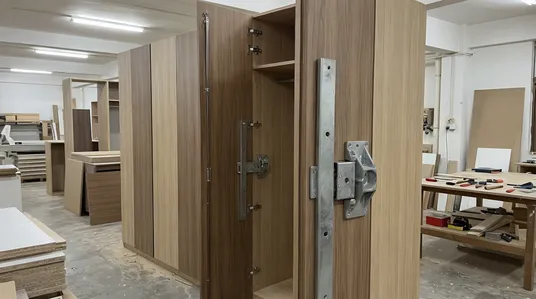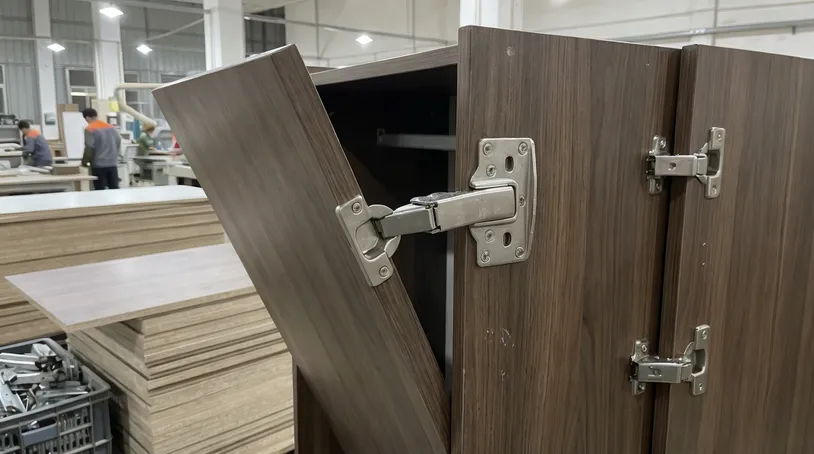
Most hinge spec sheets list a cycle life number and a load rating. Few explain what those numbers actually reflect — what test conditions produced them, whether they map to your application, or how to tell if a supplier's claim is backed by real batch testing or just copied from a catalog template.
That gap costs buyers. A hinge that passes a residential-grade test will fail early in a contract hotel project. A load rating measured on a static fixture doesn't tell you what happens after 30,000 open-close cycles under dynamic stress. If you're sourcing hinges for furniture that ships into commercial, hospitality, or high-turnover residential markets, the spec sheet is only useful if you know how to read it.
This article breaks down the numbers — what they mean, how they're generated, and what to ask a supplier before you commit to a production order.
—
What "furniture hinge mechanism quality" actually means
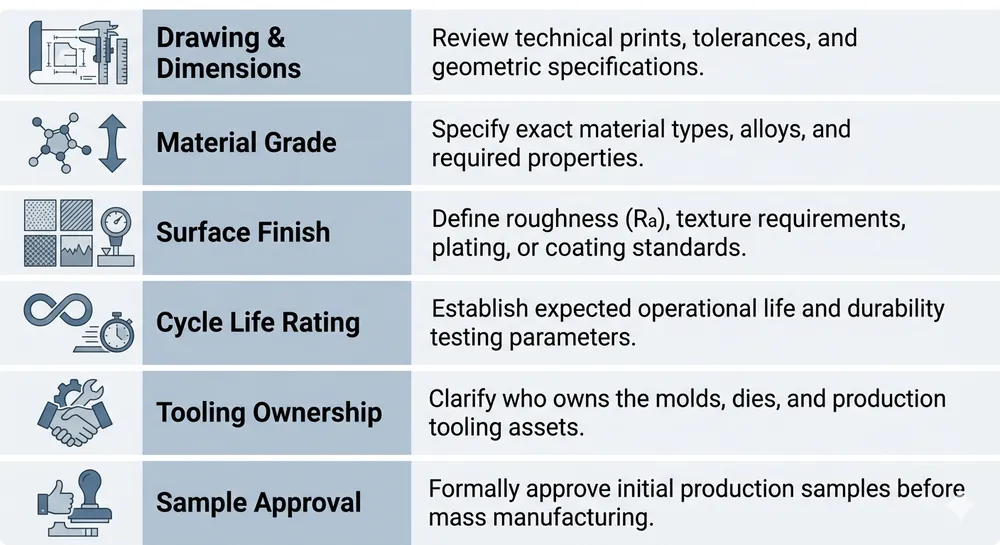
"Quality" on a hinge is not a single property. It's the intersection of three things: dimensional consistency (does the hinge fit and align correctly across a full batch?), mechanical durability (does it hold its load and motion performance over its rated cycle life?), and surface integrity (does the finish hold up in the target environment without corroding, flaking, or discoloring?).
A hinge can pass on two of those and fail on the third. We've seen batches with tight dimensional tolerances and good cycle life that had adhesion failures on the coating — fine for dry inland markets, a warranty problem for coastal distribution. The spec sheet rarely tells you which of the three the supplier actually tested rigorously and which they assumed.
For B2B buyers, the practical question is: which of these three failure modes is most likely to generate returns, warranty claims, or reorder friction in your specific market? That's where to focus your supplier evaluation.
—
Cycle life: what the number means and what it doesn't
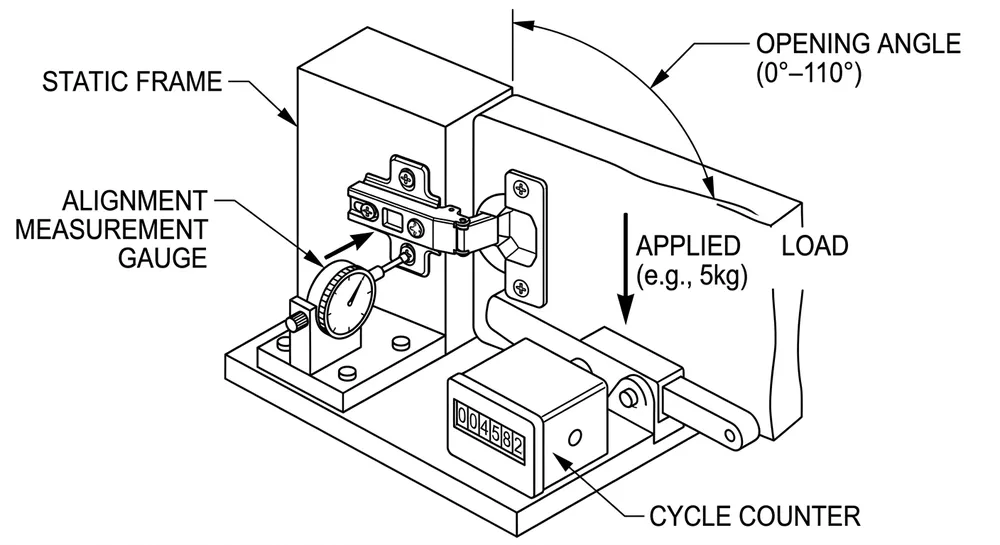
A hinge cycle life rating — typically expressed as 50,000, 80,000, or 100,000 cycles — means the hinge was opened and closed that many times under controlled test conditions without exceeding a defined failure threshold. The threshold usually covers: loss of alignment beyond a set tolerance, load capacity drop below a percentage of rated value, or visible structural failure.
What the number doesn't tell you: the test load, the test speed, the ambient conditions, and whether the test was run on production samples or pre-production prototypes.
Those variables matter more than the headline number. A 100,000-cycle rating tested at 60% of rated load under lab conditions is not the same as a 50,000-cycle rating tested at full rated load with realistic door weight and opening speed. The lower number from the harder test is the more useful spec.

The commercial-grade floor for most markets:
| Application tier | Typical cycle life requirement | Notes |
|---|---|---|
| Residential (standard) | 25,000–50,000 cycles | Entry-level product, low-frequency use |
| Contract residential / mid-market | 50,000–80,000 cycles | Rental, multi-family, student housing |
| Commercial / hospitality | 80,000–100,000+ cycles | Hotels, offices, high-turnover environments |
| Heavy commercial / institutional | 100,000+ cycles | Healthcare, education, public buildings |
The 50,000-cycle mark is the minimum we use as a batch qualification floor at MVMHardware — not a special test run for premium SKUs, but the standard pass/fail gate before any hinge batch ships. For buyers targeting contract or commercial segments, that's the right starting point, not the ceiling.
(We've had buyers come to us after a competitor's hinges failed at around 20,000 cycles in a hotel project. The supplier had listed "50,000 cycles" on the spec sheet. When we asked for the test report, it turned out the test was run at 30% of rated load. The number was technically accurate and practically useless.)
—
Load ratings: matching capacity to application
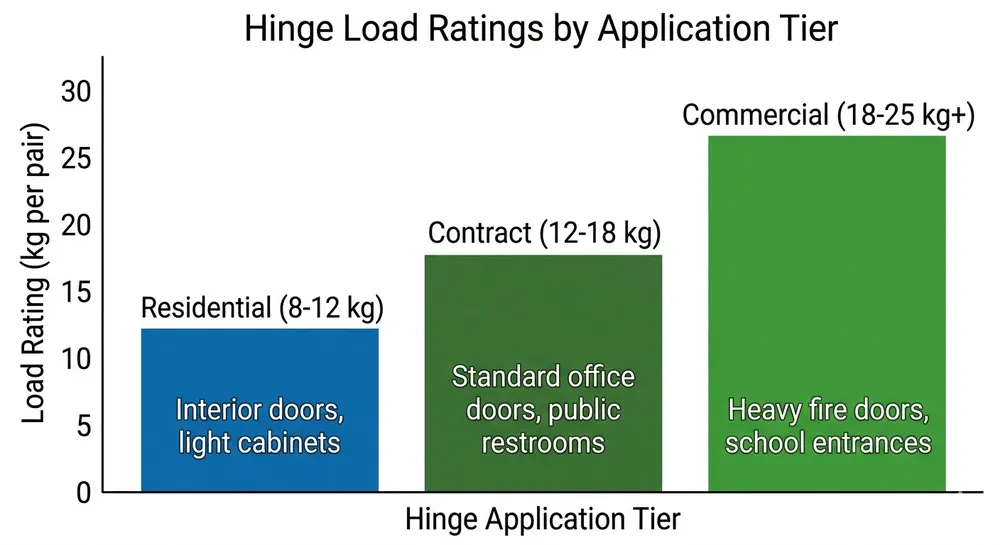
A hinge load rating tells you the maximum door weight the hinge is designed to support without deformation or premature wear. It's usually expressed in kilograms per pair or per hinge, and it should be accompanied by a door size range and a mounting configuration assumption.
The common sourcing mistake is treating load rating as a simple pass/fail against door weight. It's not. Load rating degrades over cycle life — a hinge rated at 20 kg/pair at installation may be down to 85% of that capacity at 40,000 cycles if the pivot geometry and material spec aren't right. For high-cycle applications, you need to know the load retention curve, not just the initial rating.
How to match load rating to your application:
- Take the actual door weight and add 20–30% safety margin for dynamic load (the force of a door being pushed or pulled quickly is higher than static weight)
- For doors over 600mm wide, check whether the rating was tested at that door width — wider doors create more torque at the hinge pivot
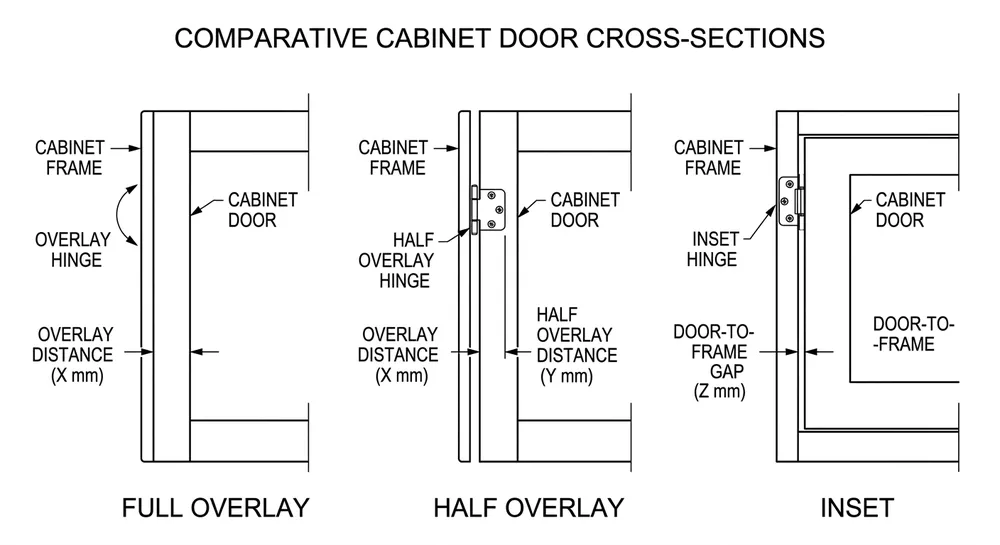
- For overlay hinges on frameless cabinets, confirm the rating accounts for the full overlay distance, not just the door weight
Torque specs appear on some hinge data sheets, particularly for soft-close and damped mechanisms. Torque is the rotational resistance the hinge provides during closing — too low and the door slams, too high and it feels stiff and wears the damper faster. For soft-close hinges, ask for the torque range at both the start and end of the closing arc, not just a single figure.
—
Surface treatment durability: salt spray hours and what they mean for your market
Surface treatment on a furniture hinge does two things: it protects the base metal from corrosion, and it determines the visual finish your downstream customer sees. For B2B buyers, the first function is the one that generates warranty claims. The second is the one that drives initial purchase decisions.
The standard test for corrosion resistance is salt spray (also called neutral salt fog, per ISO 9227 or ASTM B117). The result is expressed in hours before the appearance of red rust on the base metal or white corrosion on zinc-based coatings. Common benchmarks:
| Surface treatment | Typical salt spray rating | Suitable markets |
|---|---|---|
| Zinc plating (standard) | 72–120 hours | Dry inland markets, low-humidity environments |
| Zinc plating + chromate passivation | 200–300 hours | General export, moderate humidity |
| Nickel plating | 200–400 hours | Decorative applications, moderate corrosion resistance |
| Powder coating (60–80μm) | 500+ hours | Coastal markets, outdoor-adjacent applications |
| Zinc plating + powder topcoat | 500–700 hours | High-humidity, coastal, or marine-adjacent |
We run our powder coating line at 60–80μm film thickness — that's the range that consistently passes 500-hour salt spray without adhesion failure. We tested thinner at 45–55μm for a period to reduce material cost. The salt spray results on coastal-market shipments told us that was the wrong trade-off. We moved back up.
For buyers supplying into Southeast Asia, the Middle East, or coastal North America, the 500-hour threshold is the practical minimum. Anything below that and you're accepting corrosion warranty risk on your downstream accounts.
Coating adhesion is a separate variable from thickness. A 70μm coating that wasn't properly pre-treated will fail adhesion before it fails salt spray. Ask for cross-cut adhesion test results (ISO 2409) alongside salt spray hours — the two together tell you whether the coating will actually stay on the part.
—
How to evaluate a hinge supplier's QC process
The spec sheet tells you what the supplier claims. The QC process tells you whether those claims apply to the batch you'll actually receive.
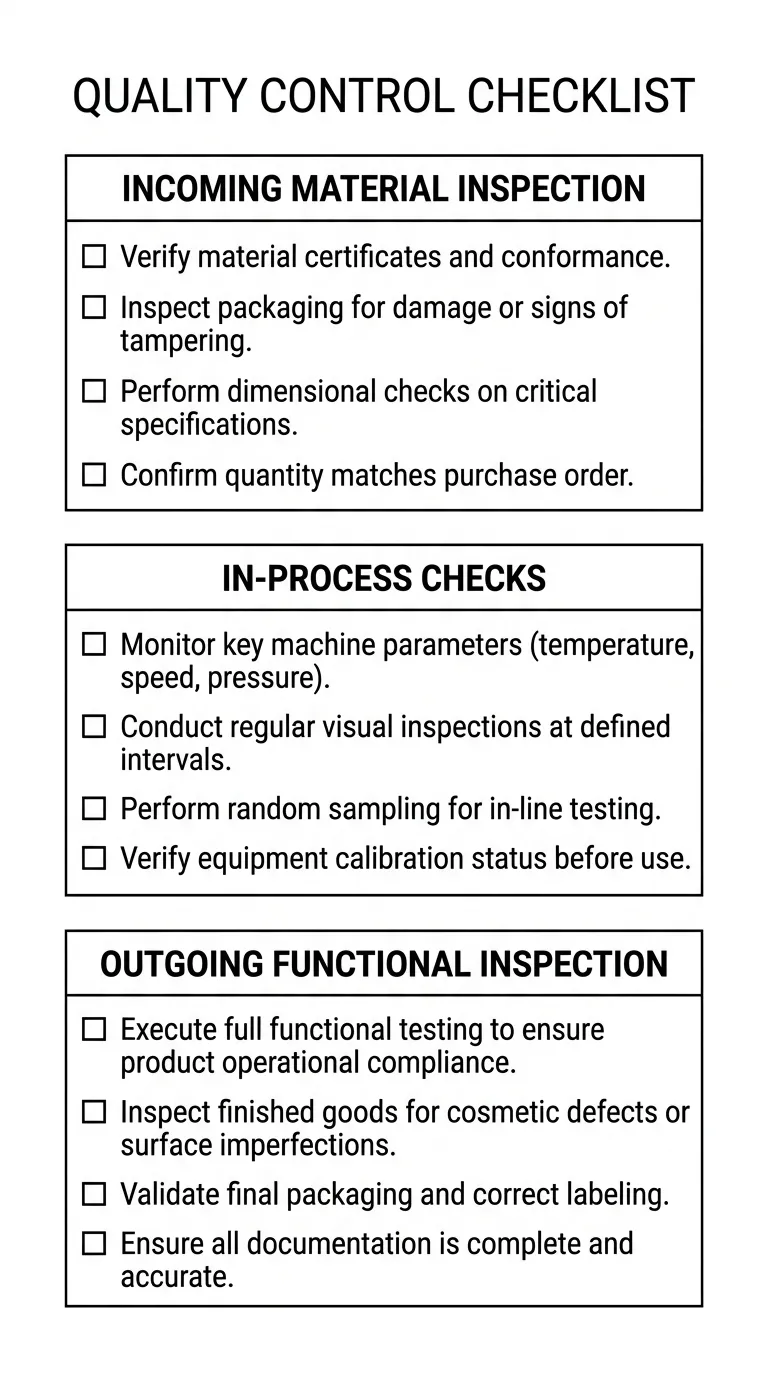
There are three checkpoints that matter for hinge mechanism quality, and you can ask about all three during RFQ:
1. Incoming material inspection Does the supplier check incoming steel and zinc alloy against mill certificates? Do they pull dimensional samples from the first stamped parts of each coil change? Suppliers who skip this step are the ones who end up with batch hardness variation that shows up as premature wear at 15,000 cycles.
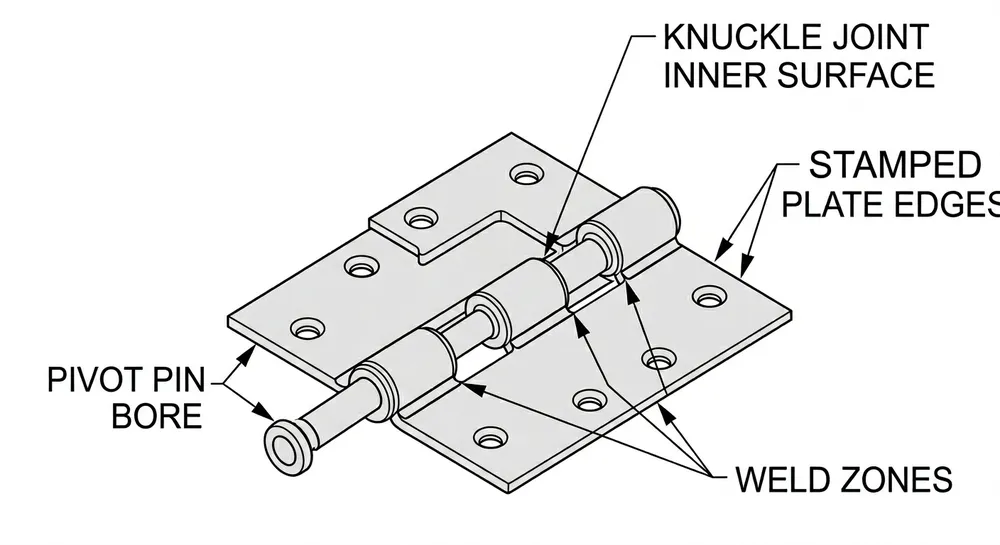
2. In-process dimensional and functional checks At what stages does inspection happen? For hinges, the critical checkpoints are: after stamping (pivot hole diameter and position tolerance), after surface treatment (coating thickness and adhesion), and after assembly (opening angle, closing force, alignment under load). A supplier who only inspects finished goods is catching problems after the cost has already been incurred.
3. Outgoing inspection protocol Is outgoing inspection 100% functional or statistical sampling? Sampling catches systematic defects but misses random failures — a sticky pivot, a misaligned mounting hole, a damper that doesn't engage. For mechanisms, 100% functional testing before packing is the only way to ensure the unit your customer installs is the unit that was tested.
Documents to request at RFQ stage:
- Cycle life test report (with test load, speed, and failure criteria — not just the headline number)
- Salt spray test report (ISO 9227 or ASTM B117, with hours and failure definition)
- Dimensional inspection report for the specific SKU
- ISO 9001:2015 certificate (scope should cover the product category, not just the company)
- Material certification for steel and zinc alloy (mill report or equivalent)
If a supplier can't provide these on request, that's the answer to your quality question.
—
MVMHardware's quality baseline: what we test and why it matters for your order
We run 50,000-cycle load testing as the standard batch qualification floor — not a premium option, not a special request for large orders. Every production batch clears that gate before it ships. For buyers targeting contract or commercial segments, that baseline means you're not starting from zero when you need to justify your sourcing decision to a downstream customer or a compliance team.
The in-house die-casting operation is the part of our process that most directly affects cycle life consistency. Most mechanism factories in this region outsource die-cast components — pivot housings, adjustment collars, damper bodies — to third-party foundries. That means they have no direct control over dimensional consistency on the parts that determine hinge alignment and pivot wear. We brought die-casting in-house around 2015. When a pivot housing comes out of our die-casting cell, we know the wall thickness, the alloy composition, and the dimensional tolerance. When it doesn't meet spec, the fix happens on our floor before it reaches assembly.
Dimensional inconsistency in die-cast pivot components is the leading cause of early cycle life failure in hinges that otherwise look fine on paper. The pivot wears unevenly, alignment drifts, and the hinge starts binding at 20,000–25,000 cycles instead of 50,000. Buyers who've experienced this from other suppliers usually can't trace it back to the die-cast component because the finished hinge looks identical. We can show you the dimensional data from our die-casting QC records if you want to verify the process.
Outgoing inspection at MVMHardware is 100% functional — every unit, not a sample. A mechanism that passes dimensional and cycle-life checks but has a sticky pivot or a misaligned mounting hole gets pulled before it reaches your container. That's not a marketing claim; it's a process step that adds time to the line. We keep it because the alternative — a container of hinges with a 2% random failure rate — costs your downstream customers more than it costs us.
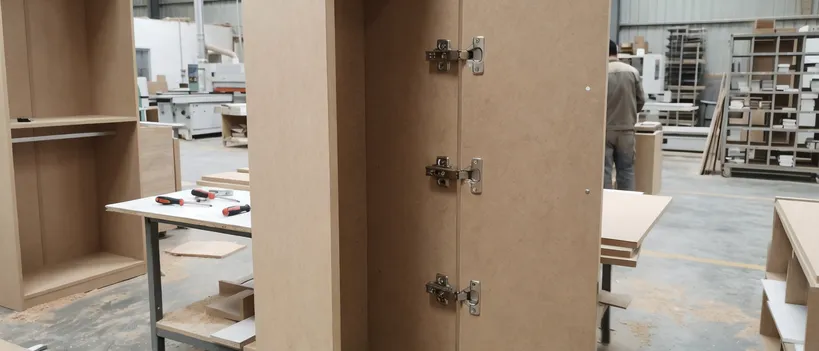
Our Door & Hinge Furniture Mechanism range covers standard overlay, inset, and concealed configurations across residential and commercial load ratings. If you're evaluating whether a specific SKU meets your cycle life and load requirements, the fastest path is to send us your door weight, opening frequency estimate, and target market — we'll match you to the right spec and provide the test documentation with the quote.
For OEM/ODM furniture mechanism projects where you need a custom cycle life rating, load capacity, or surface treatment spec, our engineering team can develop the configuration and run qualification testing before production commitment.
—
Sourcing checklist: what to verify before you place a hinge order
Use this as a working reference when evaluating suppliers or writing procurement requirements:
Cycle life
- [ ] Cycle life rating confirmed (minimum 50,000 for contract; 80,000+ for commercial)
- [ ] Test load specified (should be at or near rated load, not a reduced percentage)
- [ ] Test report available with failure criteria defined
- [ ] Batch qualification testing confirmed (not just prototype testing)
Load rating
- [ ] Load rating per hinge or per pair confirmed
- [ ] Door width and overlay distance included in test conditions
- [ ] Dynamic load factor accounted for (add 20–30% to static door weight)
- [ ] Load retention at end-of-life cycle count confirmed or estimated
Surface treatment
- [ ] Salt spray hours confirmed for target market (500+ hours for coastal/high-humidity)
- [ ] Coating thickness specified (60–80μm for powder coat)
- [ ] Adhesion test result available (ISO 2409 cross-cut)
- [ ] RoHS compliance confirmed if supplying EU or California markets
Supplier QC
- [ ] ISO 9001:2015 certificate with relevant product scope
- [ ] Incoming material inspection process confirmed
- [ ] In-process dimensional inspection at stamping and assembly stages
- [ ] Outgoing inspection protocol: 100% functional or sampling (confirm which)
- [ ] Cycle life and salt spray test reports available per batch, not just per SKU
—
Frequently asked questions
What cycle life rating do I need for a hotel furniture project?
For hotel casegoods — wardrobes, nightstands, bathroom vanities — 80,000 cycles is the practical minimum. High-traffic areas like wardrobe doors in a 200-room property can see 50–100 open-close cycles per day per door. At that rate, a 50,000-cycle hinge reaches end-of-life in under three years. Specify 80,000 cycles minimum, and ask for the test load to confirm it was run at full rated door weight.
How do I know if a supplier's cycle life claim is based on real batch testing?
Ask for the test report, not the spec sheet. A real test report includes: the test date, the sample quantity, the applied load, the opening speed, the failure criteria, and the result. If the supplier sends you a spec sheet with a cycle life number but no test report, the number is a catalog claim, not a verified batch result. Ask specifically whether the test was run on production samples or pre-production prototypes — the answer tells you a lot.
What's the difference between zinc plating and powder coating for hinge corrosion resistance?
Zinc plating provides moderate corrosion resistance (72–300 hours salt spray depending on passivation treatment) and is suitable for dry inland markets. Powder coating at 60–80μm provides 500+ hours salt spray and is the right choice for coastal markets, high-humidity environments, or any application where the furniture will be near water. For maximum protection, a zinc-plated base with powder topcoat can reach 500–700 hours. If your downstream customers are in Southeast Asia, the Gulf, or coastal North America, specify powder coating and ask for the salt spray test report.
Can I specify a custom cycle life or load rating for an OEM order?
Yes. For OEM projects, we develop the mechanism configuration to your performance requirements, run qualification testing before production commitment, and provide the test documentation with the production order. The starting point is your door weight, opening frequency, and target market — from there we can spec the pivot geometry, material gauge, and surface treatment to hit your cycle life target. Send your requirements through our Request Quote page and we'll come back with a specific recommendation.
What documents should I request before approving a hinge supplier?
At minimum: ISO 9001:2015 certificate (check the scope covers your product category), cycle life test report with test conditions, salt spray test report, and a dimensional inspection report for the specific SKU. For EU market supply, also request CE declaration of conformity and RoHS compliance documentation. If the supplier can't provide all of these on request, treat that as a quality signal.
Does hinge load rating degrade over time?
Yes. Load capacity at end-of-rated-cycle-life is typically 85–90% of initial rating for a well-designed hinge, but can drop faster if the pivot geometry is inconsistent or the die-cast components have dimensional variation. This is why in-house die-casting control matters — pivot housing dimensional consistency directly affects how evenly the load is distributed across the pivot bearing surface over the hinge's life. Ask suppliers whether their load rating is an initial value or an end-of-life value, and whether they have load retention data across the cycle life curve. “`