The question lands on our desk regularly: "We're speccing a new line — do we need motion hardware, or can we get away with static brackets and save the cost?" It's a fair question. Motion mechanisms cost more per unit, require more supplier qualification, and add complexity to your assembly line. Static hardware is cheaper, simpler to source, and easier to inspect.
But "get away with" is the wrong frame. The real question is whether your end-market will pay for the function that motion hardware delivers — and whether the margin on that function covers the sourcing premium. In most cases, the answer is clear once you run the numbers honestly. Here's how to do that.
Quick verdict: If your product sits in a category where adjustability or recline is a core purchase driver — office seating, power recliners, sofa beds, lift-top tables — motion hardware isn't optional. The cost delta is real but narrower than most buyers expect when sourcing factory-direct, and the warranty risk of substituting static hardware in a motion-category product is far more expensive than the unit price difference. If your product is a fixed-position piece where no end-user expects movement, static hardware is the right call and motion hardware is wasted spend.

Unit Cost Delta: What You're Actually Paying For
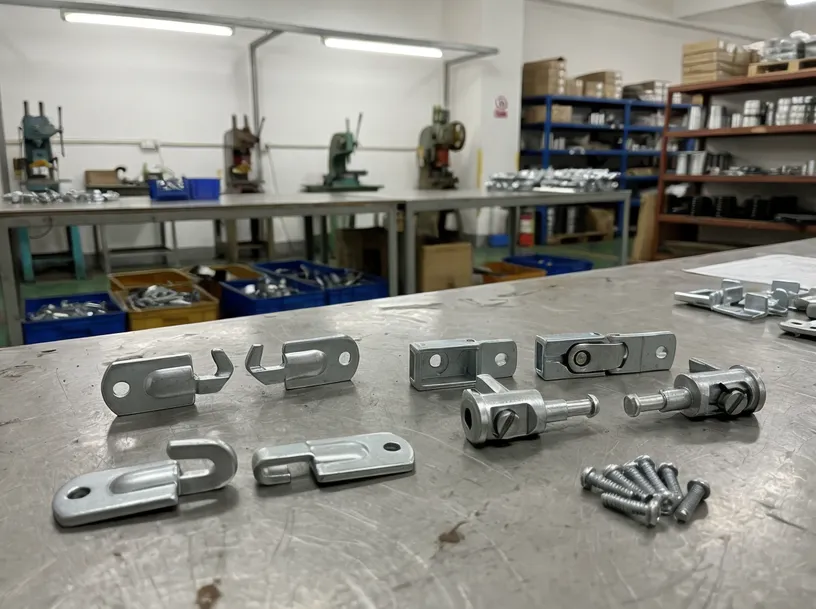
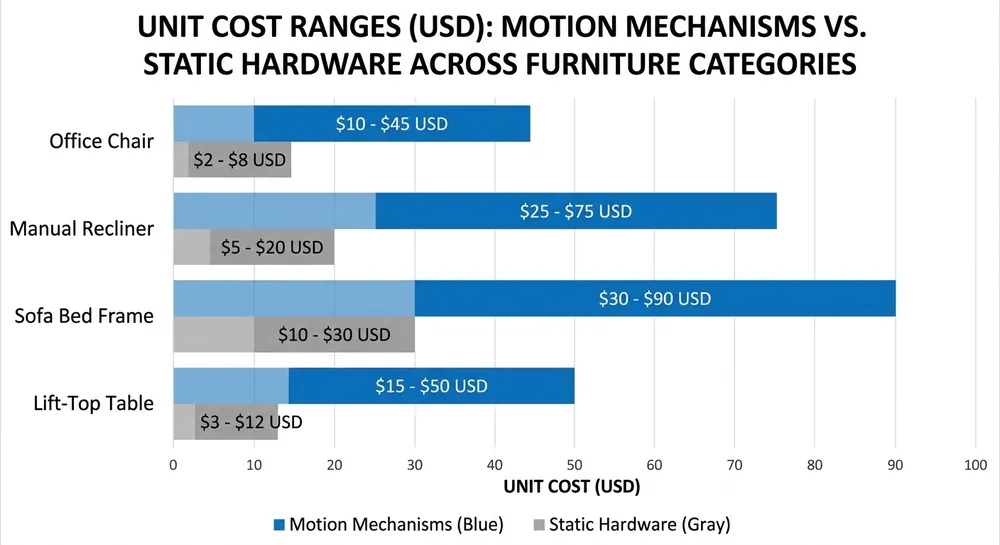
Static hardware — fixed brackets, rigid corner blocks, non-adjustable hinges, welded frame connectors — runs anywhere from a few cents to a few dollars per component depending on gauge and finish. A full set of static hardware for a fixed sofa frame might land at $3–8 per unit at factory-direct pricing.
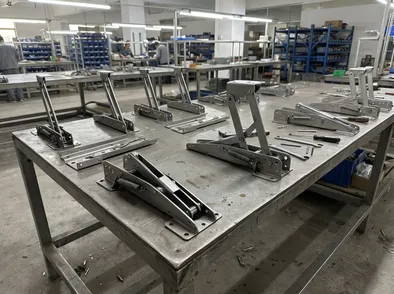
A comparable motion hardware set for a manual recliner mechanism — the linkage assembly, tilt plate, pivot hardware, and locking components — runs $12–28 per unit depending on spec, cycle life rating, and surface finish. Power recliner actuator systems sit higher. Lift-top table mechanisms fall in the $8–18 range for standard gas-assist or spring-loaded designs.
That gap looks significant on a line-item comparison. It shrinks considerably when you account for two things most buyers miss on the first pass.
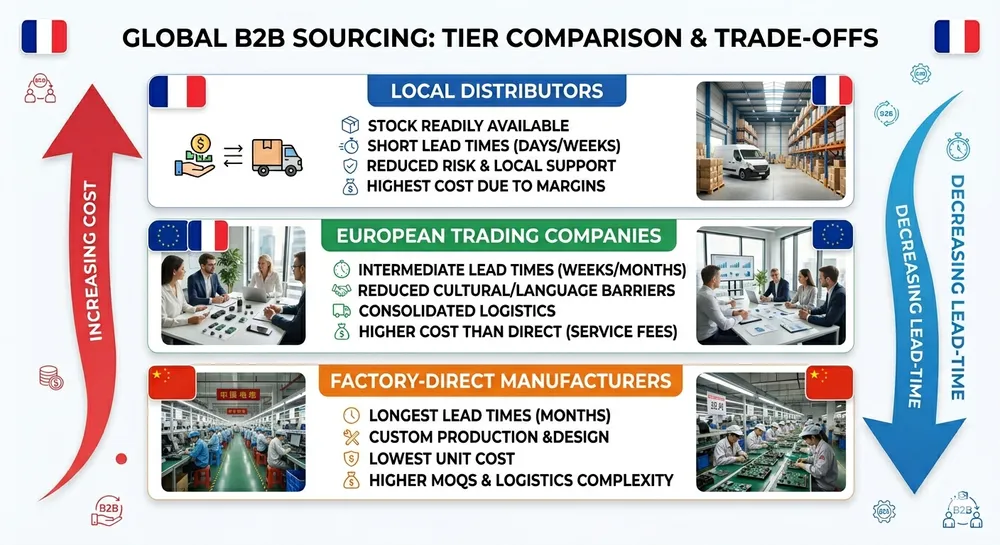
First, trading layer markup. Most static hardware is sourced through distributors or trading companies because the per-unit value doesn't justify direct factory relationships. Motion mechanisms, sourced factory-direct, cut out that markup layer — typically 15–25% of the price you'd pay through a trading intermediary. The effective cost gap between static (through a distributor) and motion (factory-direct) is narrower than the catalog prices suggest.
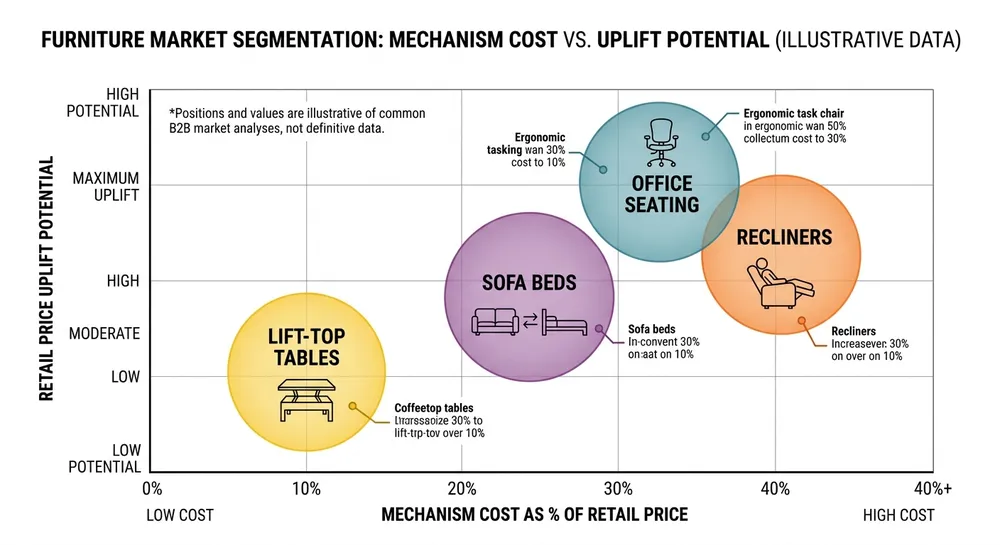
Second, the retail price differential your downstream customer captures. A fixed-position sofa retails at a different price tier than a recliner sofa. The mechanism cost is a fraction of the retail price uplift. If your buyer marks up a recliner sofa $80–150 over a comparable fixed model, and your mechanism cost delta is $15–20, the margin math is straightforward.
(We've had buyers come to us after sourcing motion mechanisms through a trading company for two years, surprised at how much the factory-direct price changes the calculation. The mechanism category rewards direct sourcing more than most hardware categories because the per-unit value justifies the relationship.)
Head-to-Head: What the Spec Comparison Actually Means Commercially
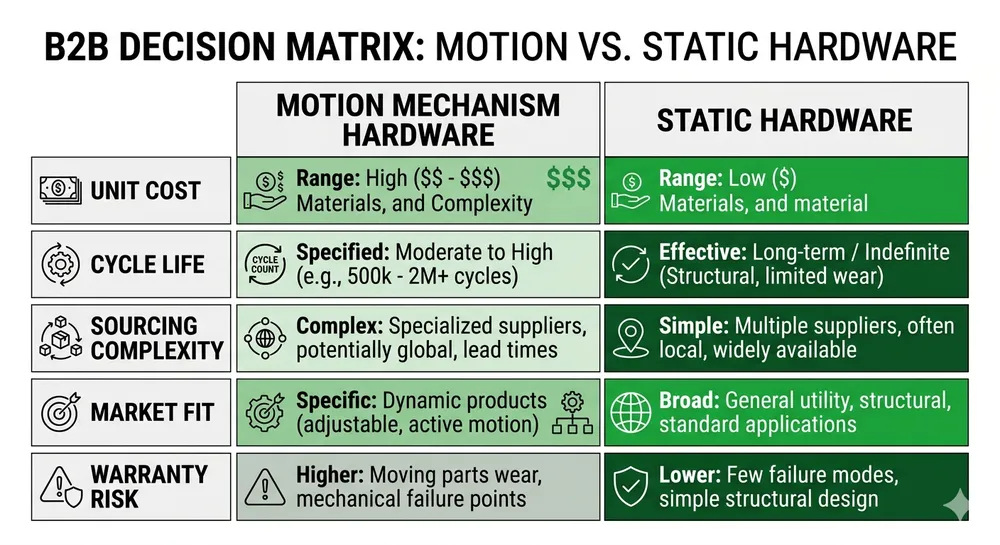
| Dimension | Motion Mechanism | Static Hardware |
|---|---|---|
| Unit cost (factory-direct) | $8–28 depending on type | $0.50–8 depending on type |
| Cycle life requirement | 50,000–150,000+ cycles | N/A — no moving parts |
| Sourcing complexity | Higher — tolerances, cycle testing, QC | Lower — commodity sourcing |
| MOQ (standard) | 500 units (MVMHardware standard) | Often lower, widely available |
| Lead time | 25–35 days (catalog items) | Shorter, often from stock |
| Warranty claim risk | Low when spec'd correctly | Low for fixed applications |
| Substitution risk | High — wrong spec = field failure | Low |
| Retail price uplift potential | High — function drives premium | None |
| Compliance documentation | CE, SGS, RoHS required for most markets | Simpler compliance profile |
The substitution risk row deserves attention. Static hardware is a commodity — a bracket is a bracket within a gauge range, and most suppliers can deliver something that fits. Motion mechanisms are not interchangeable at the spec level. A mechanism rated for 50,000 cycles in a residential recliner will fail prematurely in a commercial hospitality application that sees 3–5x the use frequency. Sourcing the wrong cycle-life spec to save $3 per unit generates warranty returns that cost $40–80 per unit to process. We've seen that math play out for buyers who switched to a cheaper mechanism supplier mid-season.
Cycle Life and the Total Cost of Ownership Calculation
Static hardware has no cycle life requirement because it doesn't move. That's its structural advantage in fixed-position applications — zero wear, zero fatigue, no moving-part failure modes. A welded steel bracket on a fixed sofa frame will outlast the upholstery by a decade.
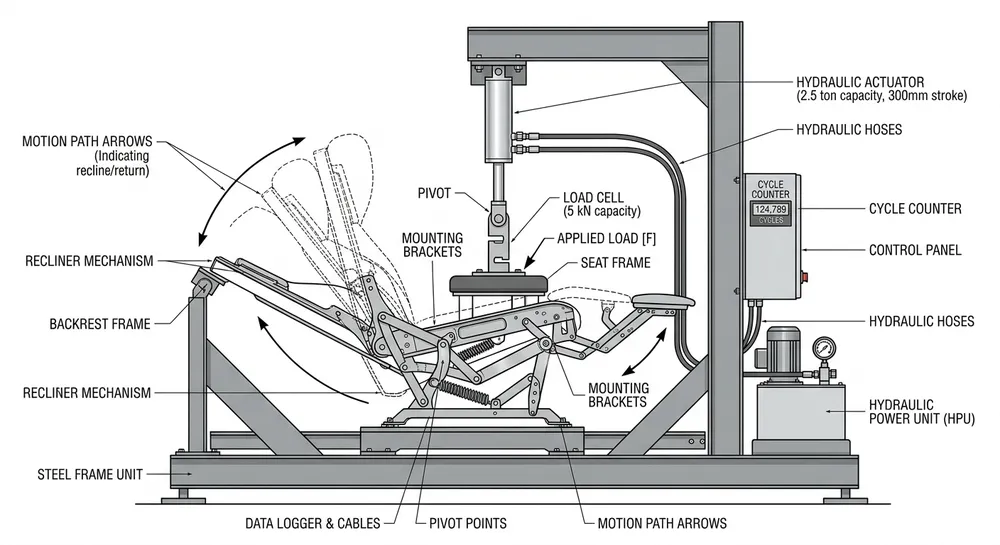
Motion mechanisms operate under a completely different failure model. Every actuation — every recline, every tilt, every fold — is a load cycle on the pivot points, spring assemblies, and locking components. The question isn't whether a mechanism will wear; it's whether it will reach the end of the product's commercial life before it does.
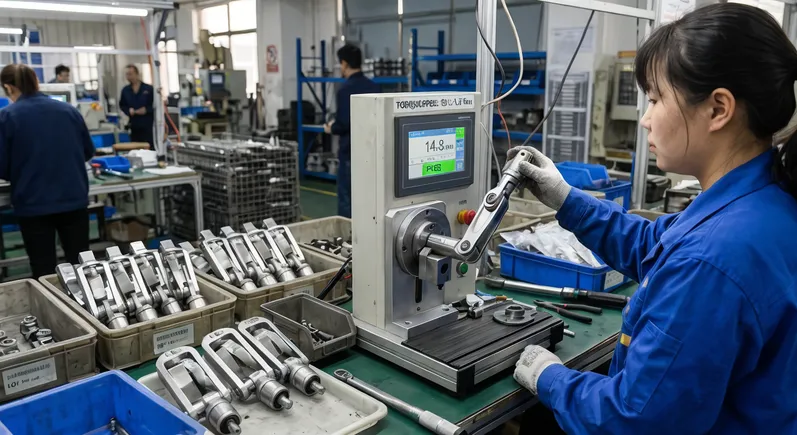
Our standard cycle life test for chair mechanisms is 50,000 cycles — that's the commercial office chair certification floor for most markets, and we use it as our minimum, not our target. Recliner mechanisms for residential use are tested to 30,000 cycles minimum; commercial hospitality specs run 80,000–100,000 cycles. Sofa bed frames that convert daily get tested to 10,000 full open-close cycles, which represents roughly 27 years of nightly use.
The commercial implication: a mechanism that passes the correct cycle life spec for its application generates near-zero warranty claims over the product's commercial life. A mechanism that's under-spec'd for its application generates returns in year two or three — exactly when your buyer's customer is still within warranty coverage and your buyer is looking at you for resolution.
Total cost of ownership for motion hardware = unit cost + (warranty claim rate × claim processing cost). When the mechanism is spec'd correctly and sourced from a factory running 100% functional testing before shipment, the warranty claim rate approaches zero. The TCO calculation then reduces to unit cost — and at factory-direct pricing, that's a number most buyers can work with.
Where Static Hardware Wins Outright
Static hardware is the correct choice in three clear scenarios, and there's no reason to complicate them.
Fixed-position structural applications: Sofa frames, bed frames, cabinet carcasses, fixed dining chairs — anywhere the furniture is designed to stay in one position and the hardware's job is structural integrity, not movement. Static brackets, corner blocks, and connectors are purpose-built for this. Motion hardware adds cost and complexity with zero functional benefit.
Price-tier products where adjustability isn't a purchase driver: Entry-level seating and case goods where the retail price point doesn't support a motion hardware premium. If your buyer's customer is choosing between a $199 fixed chair and a $299 recliner, and your buyer is targeting the $199 segment, the mechanism cost doesn't fit the margin structure. Static hardware is the right call.
High-volume commodity programs with tight landed cost targets: When your buyer is running a 50,000-unit program for a mass-market retailer with a locked cost target, every dollar of hardware cost is scrutinized. If the product spec doesn't require motion, static hardware protects the margin.
The mistake we see occasionally is buyers trying to add a motion element to a product that doesn't need it — usually because a competitor's product has it and they want feature parity. If the motion function doesn't change the end-user's purchase decision, it's cost without return.
Where Motion Hardware Pays Off: Market Segments Worth Targeting
The segments where motion hardware investment generates clear commercial return are well-defined. These aren't lifestyle categories — they're market segments with documented willingness to pay for adjustability and function.
Office seating — commercial and home office: The ergonomic seating market runs on mechanism function. Tilt tension adjustment, seat depth, lumbar support positioning — these are the features that justify the price premium over fixed seating and that procurement buyers specify explicitly. A chair mechanism that passes 50,000-cycle testing and carries CE certification is a prerequisite for commercial office supply contracts, not a differentiator. Your buyers in this segment need the documentation as much as the hardware.
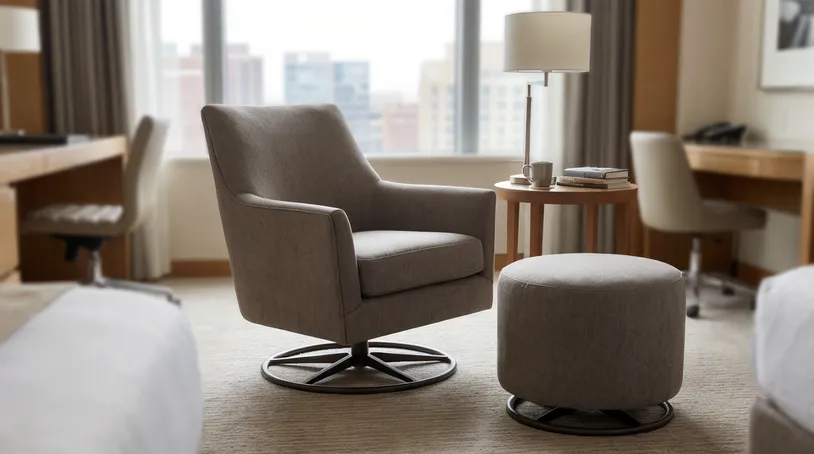
Power and manual recliners — residential and hospitality: The recliner category is mechanism-defined. There is no recliner without a recliner mechanism — the product category exists because of the hardware. The question here isn't motion vs static; it's which mechanism spec fits the application. Residential manual recliners, power recliners with USB charging integration, wall-hugger mechanisms for space-constrained rooms, and zero-gravity recline profiles are all distinct mechanism configurations. Buyers in this segment are sourcing mechanism specifications, not just hardware.
Sofa beds and convertible seating: The sofa bed market rewards mechanism quality directly — a sofa bed that converts smoothly and holds its position sells; one that sticks, squeaks, or sags after 18 months generates returns. The mechanism is the product's core functional component, and buyers who've had a bad mechanism experience are willing to pay more for a verified spec. (This segment has grown significantly for us over the past three years — the home office and guest room furniture market has driven consistent demand for quality convertible hardware.)
Lift-top and adjustable tables: Height-adjustable and lift-top table mechanisms serve the home office and multifunctional living space market. Gas-assist and spring-loaded lift mechanisms in the $8–18 range enable a retail price premium of $60–120 over a fixed-top equivalent. The mechanism cost-to-retail-uplift ratio in this category is among the most favorable we see.
Sourcing Complexity: What Motion Hardware Actually Requires From Your Supply Chain
This is the part of the comparison that buyers underestimate. Static hardware is a commodity procurement exercise — you spec the gauge, the finish, and the load rating, get three quotes, and pick the best landed cost. Quality variation exists but is manageable through standard incoming inspection.
Motion mechanism sourcing is a different discipline. The variables that determine whether a mechanism performs as specified — pivot geometry, spring rate, die-cast component dimensional consistency, surface treatment adhesion on moving contact surfaces — are not visible on a spec sheet and not catchable by standard incoming inspection. You need a supplier who controls these variables at the process level, not just at the outgoing inspection stage.
What that means practically for your supplier qualification:
Cycle life verification: Ask for the test protocol and results, not just the cycle life claim. A mechanism "rated for 50,000 cycles" means nothing without knowing the load applied, the test frequency, and what constitutes a failure. Our standard test runs at rated load capacity, 10 cycles per minute, with failure defined as any functional degradation — not just catastrophic failure. That's a meaningful number. A cycle life claim without a test protocol is a marketing figure.
Die-cast component control: The adjustment knobs, pivot collars, and decorative covers on a mechanism are typically die-cast zinc alloy. Dimensional inconsistency in these components is the leading cause of mechanism feel complaints — loose knobs, uneven tilt resistance, rattling under load. Suppliers who outsource die-casting to third-party foundries have limited control over batch-to-batch consistency. We brought die-casting in-house specifically because this was the failure point we couldn't control externally.
Surface treatment on moving surfaces: Powder coating is the right finish for static hardware — it's durable, cost-effective, and easy to apply consistently. On motion mechanism components, powder coating on pivot points and sliding surfaces adds thickness that affects clearance and can cause binding after thermal cycling. The correct finish for moving contact surfaces is electroplating — nickel or zinc — which adds minimal dimensional change while providing corrosion protection. A supplier applying powder coat uniformly across all mechanism components, including moving surfaces, is cutting a corner that will show up in field performance.
100% functional testing vs sampling: For static hardware, AQL sampling inspection is standard and appropriate — a bracket either meets dimensional spec or it doesn't, and sampling catches systematic defects. For motion mechanisms, functional testing needs to be 100% — a mechanism can pass all dimensional checks and still have a sticky lock engagement or a tilt spring that's out of rate. We run 100% functional testing on every unit before packing. Ask your supplier whether their outgoing inspection is 100% functional or AQL sampling — the answer tells you a lot about how they think about mechanism quality.
Scenario Decisions: Three Sourcing Situations, Clear Answers
Scenario 1: You're launching a mid-market manual recliner line for North American retail, 2,000 units per SKU.
Motion hardware is required — this is a mechanism-defined product category. The relevant decision is mechanism spec, not motion vs static. For North American retail at mid-market price points, you need a manual recliner mechanism rated to 30,000 cycles minimum, with CE documentation for any cross-border retail compliance requirements, and a surface finish that passes 500-hour salt spray for coastal market distribution. Factory-direct pricing at 2,000 units per SKU puts you well above the 500-unit MOQ threshold where pricing is competitive. Static hardware is not a consideration here.
Scenario 2: You're building a fixed-frame sofa program for a hospitality contract — 500 units, tight cost target.
Static hardware is the right call. The product is fixed-position by design, the end-use environment is commercial (which means durability requirements are high but motion function is irrelevant), and the cost target doesn't support mechanism premium. Specify heavy-gauge static brackets and corner blocks, verify weld quality on structural joints, and put your sourcing energy into upholstery and frame material rather than hardware upgrades that add no value.
Scenario 3: You're evaluating whether to add a lift-top table mechanism to an existing fixed-top table SKU to create a premium variant.
This is exactly the scenario where motion hardware pays off. The mechanism cost ($10–15 for a standard gas-assist lift-top fitting at volume) enables a retail price increase of $60–100 over the fixed-top variant. Your buyer gets a new SKU at a higher margin tier without a new frame design. The sourcing addition is a single mechanism component from a qualified supplier. The risk is low; the margin upside is clear. Add the motion variant.
What to Verify Before You Commit to a Motion Mechanism Supplier
The Furniture Motion Mechanism category has no shortage of suppliers. The qualification gap between them is wider than in static hardware because the failure modes are less visible and slower to surface.
Before placing a production order, verify:
- Cycle life test report — actual protocol, load, and failure definition, not just a claimed number
- In-house vs outsourced die-casting — outsourced means variable component quality you can't audit
- Surface treatment specification by component type — electroplating on moving surfaces, not powder coat
- 100% functional testing confirmation — ask specifically whether outgoing inspection is 100% or AQL
- Compliance documentation — CE declaration, SGS test reports, RoHS documentation ready to ship with order
- MOQ and lead time for your volume — confirm the production schedule is a real slot, not a best-case estimate
For deeper background on how cycle life testing works and what the numbers mean for your product spec, see our guide on motion mechanism cycle life testing.
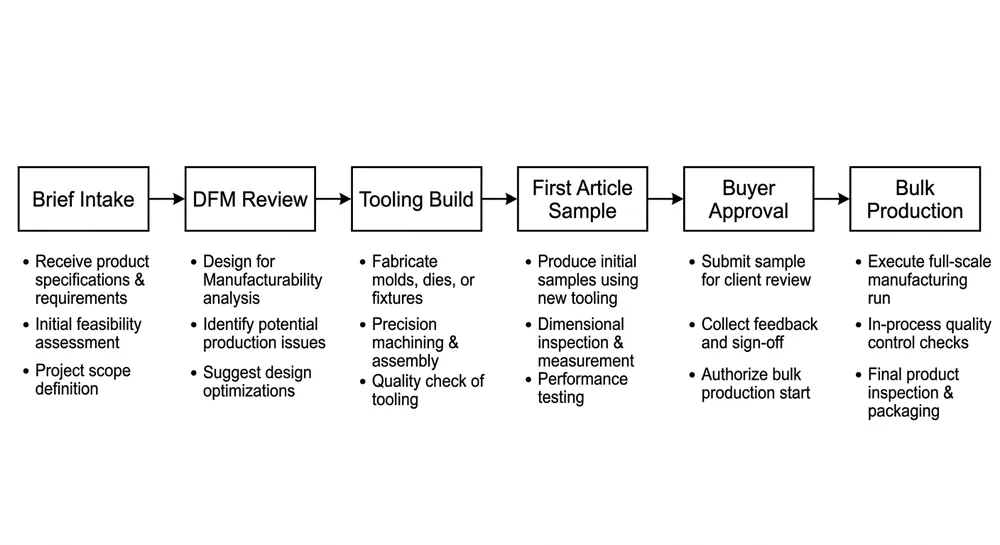
If you're evaluating custom mechanism development for a new product line, OEM motion mechanism development covers the tooling, sampling, and iteration process in detail.
The Decision in One Framework
Run this checklist against your product spec before committing to either hardware type:
| Question | If Yes → | If No → |
|---|---|---|
| Does the end-user expect the furniture to move or adjust? | Motion hardware required | Static hardware sufficient |
| Does the product category command a retail premium for adjustability? | Motion hardware justified | Evaluate margin math carefully |
| Is the end-use environment commercial or high-frequency? | Specify higher cycle life | Residential spec sufficient |
| Does your target market require CE/compliance documentation? | Verify supplier certification | Standard QC sufficient |
| Is your annual volume above 500 units per SKU? | Factory-direct motion sourcing viable | Evaluate MOQ fit |
| Are you sourcing through a trading company currently? | Factory-direct saves 15–25% | — |
The motion vs static decision is straightforward once you stop treating it as a cost question and start treating it as a product category question. Motion hardware belongs in motion-category products. Static hardware belongs in fixed-position products. The cost delta is real, manageable, and justified by the retail price structure of the categories that require it.
Where buyers get into trouble is sourcing motion mechanisms the same way they source static hardware — on price, without verifying the spec, the test protocol, or the process controls behind the number. That's where the warranty claims come from, not from the decision to use motion hardware in the first place.