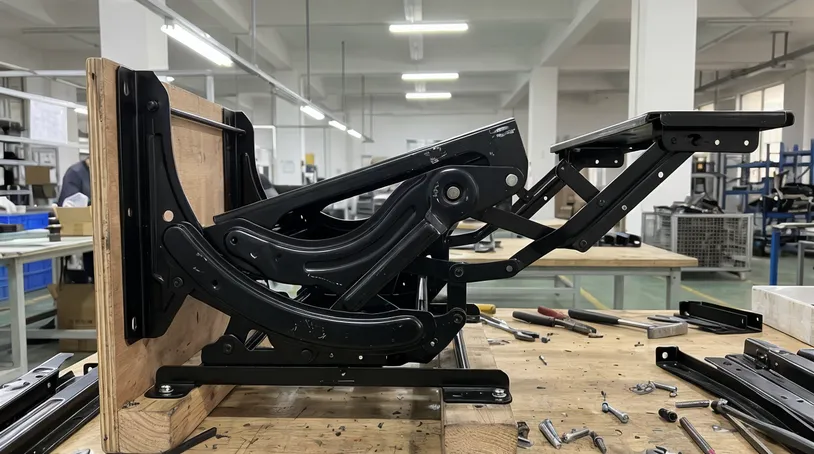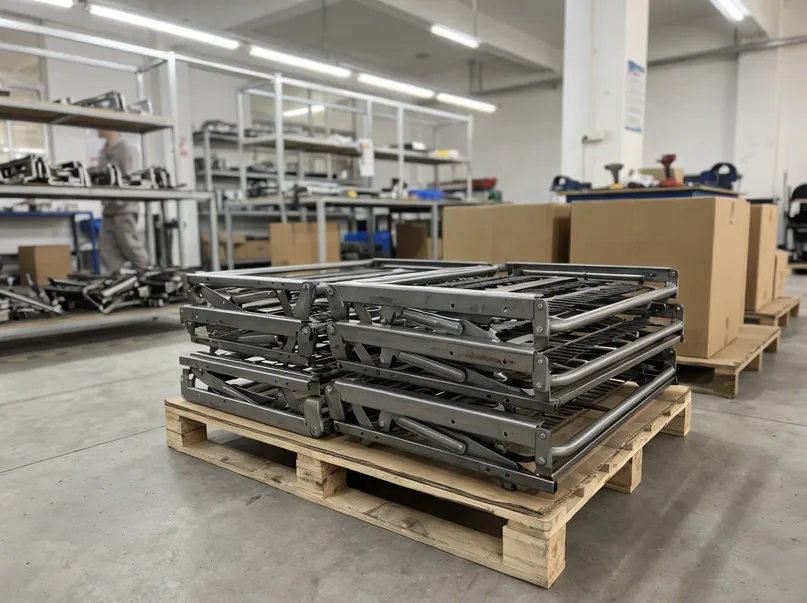
Australia's furniture import market runs on a tight margin structure. You're competing against direct-to-consumer brands, managing freight costs that are structurally higher than most other developed markets, and sourcing components that most local distributors treat as a secondary category. Recliner mechanisms sit squarely in that gap — specialized enough that general hardware distributors don't stock them well, but not exotic enough that anyone has built a deep local supply chain around them.
This guide maps the actual sourcing landscape: who the local players are, what they're good for, where the economics break down at volume, and when a factory-direct import arrangement starts making more sense than buying through a local intermediary.

How the Australian Recliner Mechanism Market Actually Works
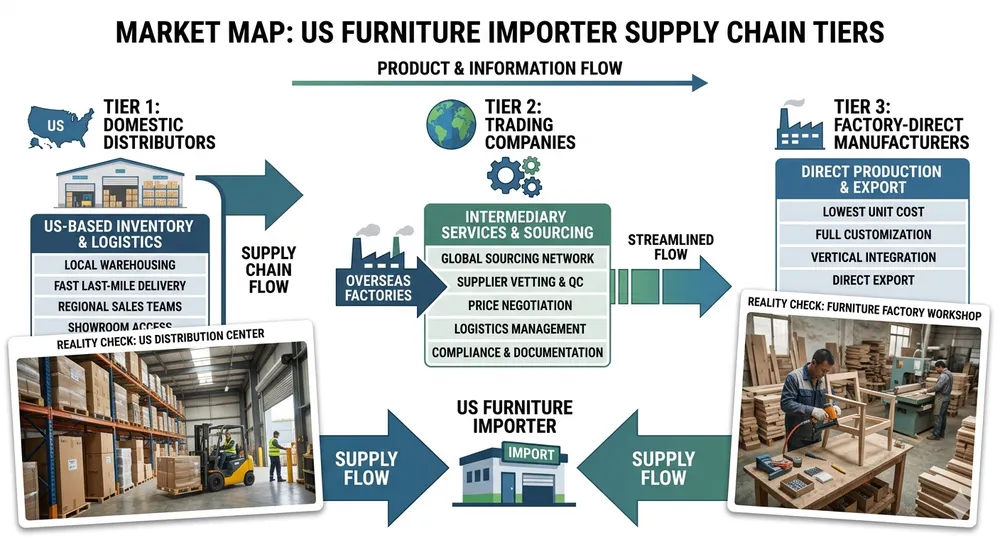
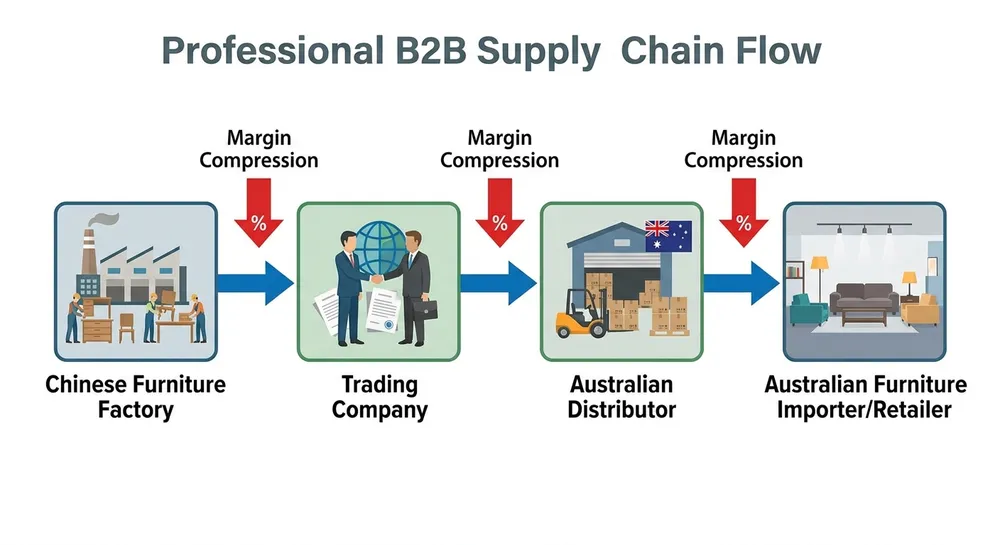
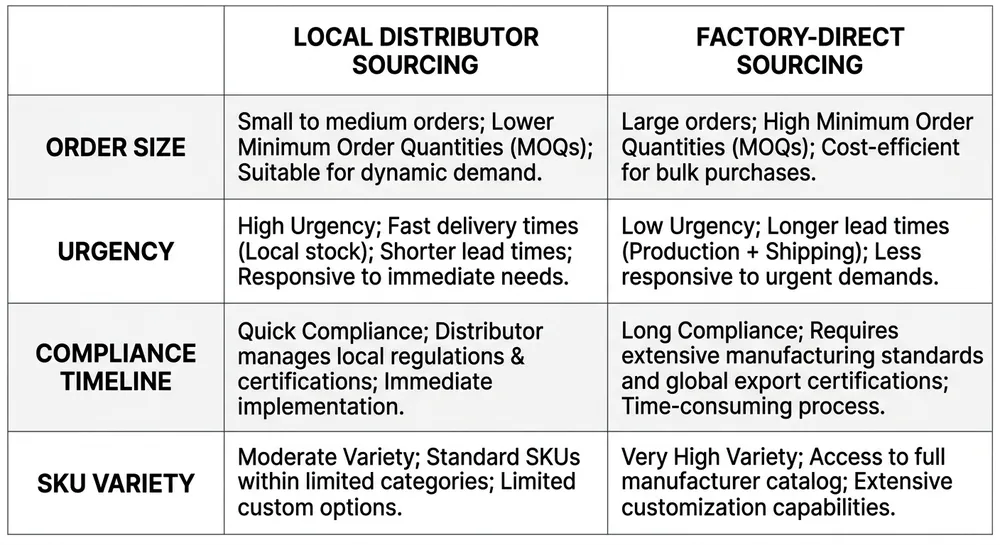
Most recliner mechanisms sold in Australia originate from factories in Guangdong and Zhejiang — the same manufacturing clusters that supply Europe and North America. What varies is the number of hands the product passes through before it reaches your warehouse. A local distributor typically sources from a Chinese trading company or factory, holds stock in Sydney or Melbourne, and sells at a margin that covers warehousing, local freight, and their own overhead. That convenience layer is real and sometimes worth paying for. It's also where 20–40% of your unit cost goes.
The local market splits into three supplier types:
- Stocking distributors: Hold physical inventory in Australia, offer short lead times (days to 1–2 weeks), but carry limited SKU depth on mechanism hardware specifically
- Import agents / trading companies: Source on your behalf from Asia, offer more SKU flexibility, but add a coordination layer and typically require 6–10 week lead times
- Factory-direct importers: You source directly from the manufacturer, manage your own freight and customs, but control quality, specification, and landed cost
Understanding which model you're dealing with — and what that means for your order economics — is the first step in evaluating any supplier on this list.
What Serious Buyers Check Before Committing to a Supplier
Before walking through the supplier landscape, here's the evaluation framework that separates a reliable mechanism supplier from one that looks fine until your first container arrives wrong.
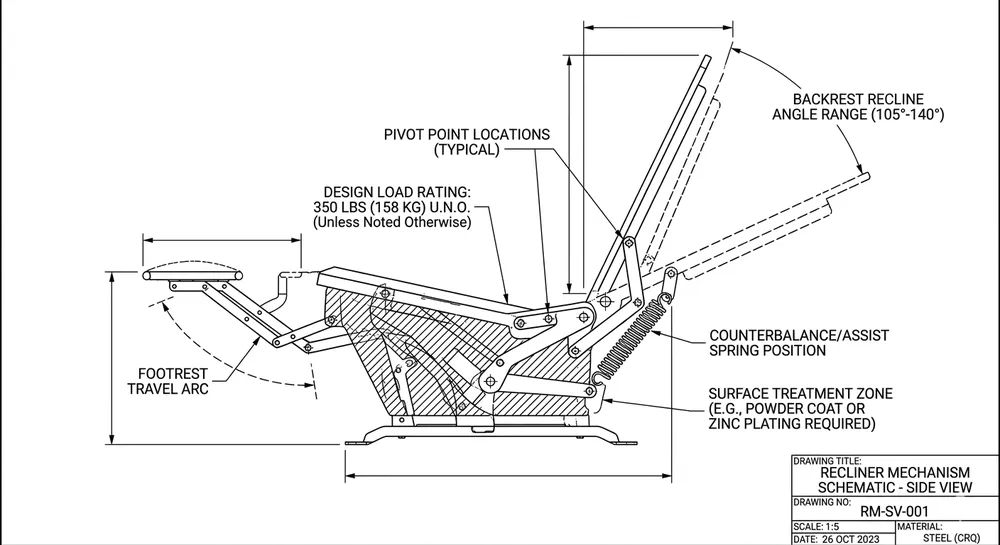
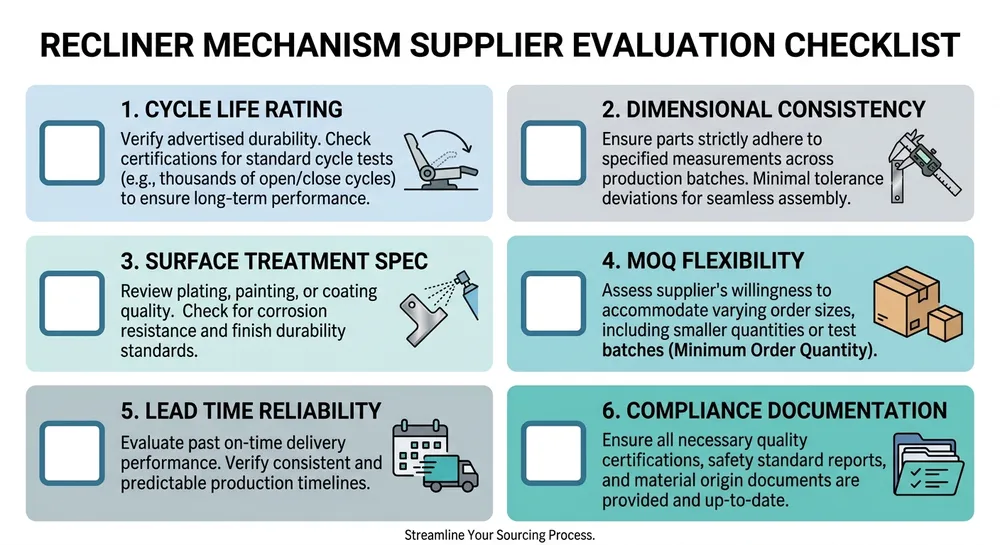
Cycle life rating and test documentation — A recliner mechanism should be rated to a minimum of 50,000 cycles for residential use; commercial or hospitality applications need 80,000–100,000 cycles. Ask for the test report, not just the claim. If a supplier can't produce third-party or in-house cycle test data, that's a gap in their QC process.
Dimensional consistency across batches — Mechanisms that fit your frame on the first order but require shimming on the third order are a production problem, not a tolerance problem. Ask whether the supplier controls stamping in-house or sources fabricated components from sub-suppliers. Sub-sourced stamping is where batch-to-batch variation enters the chain.
Surface treatment specification — Powder coat thickness below 50μm fails salt spray testing in coastal environments, which matters for Australian buyers supplying Queensland, WA, and coastal NSW markets. Ask for the film thickness spec and the salt spray rating. (We run 60–80μm on our powder line specifically because the 45–55μm range produced adhesion failures on coastal-market shipments — we learned that one the hard way.)
MOQ and reorder flexibility — A 500-unit MOQ is workable for most importers running regular replenishment. MOQs above 2,000 units on standard catalog items signal a supplier optimized for large-volume buyers, not importers managing mixed SKU orders.
Lead time reliability, not just lead time — A 35-day lead time that hits 35 days consistently is worth more than a 25-day promise that runs to 45 days when the factory is busy. Ask for on-time delivery rate data, not just the quoted window.
Compliance documentation — CE marking, SGS test reports, and RoHS compliance documentation should ship with the order. If you're supplying into commercial or hospitality channels, your buyers will ask for these. Getting them after the fact is a customs and compliance headache you don't need.
The Local Supplier Landscape: 10 Companies Worth Knowing
The following companies represent the active sourcing options available to Australian furniture importers. They span stocking distributors, hardware specialists, and import-focused suppliers. No theatrical ranking — the right choice depends on your order profile, not a numbered list.
—
1. Häfele Australia
Type: Hardware distributor — stocking Website: hafele.com.au
Häfele is the most established hardware distributor operating in Australia with physical branch presence across major cities. Their catalog covers furniture fittings broadly — hinges, drawer systems, and some motion hardware. For recliner mechanisms specifically, their SKU depth is limited compared to their core cabinetry hardware range, but their local stock and same-week delivery make them a reliable emergency source. If you need 50 units to complete a production run while waiting on a container, Häfele is the call. For planned volume procurement, their pricing reflects the full distribution margin.
—
2. Hettich Australia
Type: Hardware distributor — stocking Website: hettich.com/en-au
Hettich's Australian operation focuses primarily on drawer systems and hinge hardware, with motion furniture components as a secondary category. Their technical support is strong — if you're troubleshooting a mechanism integration issue, their local reps have the product knowledge to help. Like Häfele, their value proposition is local availability and technical service, not competitive unit pricing on volume orders.
—
3. Sugatsune Australia
Type: Precision hardware specialist Website: sugatsune.com.au
Sugatsune operates at the premium end of the hardware spectrum — their mechanisms are engineered to tight tolerances and carry strong cycle life ratings. For furniture importers supplying high-end residential or commercial channels where mechanism quality is a selling point, Sugatsune is worth evaluating. Their pricing is positioned accordingly, and their MOQs on specialty items can be restrictive for smaller importers. Strong compliance documentation is a consistent strength.
—
4. Blum Australia
Type: Hardware distributor — stocking Website: blum.com/au
Blum's Australian presence is primarily built around their lift systems and hinge hardware for cabinetry. Their motion furniture range is narrower than their core catalog. Worth knowing as a local stocking option for specific hinge and lift components that interact with recliner frame assemblies, but not a primary source for recliner mechanisms specifically.
—
5. Furniture Hardware Australia (FHA)
Type: Furniture hardware importer/distributor Website: furniturehardware.com.au
FHA operates as a dedicated furniture hardware importer, which puts them closer to the mechanism category than general hardware distributors. Their catalog includes motion hardware components alongside standard furniture fittings. Lead times reflect their import model — typically 4–8 weeks on non-stocked items — but their pricing is more competitive than full-service distributors for planned orders. Worth requesting a catalog and pricing sheet if you're sourcing mechanisms regularly.
—
6. Interline Brands Australia
Type: Furniture component importer Website: interlinebrands.com.au
Interline operates in the furniture component import space, sourcing from Asian manufacturers and supplying Australian furniture producers and importers. Their mechanism range varies by season and supplier relationships. The import-agent model means more SKU flexibility than a stocking distributor, but less predictability on lead times and batch consistency. Useful for sourcing less common mechanism configurations that local distributors don't stock.
—
7. Dwell Hardware
Type: Furniture hardware specialist Website: dwellhardware.com.au
Dwell positions as a furniture hardware specialist with a focus on the Australian trade market. Their mechanism range includes recliner and sofa hardware sourced from Asian manufacturers. For importers who want a local point of contact with some mechanism specialization, Dwell is worth evaluating. Their trade pricing structure is more accessible than premium distributors for mid-volume buyers.
—
8. Kinetic Furniture Components
Type: Furniture component supplier Website: kineticfurniture.com.au
Kinetic focuses specifically on motion furniture components — mechanisms, frames, and related hardware — which gives them more category depth than general hardware distributors. Their supplier relationships in China and Southeast Asia mean they can source configurations that aren't in standard distributor catalogs. Lead times on import orders run 6–10 weeks; they hold limited local stock on fast-moving SKUs.
—
9. Pacific Furniture Supplies
Type: Furniture hardware importer Website: pacificfurnituresupplies.com.au
Pacific operates as a furniture hardware importer serving the Australian trade market, with a catalog that includes motion hardware alongside upholstery components and frame hardware. Their mechanism range is broader than most general distributors. For importers building out a full component sourcing relationship rather than buying mechanisms in isolation, Pacific's multi-category offering reduces the number of supplier relationships to manage.
—
10. MVMHardware (Factory-Direct)
Type: Manufacturer — factory-direct export Website: mvmhardware.com
MVMHardware is a Guangdong-based recliner and sofa mechanism manufacturer that ships factory-direct to Australian importers. This is a different supplier model from the nine above — no Australian warehouse, no local rep, but also no distribution margin between the factory and your container. We've been manufacturing mechanism hardware since 2008, and Australia has been an active export market for us for over a decade.
The commercial case for factory-direct is straightforward at repeat volume: you're buying at the price the local distributors pay, not the price they sell at. On a 1,000-unit order of recliner mechanisms, the landed cost difference between a local distributor and factory-direct typically runs 25–40% depending on the SKU. That margin either goes to your bottom line or gives you room to compete on price in your own market.
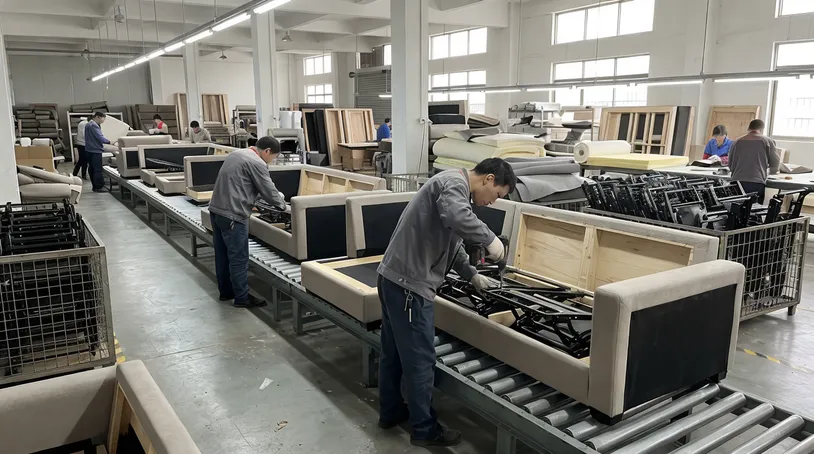
What makes the factory-direct model work at our end: 6 dedicated production lines, 3,000,000 units annual capacity, and 100% functional testing on every unit before it leaves the floor. Your 500-unit order gets the same QC process as a 50,000-unit run. CE, SGS, and RoHS documentation ships with every order — your compliance team gets what they need without chasing paperwork after the fact.
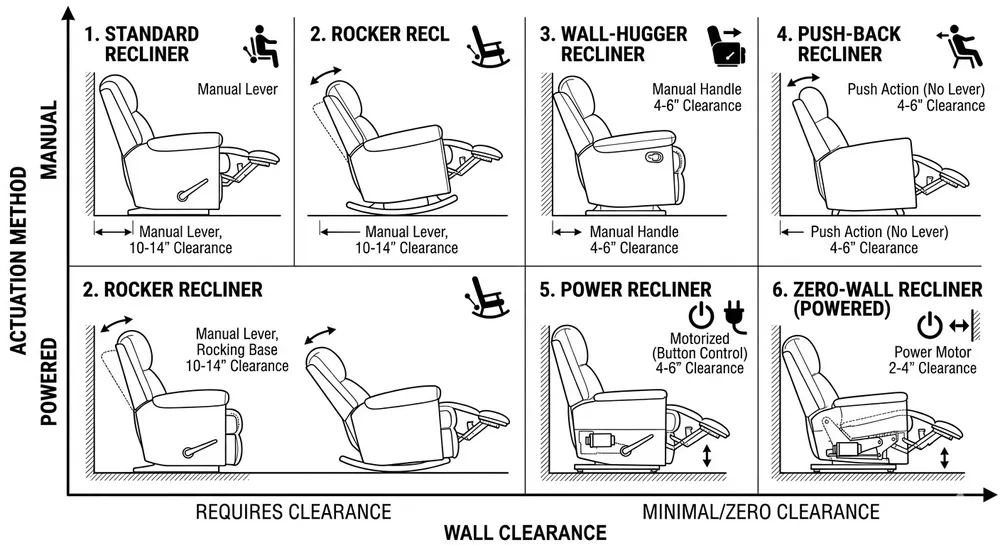
Our Recliner & Sofa Mechanism catalog covers the full range of recliner linkages, wall-hugger mechanisms, and sofa bed frames. Standard MOQ is 500 units; OEM/ODM tooling is available for buyers who want a proprietary mechanism configuration.
—
The Cost of Local Convenience — An Honest Trade-Off
Local distributors earn their margin. Same-week delivery when you're short 200 units to complete a production run is worth real money. Technical support from a local rep who can visit your facility is worth real money. The ability to return a defective batch without navigating international freight logistics is worth real money.
The question is whether you're paying for that convenience on every order, including the planned volume orders where you have 8–10 weeks of lead time and a confirmed spec. That's where the economics shift.
A rough landed-cost comparison for a standard recliner mechanism:
| Sourcing Route | Typical Unit Cost Range | Lead Time | Stock Risk |
|---|---|---|---|
| Local stocking distributor | High — full distribution margin | Days to 1 week | Distributor holds stock |
| Local import agent | Medium-high — agent margin + freight | 6–10 weeks | You hold stock |
| Factory-direct (China) | Medium — factory price + freight | 25–35 days production + transit | You hold stock |
The factory-direct column doesn't win on every dimension — you carry the inventory risk, you manage the freight, and you need enough lead time to plan. But on planned volume orders with a confirmed spec, the unit cost difference is significant enough that most importers running regular replenishment find the model worth building.
(The break-even point for most buyers we work with is somewhere around 500–1,000 units per order. Below that, the freight cost per unit erodes the savings. Above it, the economics are consistently in favour of direct.)
When Local Supply Is the Right Answer
Factory-direct sourcing isn't always the smarter choice. Be honest with yourself about when local supply fits better:
- Urgent small orders — If you need 100 units in 5 days to complete a production run, no factory in China helps you. A local stocking distributor does.
- First-time sourcing of a new mechanism type — Buying a small quantity locally to test fit and function before committing to a container order is a reasonable risk management step.
- Projects with tight compliance timelines — If you need local certification documentation on a short timeline for a commercial tender, a local supplier with pre-cleared stock is faster.
- Mixed small-quantity orders — If you're buying 50 units each of 10 different mechanism types, the freight economics don't support factory-direct on any individual SKU.
The right sourcing model depends on your order profile, not a principle. Most importers running a mature product line end up with a hybrid: factory-direct for their core SKUs at planned volume, local distributor as a buffer for urgent replenishment.
Sourcing Route by Order Profile
Use this as a quick reference when evaluating which supplier model fits a specific order:
Urgent replenishment (under 200 units, needed within 2 weeks) → Local stocking distributor. Häfele, Hettich, or Dwell Hardware depending on the mechanism type. Pay the premium — the speed is worth it.
Planned volume order (500+ units, 6–10 weeks lead time) → Factory-direct or local import agent. At this volume and lead time, the unit cost difference between local distribution and factory-direct is significant. Request quotes from both and compare landed cost, not list price.
New mechanism type, first order → Buy a small quantity locally to verify fit and function. Once the spec is confirmed, move to factory-direct for repeat orders.
OEM or custom mechanism configuration → Factory-direct only. Local distributors don't carry tooling capability. You need a manufacturer with in-house engineering and tooling — not a distributor reselling catalog items.
High-end residential or commercial channel → Evaluate Sugatsune for premium positioning, or specify a factory-direct supplier with documented cycle life ratings and compliance certification. The mechanism quality claim needs to be backed by test data your downstream buyers can see.
Frequently Asked Questions
What cycle life rating should I specify for recliner mechanisms going into commercial or hospitality furniture?
For residential use, 50,000 cycles is the standard floor. For commercial environments — hotel rooms, aged care facilities, cinema seating — specify 80,000–100,000 cycles minimum and ask for the test report. The failure mode in commercial use isn't the mechanism wearing out gradually; it's a sudden failure under load from a user who isn't treating the furniture gently. Higher cycle ratings correlate with heavier gauge steel and tighter tolerance on pivot points — both of which you want in a commercial application. If a supplier quotes you a commercial mechanism without offering cycle test documentation, that's a red flag.
What's the realistic landed cost difference between buying locally and importing factory-direct for recliner mechanisms?
On a 1,000-unit order of a standard recliner linkage mechanism, the difference between a local distributor's price and a factory-direct landed cost (including sea freight and customs) typically runs 25–40%. The exact figure depends on the mechanism spec, the freight rate at the time of shipment, and the local distributor's margin structure. The factory-direct number improves as order volume increases because sea freight cost per unit drops on larger shipments. At 500 units, the savings are real but modest. At 2,000+ units, the economics are consistently compelling.
How do I verify that a recliner mechanism supplier's compliance documentation is genuine?
CE declarations of conformity should reference the specific directive (typically the Machinery Directive or General Product Safety Directive depending on the mechanism type) and include the notified body number if third-party assessment was involved. SGS reports should carry a report number you can verify directly with SGS. RoHS compliance should be backed by material test reports, not just a self-declaration. Ask for the actual documents before placing an order — a legitimate supplier sends them without hesitation. (We include CE declaration, SGS report, and RoHS material test report with every shipment as standard documentation, not on request.)
What MOQ is realistic for factory-direct recliner mechanism orders from China?
For standard catalog mechanisms, 500 units is a workable MOQ with most established manufacturers. Below 500 units, the per-unit freight cost starts eroding the price advantage of factory-direct sourcing. For OEM or custom configurations requiring new tooling, MOQ depends on tooling amortization — expect 1,000–2,000 units minimum on a new tooling project, though the exact number depends on the mechanism complexity and tooling cost. Any factory quoting you a 100-unit MOQ on a custom mechanism is either not building real tooling or is amortizing it into a unit price that removes the cost advantage.
What's the typical production lead time for a factory-direct recliner mechanism order?
For standard catalog items, 25–35 days from order confirmation and deposit is a realistic production window with an established manufacturer. Add 12–18 days for sea freight to Australian ports (Sydney, Melbourne, Brisbane) and customs clearance. Total door-to-door from order placement runs approximately 40–55 days depending on port congestion and customs processing. The most common delay isn't production — it's buyers sending revised specifications after production has started. Lock your spec before you place the order.
—
If your current sourcing arrangement is working for urgent small orders but compressing margin on your planned volume runs, that's the gap worth addressing. The Recliner & Sofa Mechanism catalog covers the standard configurations most Australian importers are sourcing — wall-hugger linkages, three-position recliner mechanisms, and sofa bed frames. Send your current spec or a sample reference to Request Quote and we'll come back with a landed-cost comparison against what you're paying now.