The Netherlands sits at one of Europe's most active furniture import and distribution crossroads. Rotterdam handles more container freight than any other European port, and the Dutch furniture trade — both domestic manufacturing and import distribution — runs on a steady diet of mechanism hardware: lift-top fittings, folding table brackets, extension table slides, and the full range of surface motion components that determine whether a piece of furniture works reliably for five years or fails in the first season.
If you're sourcing table and surface mechanisms for a Dutch or European furniture operation, you already know the landscape is fragmented. There are German and Austrian hardware giants with local distribution arms, specialist importers, and a handful of regional distributors who stock what moves and special-order the rest. Each model has a different cost structure, lead time profile, and minimum order reality. This article maps that landscape honestly — including where local supply earns its premium and where factory-direct procurement starts making more financial sense.

How Serious Buyers Evaluate Table Mechanism Suppliers
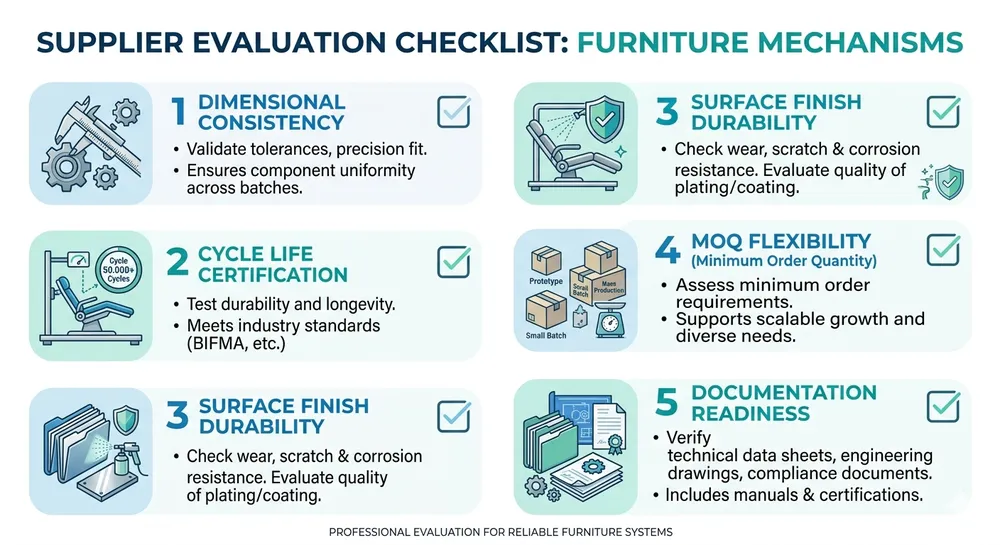
Before walking through the supplier landscape, it's worth being explicit about what actually separates a reliable mechanism supplier from one that creates downstream problems. The criteria that matter in this category are specific.
Dimensional consistency across batches is the first filter. A lift-top mechanism that fits your cabinet prototype perfectly but runs 0.3mm wider on the production batch creates rework costs that erase your margin on the order. Ask for batch-to-batch tolerance documentation, not just a sample approval.
Cycle life certification is non-negotiable for commercial furniture. A residential lift-top mechanism rated for 20,000 cycles will fail in a hotel room or co-working space environment within two years. CE certification covers market access; it doesn't automatically tell you the cycle life spec. Get the test report, not just the certificate.
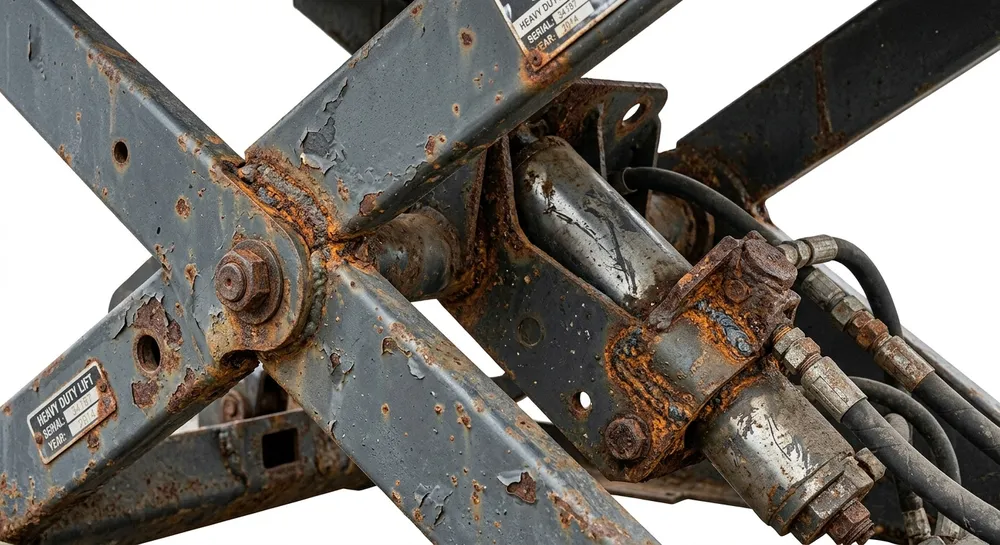
Surface finish durability matters more than it looks on a spec sheet. Mechanisms in coastal markets — and the Netherlands qualifies — need salt spray resistance above 300 hours minimum. Powder coat adhesion failures at weld seams are the most common field complaint in this category. (We see this regularly on mechanisms sourced from suppliers who outsource their surface treatment — the coating spec is right on paper, but the pre-treatment at the weld zone is inconsistent.)
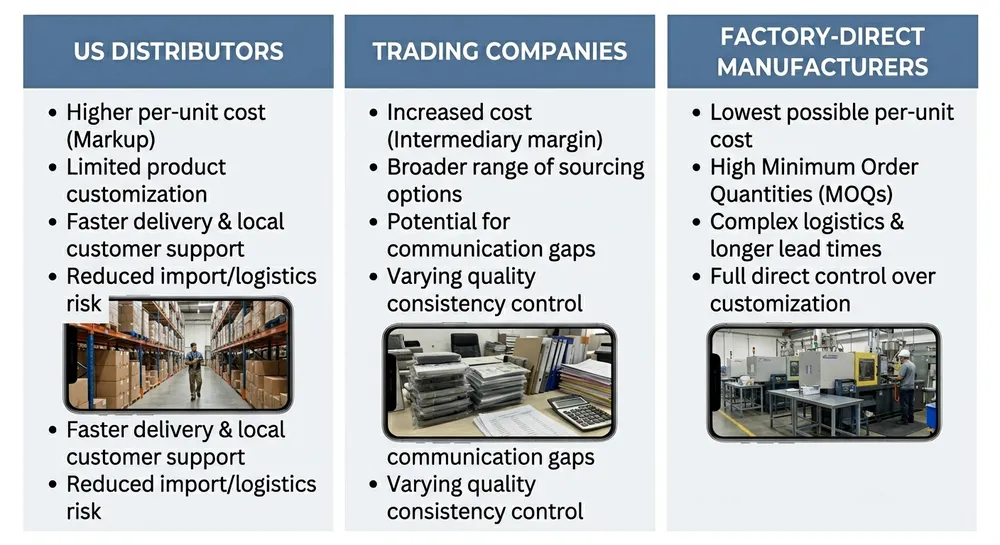
MOQ and reorder flexibility determines whether a supplier fits your procurement model. A distributor stocking 50-unit minimums is the right answer for a small furniture workshop. A factory with 500-unit MOQ and 25–35 day lead time is the right answer for a distributor placing quarterly container orders.
Documentation readiness is a practical filter for European buyers. CE declaration of conformity, RoHS compliance documentation, and SGS test reports should ship with the order — not require a two-week chase after delivery.
The European Distributor Landscape: Ten Suppliers Worth Knowing
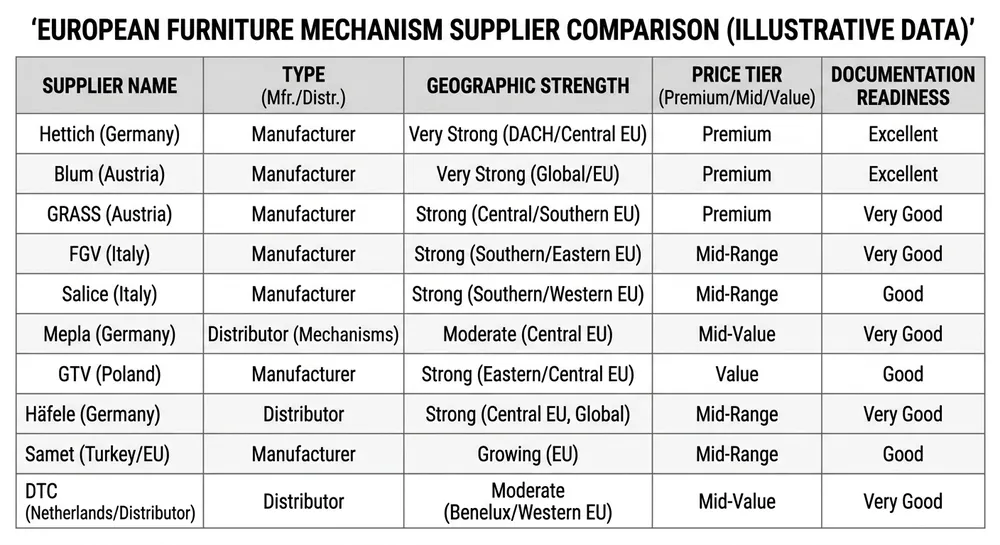
The European market for table and surface mechanisms is served by a mix of large hardware conglomerates, specialist manufacturers with their own distribution networks, and regional importers. Here is a realistic picture of who operates in this space and what each model offers.
1. Häfele — häfele.com
Häfele is a German hardware distributor with one of the broadest furniture fitting catalogs in Europe and a well-established Dutch distribution operation. Their table mechanism range covers folding brackets, extension table hardware, and lift-top fittings. The strength here is catalog depth and same-week delivery on stocked items. The trade-off is that Häfele is a distributor, not a manufacturer — the mechanisms in their catalog come from multiple OEM sources, and batch-to-batch consistency depends on which factory is behind a given SKU at any point in time.
2. Hettich — hettich.com
Hettich is a German manufacturer with genuine engineering depth in furniture motion hardware. Their runner and slide systems are well-regarded, and their European distribution network is mature. For table extension mechanisms specifically, Hettich's catalog is strong. Lead times on standard items are predictable. MOQ for direct orders tends to be higher than what a small workshop needs, which pushes smaller buyers toward their distributor network — adding a margin layer.
3. Julius Blum GmbH — blum.com
Blum is the Austrian precision hardware manufacturer that most European furniture buyers encounter through their hinge and drawer systems. Their lift mechanism range — particularly the AVENTOS series — is widely specified in kitchen and furniture applications. Blum's quality consistency is genuinely strong; their manufacturing tolerances and cycle life specs are well-documented. The premium is real: Blum mechanisms sit at the higher end of the landed cost range for European buyers, which compresses margin on price-sensitive product lines.
4. Grass — grass.eu
Grass is another Austrian furniture fitting manufacturer with a strong European distribution footprint, including the Netherlands. Their motion hardware range covers drawer systems and some table mechanism applications. Similar profile to Blum in terms of quality consistency and price positioning — appropriate for premium furniture lines where the mechanism spec is a selling point, less competitive on cost-sensitive commercial furniture.
5. Salice — salice.com
Salice is an Italian furniture hardware manufacturer with CE-certified products and distribution across the EU. Their hinge and sliding door hardware is their core business, but their catalog extends into table and surface mechanism applications. Italian manufacturing with European compliance documentation in order — a reasonable option for buyers who need CE paperwork without the Austrian price premium.
6. Sugatsune — sugatsune.com
Sugatsune is a Japanese precision hardware manufacturer with a European distribution hub. Their table mechanism and surface fitting range is technically precise — tolerances are tight, finishes are consistent, and their catalog covers some specialty applications that European manufacturers don't stock. The trade-off is lead time: Sugatsune's European stock is selective, and non-stocked items route back through Japan, which adds weeks to the procurement cycle.
7. Accuride International — accuride.com
Accuride is a US-origin slide and motion hardware manufacturer with European distribution. Their heavy-duty slide and extension mechanism range is well-regarded for commercial and industrial furniture applications. For buyers sourcing mechanisms for high-load or high-cycle commercial table applications, Accuride's specs are worth reviewing. European stock depth is more limited than their North American operation.
8. Vauth-Sagel — vauth-sagel.com
Vauth-Sagel is a German furniture hardware specialist with a focused catalog of lift, fold, and surface mechanism fittings. Their product range is more targeted than Häfele or Hettich — they go deeper on specific mechanism types rather than covering the full hardware spectrum. For buyers who know exactly which mechanism type they need and want a specialist supplier, Vauth-Sagel is worth a direct conversation.
9. King Slide — kingslide.com
King Slide is a Taiwanese slide and motion hardware manufacturer with European distribution. Their drawer slide range is their primary business, but their catalog includes table extension and surface mechanism components. Taiwanese manufacturing with European compliance documentation — a middle-ground option between European premium pricing and direct China factory sourcing.
10. Waterloo Furniture Components — waterloofurniture.co.uk
Waterloo Furniture Components is a UK-based furniture mechanism distributor that serves European buyers, including the Netherlands market. Their catalog covers folding table brackets, lift-top mechanisms, and extension table hardware sourced from multiple manufacturers. Post-Brexit, their EU logistics have added complexity, but they remain a useful source for mechanism types that European distributors don't stock in depth.
Where Local Distribution Earns Its Premium
The European distributor model exists for good reasons, and it's worth being direct about when it's the right answer.
Urgent small orders are the clearest case. If you need 20 lift-top mechanisms to complete a client order this week, a local distributor with Rotterdam warehouse stock is the only realistic option. No factory lead time, no container logistics, no customs clearance — you pick up or receive next-day delivery and the job gets done. The per-unit cost is higher, but the alternative is a delayed delivery and a damaged client relationship.
Emergency replacement stock follows the same logic. Mechanism failures in the field happen. A distributor who can ship replacement units within 48 hours protects your after-sales reputation in a way that a factory 9,000 kilometers away cannot, regardless of how good the factory's quality control is.
Compliance timing is a third legitimate case. If you're entering a new product category and need CE-documented mechanisms on a short timeline to meet a tender deadline, a European distributor with documentation already in order removes a variable from your critical path.
The honest summary: local distribution is the right answer when speed, small volume, or compliance timing is the constraint. It is not always the right answer when volume, margin, and supply chain control are the primary variables.
The Cost Structure Behind Local Convenience
Understanding what you're actually paying for when you buy from a European distributor helps calibrate when the premium is worth it and when it isn't.
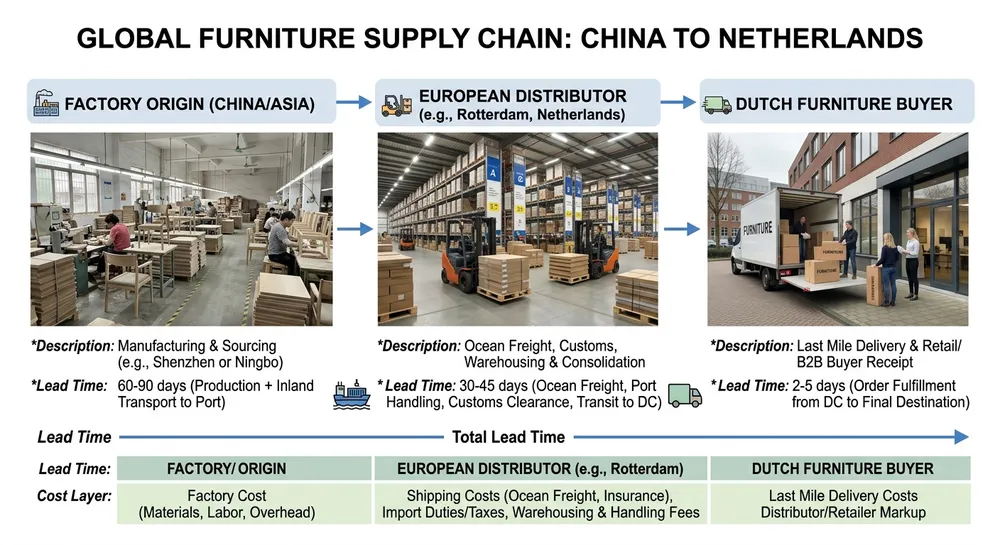
A mechanism that leaves a Chinese factory at €2.80 per unit passes through an importer or regional distributor before it reaches a Dutch furniture buyer. Each layer adds margin — typically 25–40% per tier in this category. By the time the same mechanism sits in a Dutch distributor's catalog, the landed cost to you might be €5.50–€7.00 per unit, depending on the product type and the distributor's margin structure. On a 2,000-unit order, that difference is €5,400–€8,400 in additional cost compared to factory-direct procurement at equivalent quality.
That math doesn't make local distribution wrong — it makes it a trade-off. The distributor is providing real value: warehousing, logistics management, compliance documentation, and the ability to ship 50 units instead of 500. You're paying for that infrastructure. The question is whether your order profile justifies the cost.
For buyers placing repeat orders of 500 units or more per SKU, the economics of factory-direct procurement typically improve the landed cost meaningfully enough to justify the longer lead time and the logistics management overhead. For buyers whose order pattern is irregular, small, and urgent, the distributor premium is often the cheaper option when you factor in the cost of carrying inventory yourself.
Factory-Direct Sourcing: What the Trade-Off Actually Looks Like
Factory-direct procurement from a Chinese mechanism manufacturer is not a shortcut — it's a different procurement model with different requirements and different economics. Understanding the actual trade-offs helps you decide whether it fits your operation.
Lead time is the most visible difference. A factory-direct order from Guangdong to Rotterdam runs 25–35 days production plus 25–30 days ocean freight — call it 55–65 days from order confirmation to your warehouse. That's the baseline for a standard catalog item. If you're running a just-in-time operation with no buffer stock, that lead time is a constraint. If you're placing quarterly orders and maintaining a working inventory, it's a planning parameter, not a problem.
MOQ is the second variable. A factory like ours runs 500-unit minimums on standard catalog mechanisms. That's the right scale for a distributor or importer placing container orders, not for a workshop ordering 30 units at a time. If your order volume per SKU is below 500 units per quarter, factory-direct procurement probably doesn't improve your economics enough to justify the logistics overhead.
Quality control is where factory-direct sourcing can actually improve on the distributor model, not just match it. When you buy through a distributor, you're buying whatever the distributor sourced — you have limited visibility into the factory behind the product, the QC process, or the batch consistency. When you source factory-direct, you can audit the factory, specify your quality requirements, review test reports, and build a direct relationship with the production team. For buyers who have had quality problems with distributor-sourced mechanisms, that control is worth more than the cost saving.
Documentation for European market compliance — CE, RoHS, SGS — should be standard from any factory supplying European buyers. If a factory can't provide CE declaration of conformity and SGS test reports with the shipment, that's a disqualifying gap, not a negotiation point.
We've been shipping to European buyers since 2010. The buyers who make factory-direct work are the ones who plan their inventory 60–90 days out, place orders at volume, and treat the supplier relationship as a procurement partnership rather than a spot-buy transaction. The buyers who struggle with it are the ones who try to run factory-direct on the same just-in-time model they use with local distributors — the lead times don't support it.
MVMHardware: Factory-Direct Table Mechanism Supply for European Buyers
We manufacture Table & Surface Mechanism hardware in Guangdong, China — lift-top table fittings, folding table brackets, extension table slides, and the full range of surface motion components. We've been doing this since 2008, and European buyers have been a consistent part of our customer base since 2010.
The factory runs 12,000 m² across stamping, die-casting, surface treatment, assembly, and QC. Six dedicated production lines handle the full mechanism range — table and surface mechanisms run on dedicated lines, so your order isn't competing for capacity with chair or recliner hardware. Annual output is 3,000,000 units; a 5,000-unit table mechanism order is a standard production run.
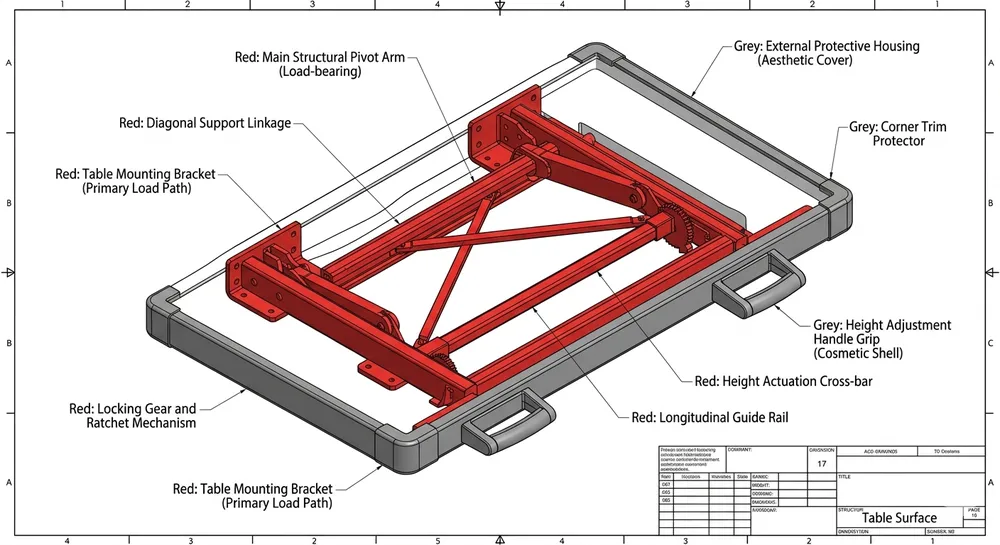
Our stamping presses hold ±0.15mm tolerance on mechanism plates and structural brackets — the dimensional consistency that prevents the batch-to-batch fit variation that creates rework costs downstream. Zinc alloy die-casting is in-house, which matters because die-cast components — adjustment knobs, pivot collars, decorative covers — are where most mechanism quality complaints originate when a factory outsources that process. We own it, so we own the fix when something is off.
Surface treatment runs a full in-house line: powder coating at 60–80μm consistent film thickness, nickel plating, and zinc plating. The powder line passes 500-hour salt spray — relevant for buyers supplying coastal markets, which includes most of the Netherlands. CE, SGS, and RoHS documentation ships with every European order. Your customs broker and compliance team get what they need without chasing us for paperwork.
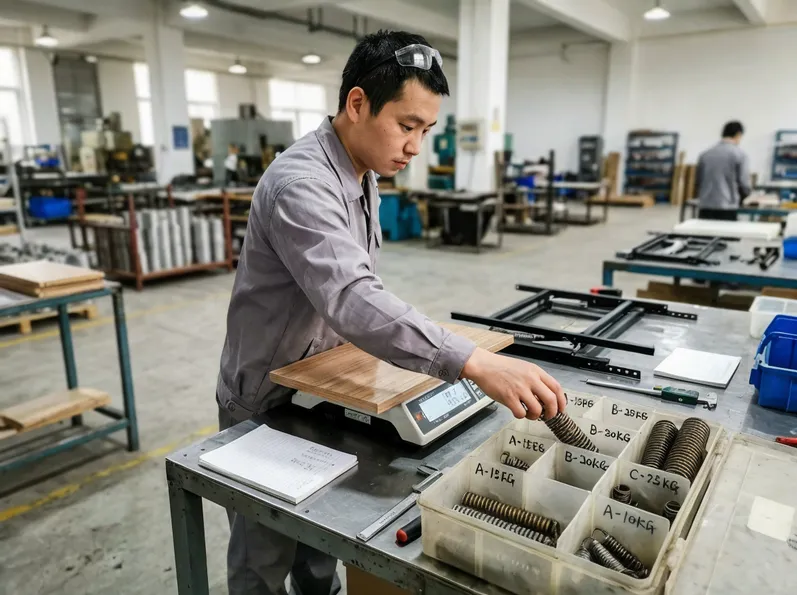
100% functional testing before shipment — every unit, not a sample pull. Mechanisms that pass dimensional checks but have a sticky lock or misaligned mounting point get pulled at the final line. That's the QC model that keeps your RMA rate at zero, which is the number your downstream customers care about.
MOQ is 500 units for standard catalog mechanisms. OEM and ODM work is available — if you need a mechanism spec'd to your furniture design rather than a catalog item, our 12-person engineering team handles the development and tooling in-house. Faster sample iterations, no third-party tooling delays.
Matching Your Sourcing Route to Your Order Profile
The right sourcing decision depends on your specific procurement situation, not a general preference for local or factory-direct supply. Here's a practical framework:
| Scenario | Recommended Route |
|---|---|
| Urgent order, under 200 units, needed within 2 weeks | Local European distributor |
| Emergency replacement stock, any volume | Local European distributor |
| Repeat order, 500+ units per SKU, quarterly cadence | Factory-direct |
| New product development, custom mechanism spec | Factory-direct OEM/ODM |
| Cost-sensitive commercial furniture bid, 1,000+ units | Factory-direct |
| First-time import, testing a new mechanism category | Factory-direct sample order, then scale |
| Mixed SKU order, low volume per line item | Local distributor or consolidator |
The buyers who get the most value from factory-direct procurement are typically importers and distributors who have moved past the trial phase and are placing predictable volume. The buyers who stay with local distribution are typically workshops and small manufacturers whose order pattern is too irregular to justify the inventory planning overhead.
Neither model is universally correct. The question is which one fits your current order profile — and whether that profile is likely to change as your volume grows.
If your volume is at the threshold where factory-direct starts making sense — 500+ units per SKU, repeat orders, and enough lead time to plan inventory — a direct conversation with a factory is worth the time. Send us your current mechanism spec or a sample reference, and we'll come back with a specific quote and a landed cost comparison you can put next to your current supplier pricing. Request a quote and we'll respond with specifics, not a brochure.
“`