The question comes up on almost every mid-range ergonomic chair project: tilt or synchro? Both mechanisms recline. Both adjust. Both show up in catalogs at similar price points. But they behave differently under a seated user, they cost differently to source at volume, and they position differently in the market. Choosing the wrong one doesn't just affect the chair's feel — it affects your return rate, your price ceiling, and which market segments you can credibly sell into.
Quick verdict: if you're building a task chair line for commercial office or contract furniture markets, synchro is the right mechanism for most SKUs. The tilt mechanism still has a clear role — budget lines, entry-level seating, and markets where price sensitivity outweighs ergonomic positioning. But if your buyer is comparing your chair against anything labeled "ergonomic," a standard tilt mechanism is a liability at the spec sheet level.
The rest of this article explains why, where the cost difference actually lands, and which scenarios flip the verdict.

How Each Mechanism Actually Moves — and Why It Matters for Your Product Line
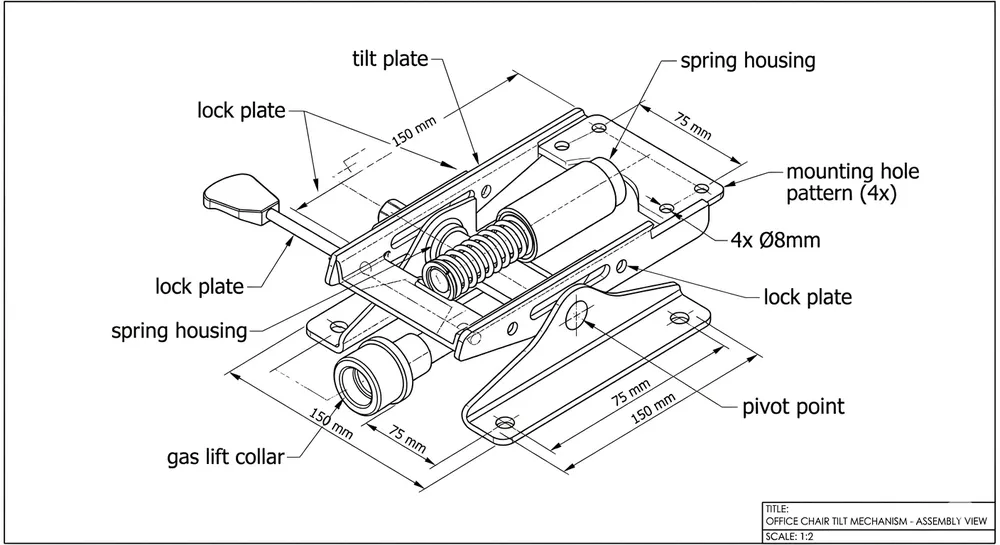
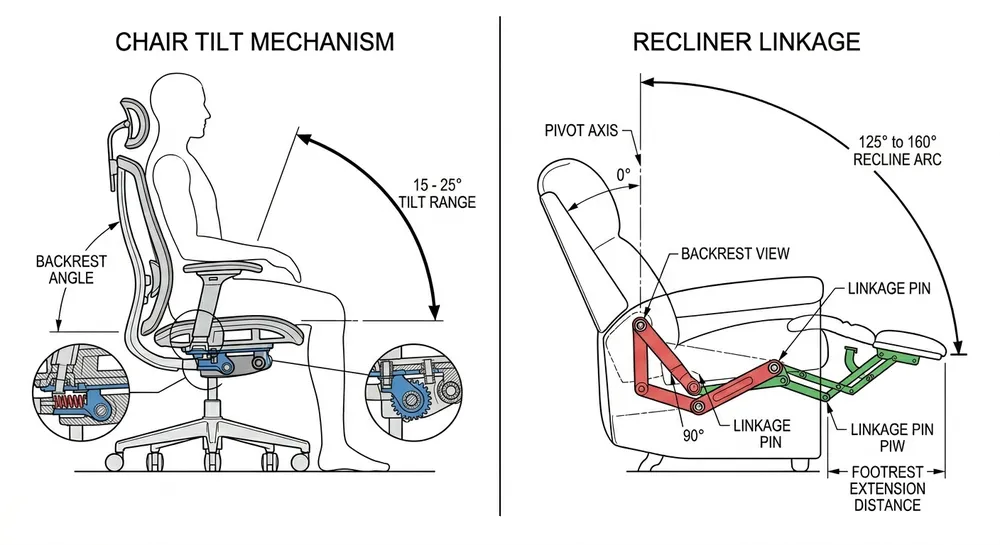
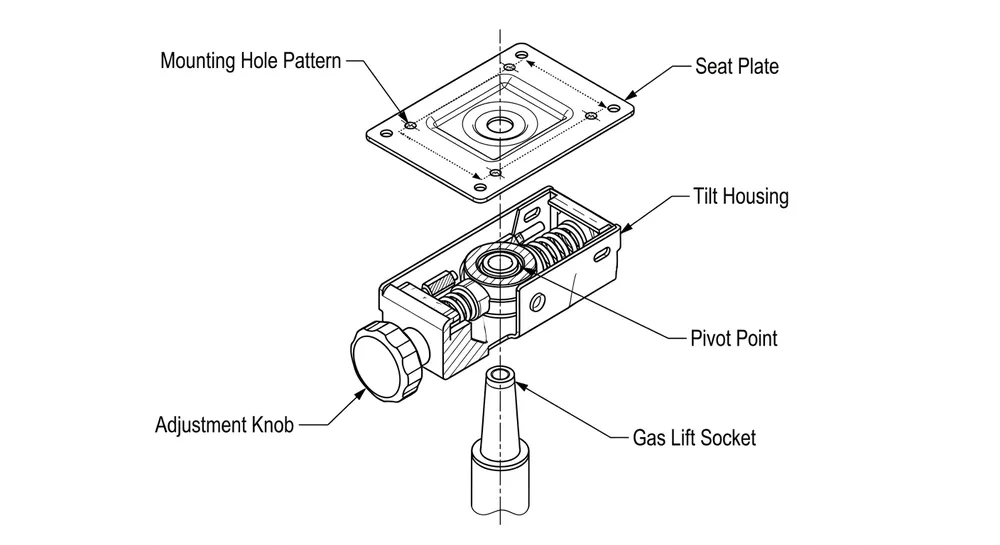
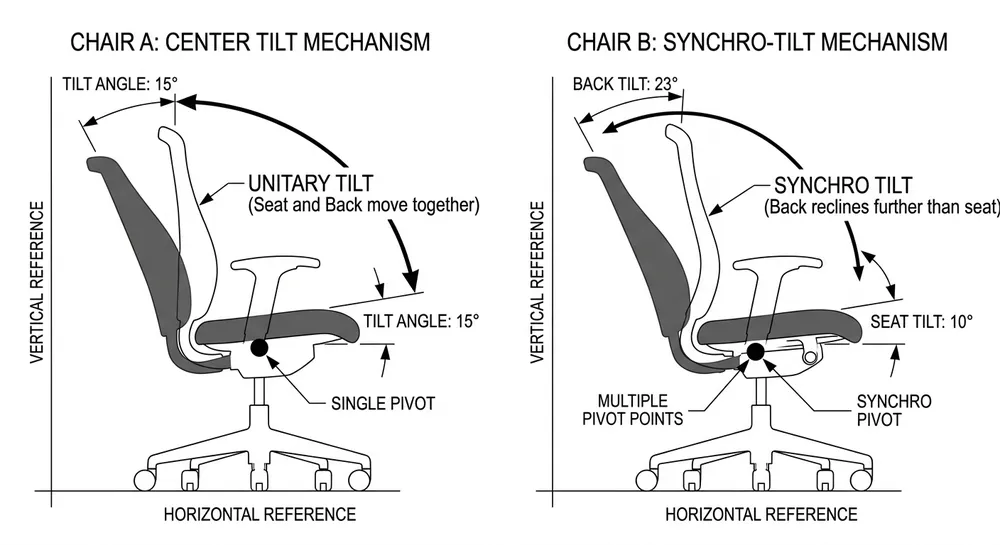
A standard tilt mechanism pivots the entire seat-and-back assembly from a single point, typically located near the front of the seat pan. When the user leans back, the seat tilts up at the front. The recline angle of the back and the tilt angle of the seat are fixed in a 1:1 ratio — they move together as one unit.
A synchro mechanism (short for synchronized) uses a two-pivot linkage that decouples the seat movement from the backrest movement. The backrest reclines at roughly a 2:1 ratio relative to the seat — for every degree the seat tilts, the back moves approximately two degrees. The seat stays closer to level throughout the recline arc, which keeps the user's thighs in a more neutral position and reduces pressure behind the knees.
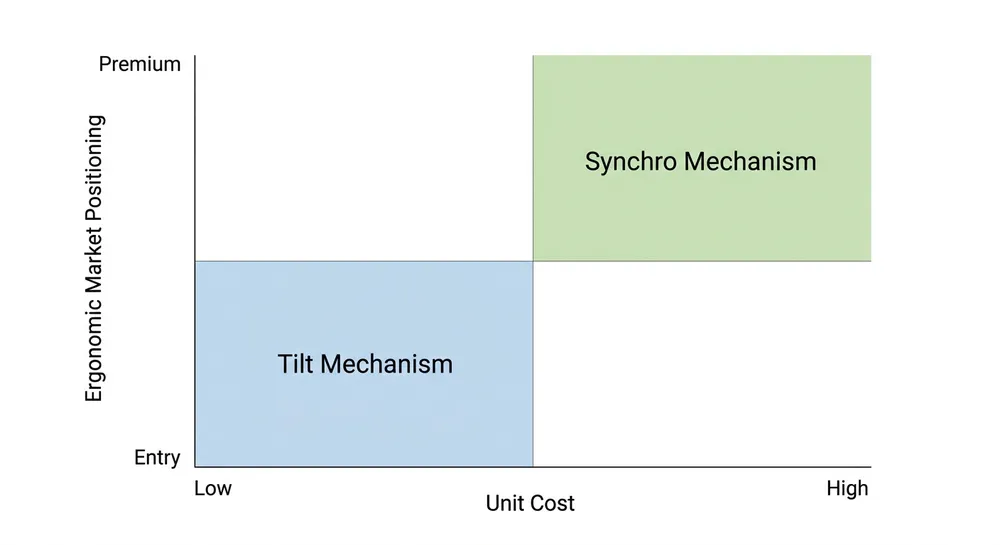
That mechanical difference has a direct commercial consequence: synchro mechanisms allow chair manufacturers to credibly use the word "ergonomic" in product positioning. A tilt mechanism chair can be comfortable, but the seat-tipping geometry works against the ergonomic claim. In markets where buyers are comparing spec sheets — corporate procurement, contract furniture, health-conscious retail — the synchro's movement profile is a selling point your downstream customer can explain to their own buyers.
(We've had customers switch from tilt to synchro mid-development after their sales team ran into this exact objection during a corporate account pitch. The mechanism swap added cost, but it opened a price tier that more than covered it.)
Head-to-Head: Tilt vs Synchro Mechanism Specification Matrix
| Dimension | Tilt Mechanism | Synchro Mechanism |
|---|---|---|
| Movement type | Single-pivot, seat+back move together | Dual-pivot, back reclines ~2× seat angle |
| Seat angle during recline | Tilts up at front | Stays near-level |
| Ergonomic positioning | Entry/mid-level | Mid/premium ergonomic |
| Typical component count | Lower | Higher (additional linkage arms) |
| Mechanism weight | Lighter | Slightly heavier |
| Unit cost (relative) | Lower baseline | 15–30% higher depending on spec |
| Tilt tension adjustment | Standard (knob or paddle) | Standard (same adjustment options) |
| Lock positions | Typically 2–4 | Typically 3–5 |
| Cycle life (commercial spec) | 50,000+ cycles | 50,000+ cycles |
| Suitable chair price tier | Budget to mid-range | Mid-range to premium |
| Market positioning ceiling | Limited in ergonomic segment | Supports full ergonomic claim |
The cost gap is real but not dramatic at the mechanism level. Where it compounds is in the chair's total BOM — a synchro mechanism typically pairs with a higher-spec seat foam, a more adjustable armrest, and a lumbar system, because the buyer who pays for a synchro mechanism expects the rest of the chair to match. If you're building a synchro chair and cutting corners on the seat cushion, you've paid for the mechanism's positioning without capturing the price premium it enables.
The Hidden Cost the Spec Sheet Doesn't Show
The mechanism unit price difference is visible. The downstream cost difference is where buyers get surprised.
Return rate exposure. A tilt mechanism chair sold into a corporate ergonomic program will generate complaints about seat pressure and thigh discomfort during extended use — not because the mechanism is defective, but because the geometry isn't suited to that use case. Those complaints become warranty claims or returns. The mechanism saved you $4–8 per unit; the return handling costs multiples of that.
Price ceiling compression. A tilt mechanism chair has a practical retail price ceiling in most markets. Once you're above a certain price point, buyers expect synchro movement — it's become a baseline expectation in the mid-range ergonomic segment. Trying to sell a tilt mechanism chair at a synchro price point creates a spec objection that your sales team has to fight on every deal.
Segment access. Corporate contract furniture buyers, healthcare facility procurement, and co-working operators increasingly specify synchro or better as a minimum requirement. A tilt mechanism chair is disqualified before the price conversation starts. If those segments are part of your distribution strategy, the mechanism choice is a market access decision, not just a product decision.
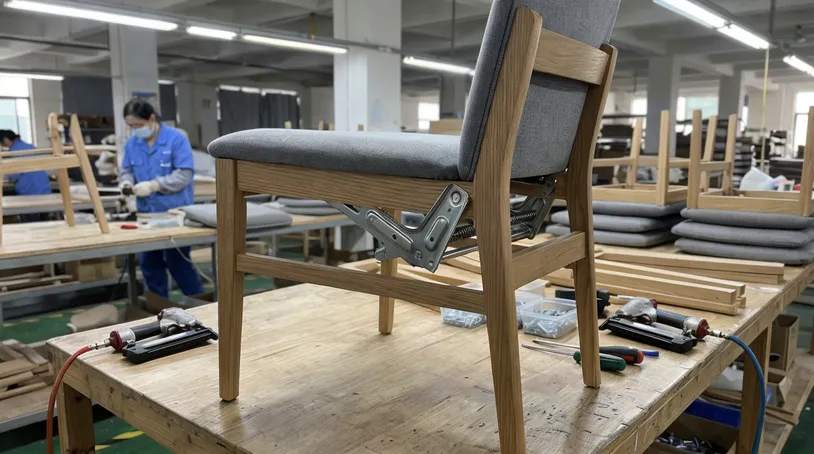
Upgrade path. If you launch a tilt mechanism chair and later want to move upmarket, you're not just swapping a component — you're redesigning the chair's seat pan geometry, potentially the base, and the armrest attachment points. Synchro mechanisms have a different mounting footprint than tilt mechanisms on most platforms. Starting with synchro on a platform you intend to develop is cheaper than retrofitting later.
We've seen this play out with buyers who launched budget lines on tilt mechanisms and then tried to extend the same chair platform upmarket. The mechanism swap forced a tooling revision on the seat shell. That's a cost that doesn't show up in the original mechanism comparison.
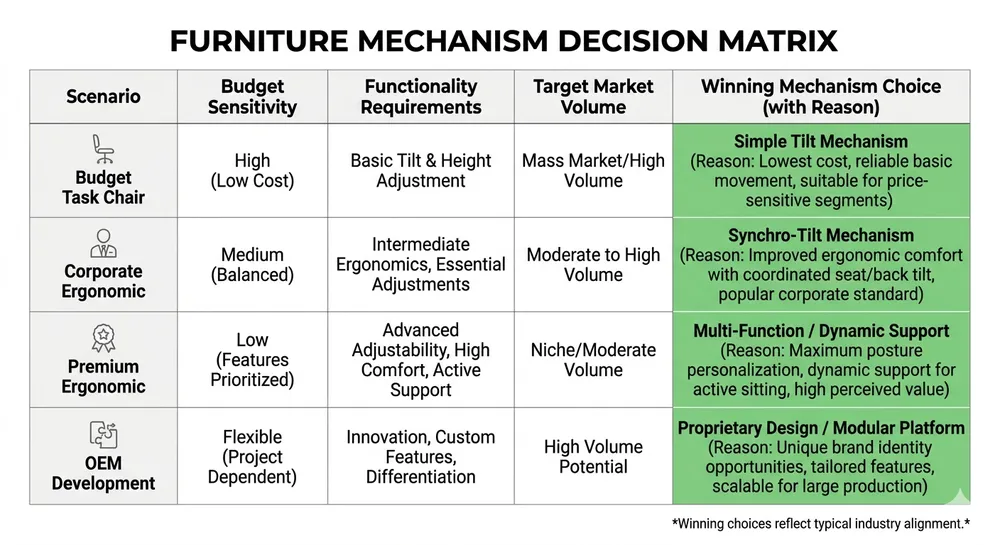
Application Showdown: Which Mechanism Wins in Each Scenario
Scenario 1: Budget Task Chair for Price-Sensitive Markets
Winner: Tilt mechanism.
If your target retail price is in the entry-level range and your buyer's primary decision criterion is price, a synchro mechanism adds cost without adding perceived value at that price point. The buyer isn't comparing ergonomic specs — they're comparing sticker prices. A well-built tilt mechanism with solid tilt tension adjustment, a stable base, and good foam delivers a functional chair at a margin that works for both you and your distributor. The Tilt Chair Mechanism is the right component for this platform.
Scenario 2: Mid-Range Ergonomic Office Chair for Corporate or Contract Markets
Winner: Synchro mechanism.
This is the scenario where the tilt mechanism loses on spec sheet alone. Corporate procurement teams, office furniture dealers, and contract furniture specifiers compare mechanisms as a standard part of their evaluation. A synchro mechanism at this tier is table stakes, not a differentiator. The 15–30% mechanism cost premium is recoverable in the chair's price positioning — and the alternative is being excluded from the segment entirely. Your Chair Mechanism line needs synchro coverage to compete here.
Scenario 3: Premium Ergonomic Line with Full Adjustability
Winner: Synchro mechanism — but spec it carefully.
At the premium tier, synchro is the floor, not the ceiling. Buyers at this level expect synchro movement plus seat depth adjustment, lumbar support, and multi-position tilt lock. The mechanism itself needs to support those add-ons without adding excessive weight or complexity to the assembly. This is where mechanism quality and dimensional consistency matter most — a synchro mechanism with sloppy pivot tolerances will feel loose in use, and that tactile quality is exactly what premium buyers are paying to avoid. Specify 50,000+ cycle testing as a minimum, and verify the pivot pin fit on samples before committing to a production run.
Scenario 4: OEM Development for a New Ergonomic Chair Platform
Winner: Synchro mechanism — and lock the spec before tooling.
If you're developing a new chair platform from scratch, build around a synchro mechanism from the start. The seat pan geometry, armrest attachment, and base proportions should all be designed around the synchro's mounting dimensions. Designing for tilt and planning to upgrade later is a false economy — the tooling revision cost when you switch will exceed the mechanism cost savings many times over.
What to Verify When Sourcing Either Mechanism
The mechanism category has a substitution problem that buyers don't always catch until product is in the field.
Tilt mechanism sourcing checks:
- Verify tilt tension spring rate matches your seat weight range. A spring calibrated for a 70kg user will feel stiff to a 55kg user and loose to a 90kg user. Ask for the spring rate spec, not just "adjustable tension."
- Check the tilt lock engagement — the most common field complaint on budget tilt mechanisms is a lock that slips under sustained load. Pull-test the lock at rated load before approving samples.
- Confirm mounting hole pattern matches your seat shell tooling. Tilt mechanism mounting patterns are not standardized across suppliers — a switch mid-production can force a seat shell revision.
Synchro mechanism sourcing checks:
- Verify the seat-to-back ratio. "Synchro" is used loosely in the market — some mechanisms labeled synchro have a 1.5:1 ratio rather than the standard 2:1. The difference is noticeable in use and matters for ergonomic positioning claims.
- Check pivot pin diameter and fit tolerance. Loose pivots are the primary cause of the "creaky" or "wobbly" feel that generates complaints on synchro chairs. Specify a maximum allowable play at the pivot and measure it on samples.
- Confirm cycle life testing documentation. 50,000 cycles is the commercial minimum; mechanisms going into high-use environments (co-working, hospitality, healthcare) should be spec'd and tested to 80,000–100,000 cycles.
- Ask for load test results at the rated weight capacity, not just at nominal. A mechanism rated to 120kg should be tested at 120kg for the full cycle count, not at 80kg with a note that it "supports up to 120kg."
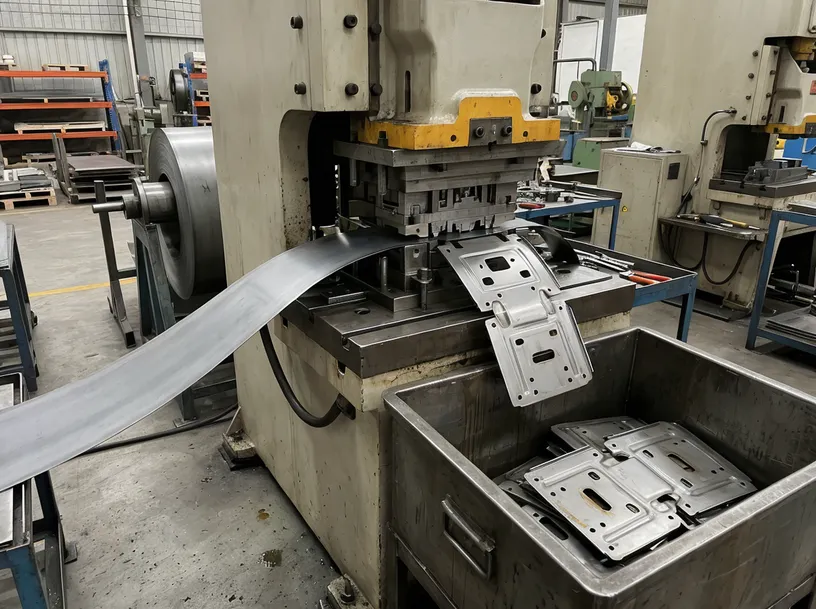
On both types: request material certification for the main structural plate. Cold-rolled steel (SPCC or equivalent) at appropriate gauge is standard for the load-bearing components. Substitution with thinner or lower-grade material is a common cost-cutting move that doesn't show up in visual inspection — it shows up in cycle testing or, worse, in field failures.
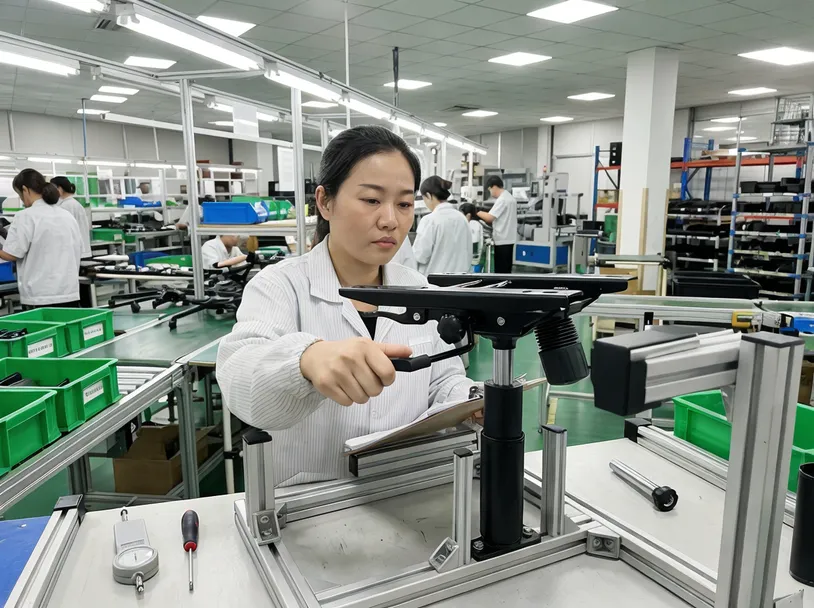
We run 100% functional testing on every mechanism before shipment — tilt range, lock engagement, and load cycle verification. That's not a sampling protocol; it's every unit. The mechanisms that pass dimensional checks but fail functional performance get pulled at that stage, not after they reach your assembly line.
Frequently Asked Questions
Can I use the same seat shell for both tilt and synchro mechanisms?
Usually not without modification. Tilt and synchro mechanisms have different mounting footprints and different seat pan geometry requirements. The synchro's dual-pivot linkage typically requires more clearance under the seat pan, and the mounting hole pattern differs between mechanism types and suppliers. If you're planning a platform that supports both, design the seat shell around the synchro first — it's easier to adapt a synchro-spec seat shell to a tilt mechanism than the reverse.
What's the minimum order quantity for synchro mechanisms?
Our standard MOQ for catalog synchro mechanisms is 500 units. For OEM specifications or custom mounting configurations, MOQ depends on tooling requirements — we'll give you the actual number based on your spec.
Does synchro mechanism add significant weight to the chair?
The weight difference at the mechanism level is modest — typically 0.3–0.8kg more than a comparable tilt mechanism, depending on spec. At the finished chair level, that difference is usually within the rounding of other component variations. It's not a meaningful factor for most applications unless you're targeting an ultra-lightweight chair specification.
How do I verify a synchro mechanism's seat-to-back ratio before ordering?
Request a physical sample and measure the seat angle and back angle at multiple recline positions. A true 2:1 synchro will show approximately 10° of seat tilt for 20° of back recline. If the ratio is inconsistent across the recline arc or significantly below 2:1, the mechanism's linkage geometry is not to spec. Don't rely on the supplier's stated ratio — measure it on the sample.
What certifications should I require for mechanisms going into European markets?
CE marking is the baseline requirement for European market compliance. For mechanisms going into chairs that will carry an ergonomic certification (e.g., for workplace health programs), you may also need test reports to EN 1335 (office chairs) covering stability, strength, and durability. Request the test reports, not just the certificate — the reports show what was actually tested and at what load levels.
—
Both mechanisms have a place in a well-structured chair line. The tilt mechanism is not obsolete — it's the right tool for the right price tier. But if you're building toward the ergonomic office segment, synchro is the mechanism your product needs, and the cost difference is recoverable in positioning. The question isn't which mechanism is better in the abstract. It's which one fits the market you're actually selling into.
If you're deciding between the two for an upcoming chair line, send us your target price point, volume, and market segment — we'll recommend the specific mechanism configuration and send back a quote with cycle test documentation included. Request Quote