You're building out a furniture product line — or expanding one — and you've landed on a decision that looks simple from the outside: chair mechanism or recliner mechanism? Both move. Both involve metal linkages, pivot points, and spring-loaded resistance. But the engineering logic behind each is completely different, and sourcing the wrong one for your application doesn't just create a product problem. It creates a warranty problem, a margin problem, and a reorder problem.
Here's the short version: chair tilt mechanisms are engineered for repetitive micro-motion under sustained load in a fixed footprint. Recliner linkage mechanisms are engineered for full-range positional travel with synchronized multi-point articulation. They share a product category name — "furniture mechanism" — and almost nothing else in terms of how they're designed, tested, or specified.
If you're sourcing for an office seating line, a task chair program, or any product where the user stays upright and the motion is a controlled tilt, you want a chair mechanism. If you're sourcing for a recliner sofa, a lounge chair, or any product where the user reclines to a near-horizontal position and the footrest deploys, you want a recliner linkage. The confusion happens in the middle — executive chairs with recline, massage chairs, hybrid lounge seating — and that's where the wrong spec decision costs real money.

Structural Logic: Why These Two Mechanisms Are Built Differently
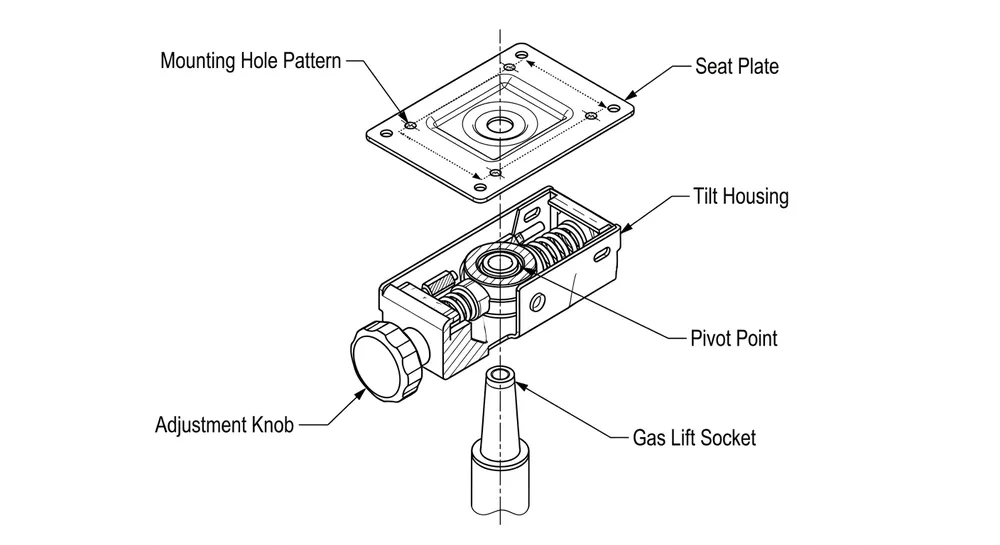
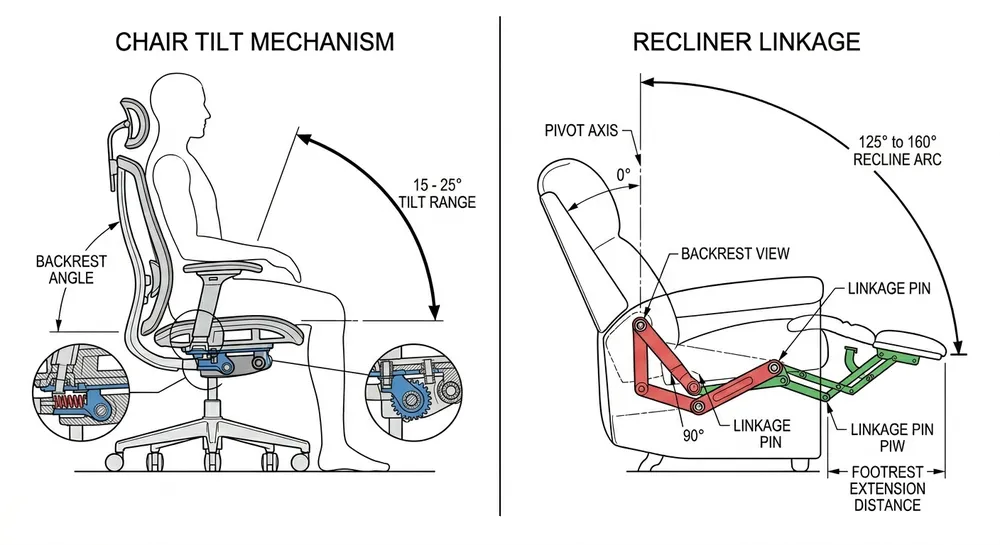
A chair tilt mechanism mounts to the seat plate and interfaces with the chair base through a central pivot. The core engineering challenge is managing repetitive angular displacement under a static vertical load — a seated person shifting their weight backward and forward, hundreds of times a day, for years. The mechanism has to absorb that motion without developing play in the pivot, without fatiguing the spring, and without the tilt lock losing its engagement precision over time.
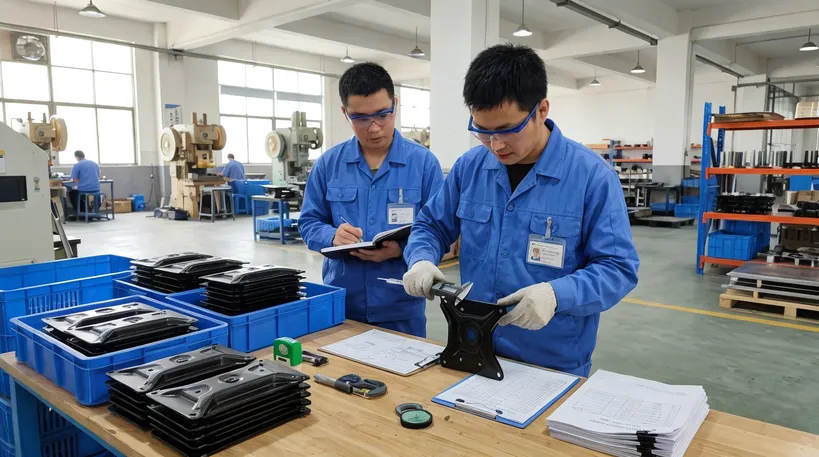
We stamp the main mechanism plate from cold-rolled steel at ±0.15mm tolerance because the pivot geometry is what determines tilt feel. A plate that's 0.3mm out of spec on the pivot hole produces a mechanism that feels loose at 6 months — not broken, just degraded. That's the kind of defect that generates warranty claims without a clear failure event, which is the worst kind for your after-sales team to handle.
The recliner linkage is a different engineering problem entirely. The mechanism has to coordinate motion across multiple pivot points simultaneously — seat, backrest, and footrest — so that the recline arc feels smooth and the footrest deploys in sync with the backrest travel. The load path is more complex: the user's weight shifts from vertical to partially horizontal as they recline, and the mechanism has to manage that load redistribution without binding or jerking at any point in the travel arc.
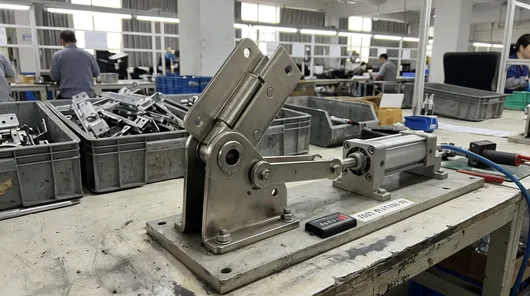
We run the recliner linkage arms through MIG welding on the structural joints rather than spot welding, because the multi-directional load during recline travel puts stress on the joint in more than one axis. Spot welds are fine for bracket assemblies where the load is predictable and planar. On a recliner arm that's handling a 120kg user mid-recline, you want full-penetration MIG on the critical joints. (We made the switch on our recliner line after seeing fatigue cracks at spot-welded joints on a competitor's product that came back to us for reverse engineering — the failure mode was exactly what you'd expect.)
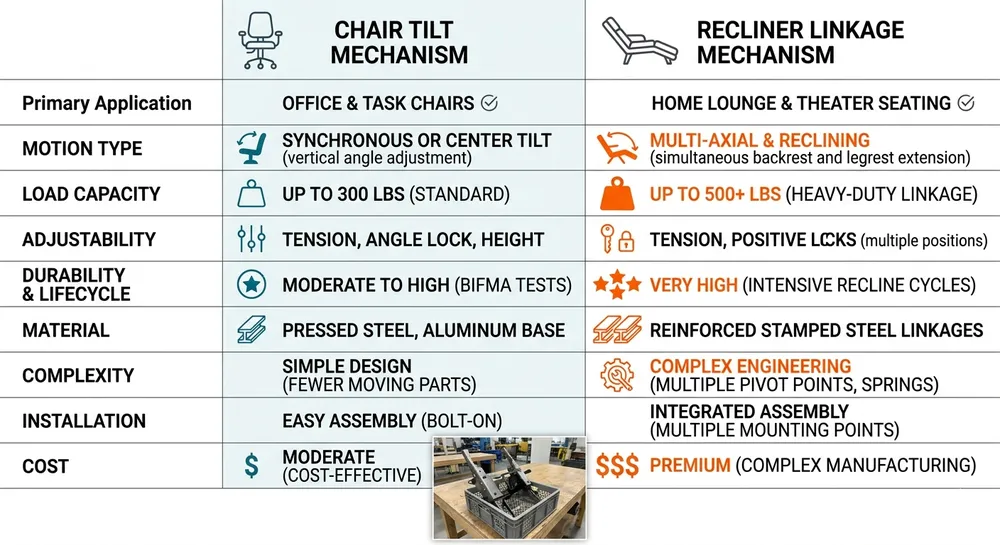
Head-to-Head Specification Matrix
| Dimension | Chair Tilt Mechanism | Recliner Linkage Mechanism |
|---|---|---|
| Motion type | Angular tilt, fixed pivot | Multi-point articulation, full recline arc |
| Typical travel range | 15–25° tilt | 90° to 155–165° recline |
| Load rating | 100–150kg static seat load | 120–150kg distributed recline load |
| Cycle life standard | 50,000 cycles (commercial office) | 20,000–30,000 cycles (residential/commercial) |
| Primary material | Cold-rolled steel plate, zinc alloy components | Cold-rolled steel linkage arms, MIG-welded joints |
| Adjustment features | Tilt tension, tilt lock, seat height (gas lift interface) | Recline position lock, footrest sync, optional power actuator interface |
| Mounting footprint | Compact — fits standard chair base column | Larger — requires sofa/chair frame integration |
| Surface treatment | Zinc plating or powder coat | Powder coat standard; nickel plate on exposed components |
| OEM customization complexity | Moderate — spring rate, lock positions, plate geometry | Higher — linkage geometry, sync ratio, footrest travel arc |
| Typical MOQ (standard) | 500 units | 500 units |
| CE/SGS documentation | Available | Available |
The Cycle Life Gap and What It Costs You Downstream
This is the number most buyers miss when they're comparing the two mechanism types, and it's the one that matters most for your warranty exposure.
Chair tilt mechanisms in commercial office applications are tested to 50,000 cycles as a standard qualification benchmark. That's the minimum for most commercial office chair certifications — BIFMA in North America, EN 1335 in Europe. We use 50,000 cycles as our floor on chair mechanism batch qualification, not our ceiling. For mechanisms going into high-use environments — call centers, co-working spaces, 24-hour operations — we spec and test higher.
Recliner linkage mechanisms operate on a different cycle-life logic. A residential recliner might see 5–10 full recline cycles per day. At that rate, 20,000 cycles represents roughly 5–6 years of normal residential use — which is a reasonable product life expectation for that market. The mechanism isn't under-engineered; it's engineered for its actual use pattern.
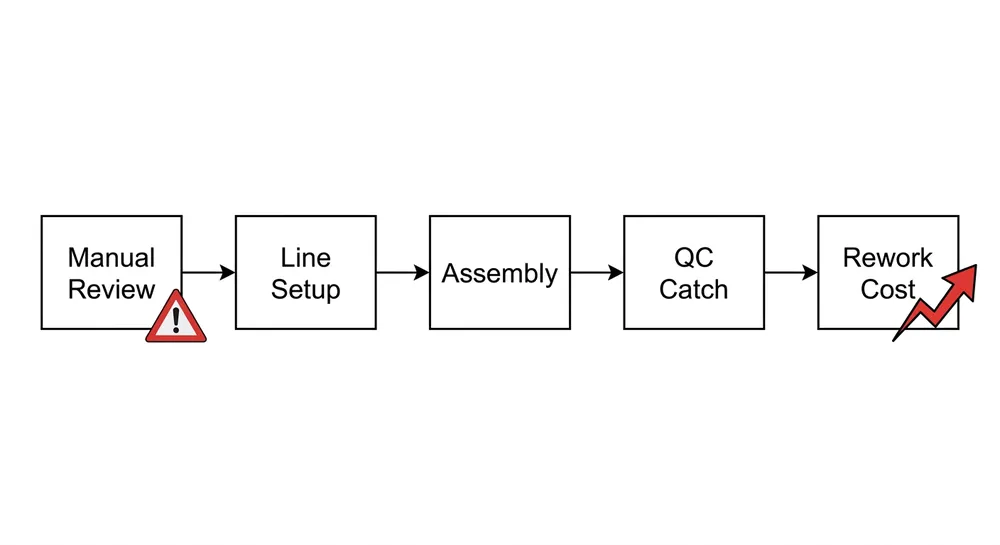
The problem arises when buyers try to use recliner linkage logic to spec a product that will see office-chair-level use intensity. We've had buyers come to us after sourcing a hybrid executive recliner chair from a supplier who used residential-grade recliner linkage hardware. The product looked right. The recline function worked in the showroom. At 18 months in a commercial environment, the linkage joints were developing play and the footrest sync was degrading. The root cause was a mechanism designed for 8,000–10,000 lifetime cycles running in an environment that was delivering that in under two years.
If your product sits in the hybrid zone — executive seating with full recline, lounge chairs for commercial hospitality, massage chairs for commercial use — you need to specify cycle life explicitly in your RFQ, not assume the mechanism supplier is designing to commercial standards by default.
OEM Customization: Where the Two Types Diverge Most
Standard catalog mechanisms — both chair and recliner — cover a wide range of applications. But OEM customization is where the engineering complexity difference between the two types becomes commercially significant.
For chair tilt mechanisms, the main customization variables are spring rate (which determines tilt resistance feel), tilt lock positions (some buyers want 3-position, some want infinite lock), seat plate geometry (to match their specific seat shell mounting pattern), and gas lift interface compatibility. These are well-understood parameters. Our engineering team can turn around a modified sample in 2–3 weeks for most chair mechanism OEM requests because the design space is defined and the tooling changes are incremental.
Recliner linkage OEM work is more involved. The linkage geometry determines the sync ratio between backrest travel and footrest deployment — change the backrest arc and you may need to recalculate the footrest linkage arm lengths to maintain smooth sync. If your product has a specific recline stop position (say, a hospitality lounge chair that reclines to 135° but not further), that's a geometry change that affects the whole linkage system, not just one component. Power recliner interfaces add another layer: the actuator mounting position, travel speed, and load rating all have to be matched to the linkage geometry.
We have 12 engineers working exclusively on mechanism hardware, and recliner linkage ODM projects typically involve 2–3 of them on geometry and tooling simultaneously. That's not a complaint — it's a realistic picture of what the development cycle looks like so you can plan your product launch timeline accordingly.
(One thing we tell buyers early in recliner ODM discussions: bring us a reference product or a motion description, not just a drawing. Linkage geometry is easier to develop from "it should feel like this" than from a 2D sketch that doesn't capture the motion arc.)
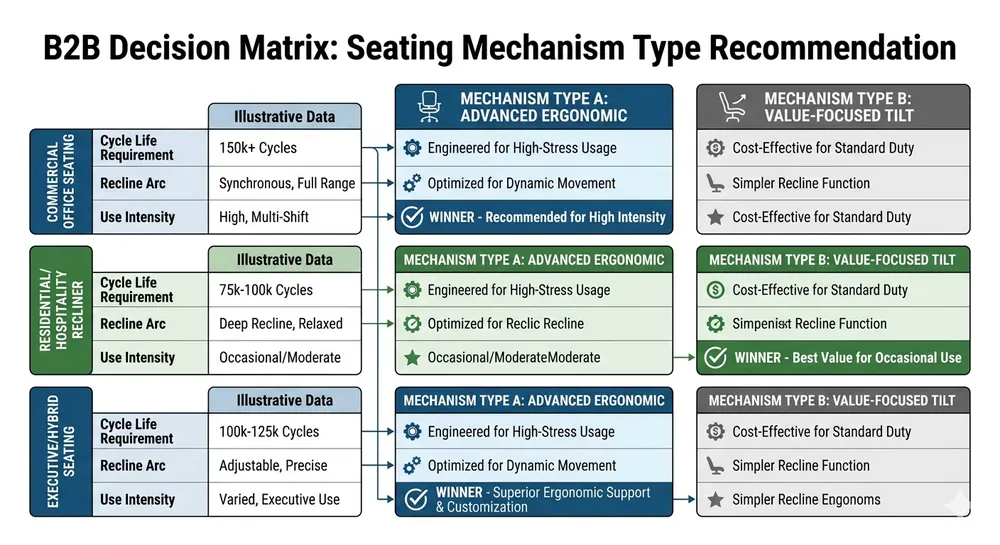
Application Scenarios: Which Mechanism Wins and Why
Commercial Office Seating — Chair Mechanism, No Contest
Task chairs, conference chairs, operator chairs, any seating product going into an office environment where the user sits upright and the motion is a controlled tilt. The cycle life requirement alone settles this: 50,000-cycle qualification, compact mounting footprint, tilt tension adjustment for different user weights. Recliner linkage hardware has no place in this application — the motion arc is wrong, the footprint is wrong, and the cycle life spec is mismatched to the use pattern.
For buyers building an office seating line for North American or European distribution, CE and EN 1335 compliance documentation on the chair mechanism is what your retail or commercial buyers will ask for. We ship that documentation with the order.
Residential and Hospitality Recliner Furniture — Recliner Linkage, Clear Winner
Sofa recliners, lounge chairs, home theater seating, hotel room lounge chairs. The full recline arc, footrest deployment, and multi-position lock are the product's core value proposition — you can't deliver that with a chair tilt mechanism. The cycle life spec matches the use pattern. The larger mounting footprint integrates into the sofa or chair frame as designed.
For hospitality buyers, the distinction between residential-grade and commercial-grade recliner linkage matters here — specify your use environment and expected daily cycle count in the RFQ so the mechanism is qualified appropriately.
Executive and Hybrid Seating — Specify Carefully
High-back executive chairs with full recline, massage chairs, hybrid lounge-office seating. This is where sourcing decisions go wrong most often. The product looks like a recliner, so buyers assume recliner linkage hardware. But if the product is going into a commercial environment with high daily use, the cycle life spec needs to match office chair standards, not residential recliner standards.
Our recommendation for this segment: use a heavy-duty chair tilt mechanism with extended recline range if the product is primarily a seating product with recline as a secondary feature. Use a commercial-rated recliner linkage if the recline function is the primary product value and the use environment is controlled (private office, executive suite, hospitality suite). The distinction is use intensity, not product appearance.
Sourcing Validation: What to Verify Before You Commit
Whether you're sourcing chair mechanisms or recliner linkages, the same substitution and quality risks exist — and they're more common than most buyers expect.
For chair tilt mechanisms, the critical verification points are:
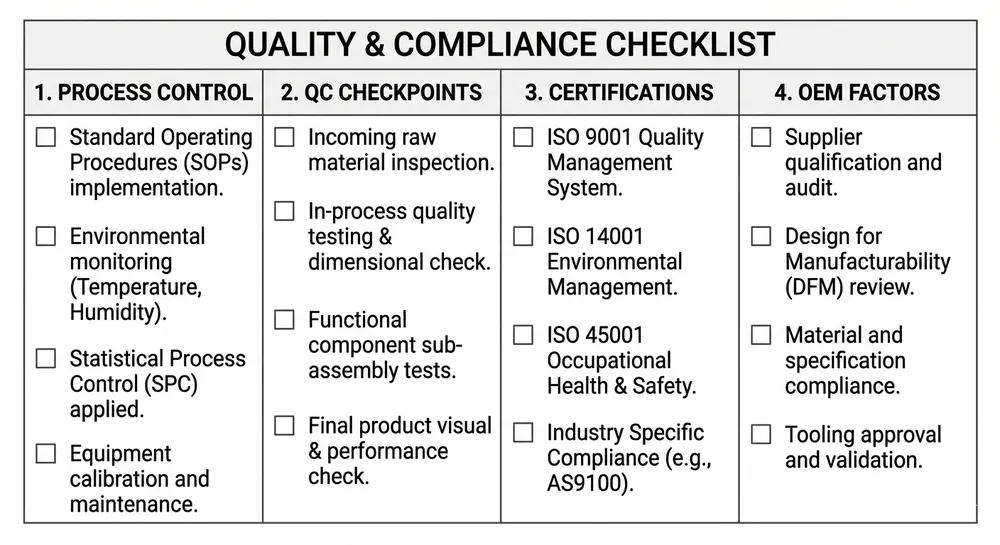
- Cycle life test report: Ask for the actual test report, not just a claim. 50,000 cycles at rated load is the commercial standard. Some suppliers test at reduced load to hit the cycle number — the test report should specify both cycle count and test load.
- Tilt lock engagement precision: This degrades over time if the lock geometry is loose from the start. Request a sample and cycle the lock 200–300 times manually before approving. If you feel play developing, the production batch will be worse.
- Plate steel grade and thickness: Cold-rolled steel (SPCC or equivalent) at the specified gauge. Substitution to thinner gauge is the most common cost-cutting move on chair mechanism plates — it's invisible until the mechanism develops flex under load.
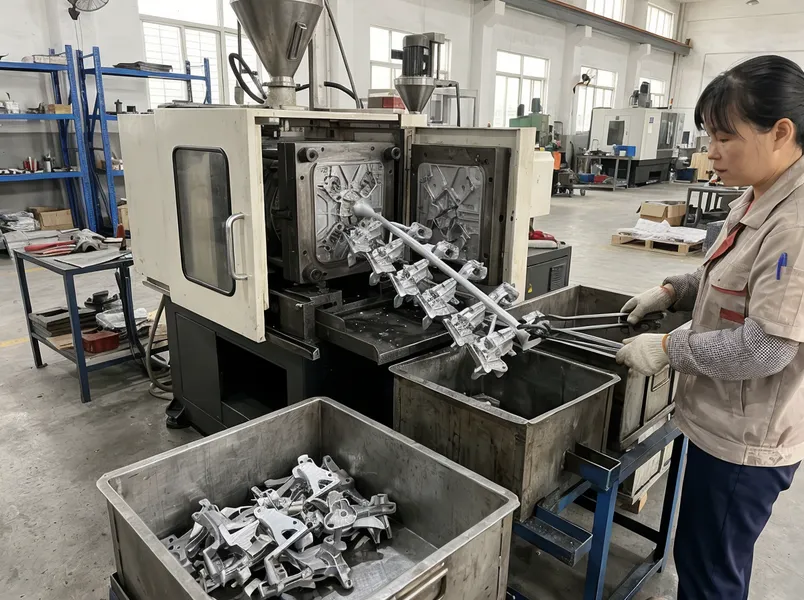
- Die-cast component quality: Tilt knobs, adjustment collars, and tension controls are die-cast zinc alloy. Dimensional inconsistency here is the leading cause of mechanism feel complaints. Ask whether the supplier die-casts in-house or outsources — outsourced die-casting means they don't control the most failure-prone components.
For recliner linkage mechanisms, add these checks:
- Weld joint integrity on linkage arms: Pull-test or visual inspection on the MIG welds at the critical pivot joints. This is where fatigue failures initiate on under-built recliner hardware.
- Sync ratio consistency across samples: Order 3–5 samples and compare the footrest deployment arc across all of them. Variation in sync ratio across a batch indicates loose tooling tolerances on the linkage arms.
- Recline stop precision: The mechanism should stop at the specified angle consistently, not vary by 5–8° across units. That variation means the stop geometry is worn or imprecise in the tooling.
- Power actuator interface compatibility (if applicable): If your product uses a power recline actuator, verify the mounting geometry and travel speed match before committing to a production run. Retrofitting an incompatible actuator interface after tooling is cut is an expensive problem.
We run 100% functional testing on every unit before packing — not sampling. A mechanism that passes dimensional checks but has a sticky tilt lock or inconsistent recline sync gets pulled at final inspection. For buyers who need third-party documentation, CE and SGS reports are available for both mechanism types.
FAQ: Chair Mechanism vs Recliner Mechanism
Can I use a recliner linkage in an office chair to get a deeper recline?
Technically possible, but commercially inadvisable for most office seating applications. Recliner linkages are designed for a larger mounting footprint than a standard chair base allows, and the cycle life spec is mismatched to office use intensity. If you need a deeper recline in an office chair, the right path is a heavy-duty chair tilt mechanism with an extended recline range — we can spec that as an OEM modification. It keeps the compact footprint and the 50,000-cycle qualification while giving you the recline angle your product needs.
What's the MOQ difference between chair mechanisms and recliner linkages?
Both start at 500 units for standard catalog items. OEM/ODM projects with custom tooling have MOQs that depend on tooling amortization — we give you the honest number based on your spec. Recliner linkage ODM tooling is generally more complex than chair mechanism tooling, so the amortization MOQ tends to be higher for heavily customized recliner designs.
Do both mechanism types carry CE and RoHS documentation?
Yes. CE declaration of conformity and SGS test reports are available for both chair mechanisms and recliner linkages. RoHS compliance documentation is available for buyers supplying into EU or California markets. These ship with the order — your compliance team doesn't need to chase us for paperwork after the fact.
How do I specify cycle life in an RFQ for a hybrid executive chair?
State your target use environment (commercial office, private executive suite, hospitality) and your expected daily cycle count. From those two inputs, we can recommend the appropriate mechanism type and qualification standard, and confirm the test report that covers your spec. Don't leave cycle life as an assumed default — it's the variable that determines your warranty exposure more than any other single spec.
What's the lead time difference between the two types?
Standard catalog items for both types run 25–35 days from order confirmation. OEM/ODM projects with new tooling run longer — recliner linkage ODM typically involves more geometry iteration than chair mechanism OEM, so the development phase is longer. We give you a milestone-by-milestone production schedule, not a single delivery date.
—
If you're at the point of comparing these two mechanism types, you've already done the hard work of narrowing your product spec. The next step is matching the mechanism to your actual use environment and cycle life requirement — not just the motion arc. Send us your product brief, your target market, and your volume expectations, and we'll come back with a specific mechanism recommendation, a cycle life qualification plan, and a quote that covers both standard and OEM options.
Explore our chair mechanism product range and recliner linkage hardware, or review our furniture mechanism sourcing guide for a broader overview of the category.