The bearing type in a rotating chair mechanism is one of those specs that gets under-specified at the sourcing stage and over-discussed after the warranty claims start coming in. We see it regularly: a buyer sources a mechanism at a competitive price, the bearing configuration isn't called out in the spec sheet, and six months into deployment the swivel action has degraded or seized entirely. By then the conversation is about replacements and refunds, not about the 30 cents per unit difference that drove the original decision.
This article is for buyers who want to make that call correctly the first time — whether you're specifying a Rotating Chair Mechanism for a commercial seating line, sourcing OEM components for a private-label program, or evaluating a supplier's standard catalog against your application requirements.

What Each Component Actually Does Under Load
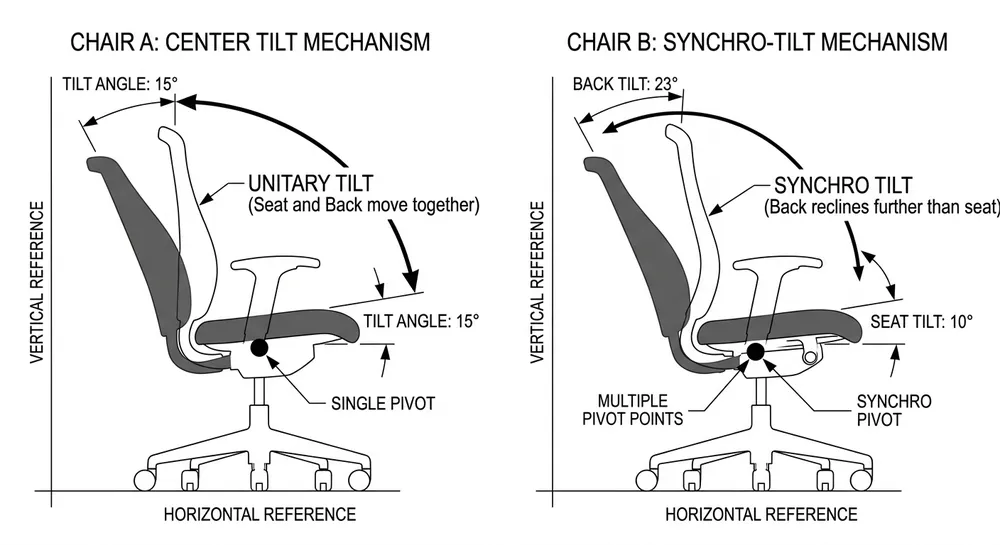
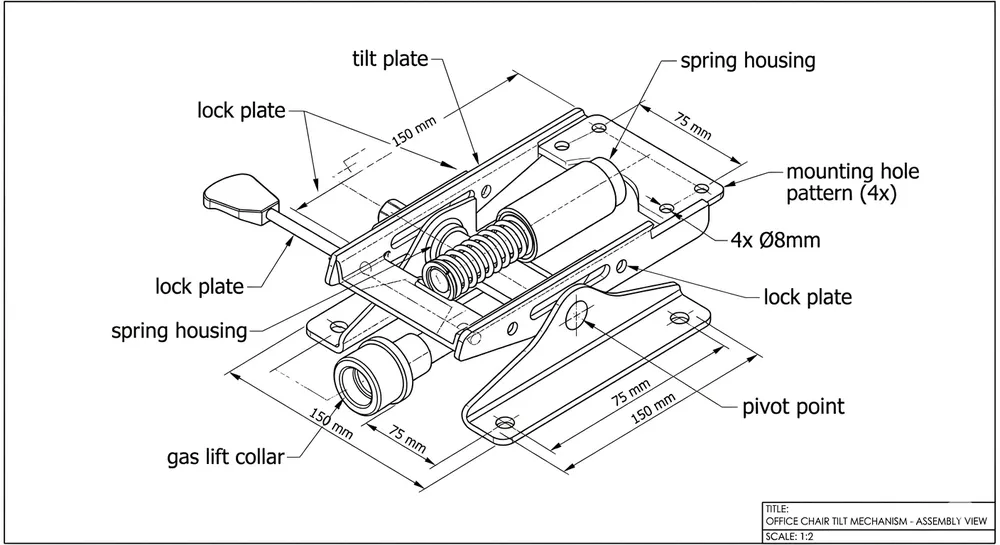
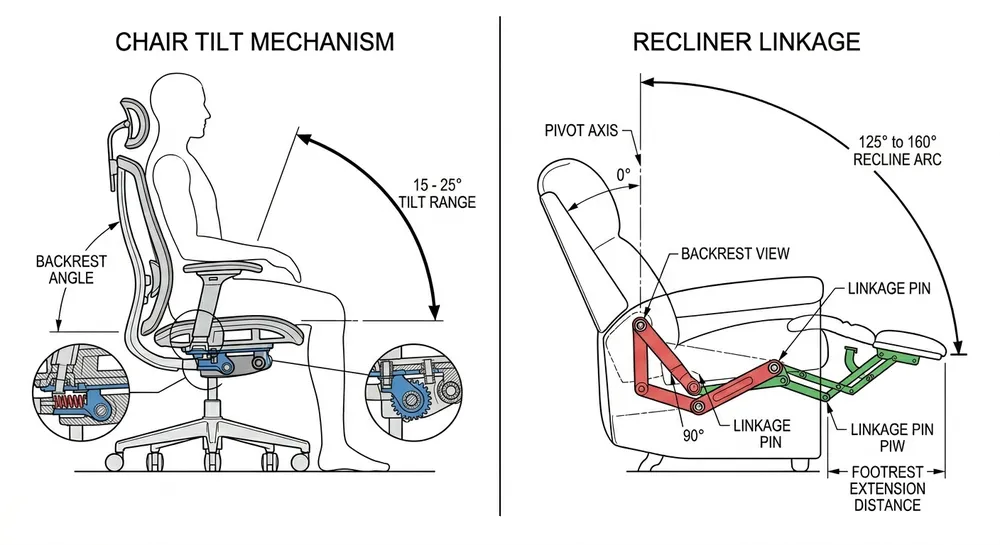
A rotating chair mechanism's swivel function depends on one thing: reducing friction between the fixed base column and the rotating seat plate while carrying the occupant's weight. The bearing or bushing sits at that interface. Everything else in the mechanism — the tilt plate, the gas lift housing, the adjustment hardware — is downstream of how well that rotation point performs.
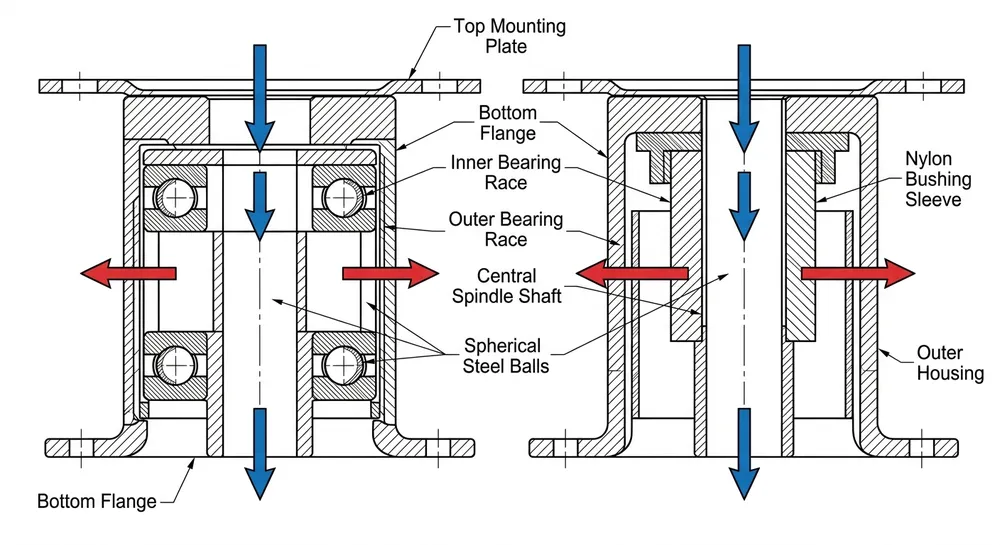
Ball bearings use a ring of hardened steel balls running in precision-ground races. The contact is point-to-point, which distributes load across multiple balls and keeps friction extremely low even under sustained radial and axial loads. In a chair mechanism, the relevant load is mostly axial (the occupant's weight pressing down) with some radial component from lateral movement. A properly spec'd ball bearing handles both without degradation over time.
Nylon bushings work differently. The bushing is a sleeve — typically glass-filled nylon or acetal — that fits between the column and the rotating housing. Contact is surface-to-surface rather than point-to-point. Friction is higher than a ball bearing, but still low enough for smooth rotation under moderate loads. The bushing material has some self-lubricating properties, which is why nylon bushing mechanisms can run without grease maintenance in residential applications.
The practical difference shows up under two conditions: sustained high load and high rotation frequency. Under light, intermittent use, both configurations feel similar. Under 120 kg continuous load with frequent rotation — a call center chair, a dispatch workstation, a gaming chair used eight hours a day — the gap between them becomes measurable within the first year of service.
Side-by-Side Spec Comparison
The table below covers the parameters that matter for OEM sourcing decisions. These are typical commercial-grade values for mechanisms in the 80–150 kg rated load range.
| Parameter | Ball Bearing | Nylon Bushing |
|---|---|---|
| Typical load rating | 150–200 kg axial | 80–120 kg axial |
| Rotation friction | Very low (0.001–0.003 μ) | Low–moderate (0.05–0.15 μ) |
| Cycle life at rated load | 100,000+ cycles | 30,000–60,000 cycles |
| Lubrication requirement | Factory-greased, sealed | Self-lubricating (no maintenance) |
| Failure mode | Race wear, ball pitting (gradual) | Bushing deformation, creep (progressive) |
| Noise under load | Near-silent when new; slight noise if contaminated | Quiet; may develop squeak as material wears |
| Temperature sensitivity | Low | Moderate (nylon softens above ~80°C) |
| Unit cost premium | +15–35% over bushing variant | Baseline |
| Replaceability | Requires matched bearing spec | Easier field replacement |
(These ranges reflect what we see across our own production runs and incoming component inspection. Exact values depend on bearing grade, bushing material formulation, and seat plate geometry — which is why we ask for load requirements before recommending a configuration.)
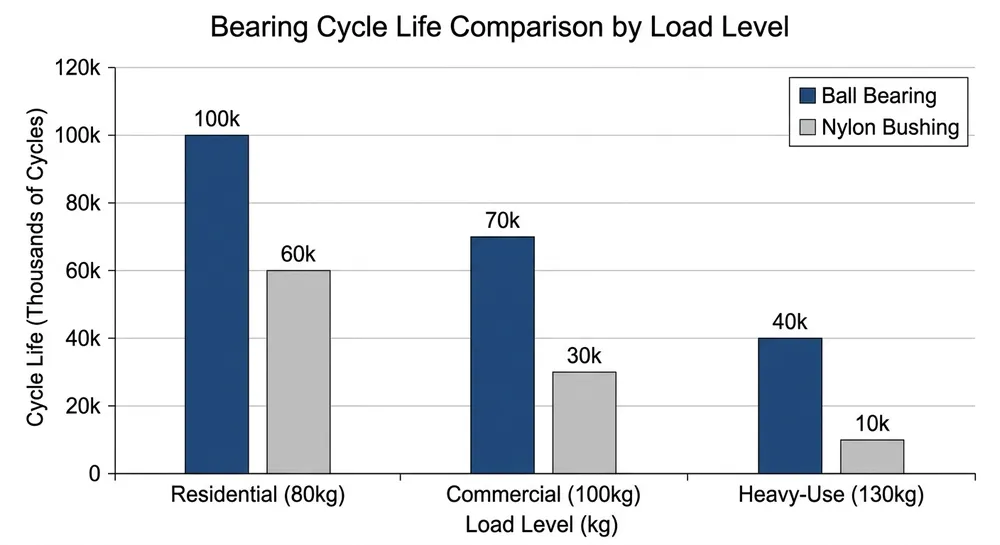
Where Each Configuration Earns Its Place
The sourcing mistake we see most often is treating this as a cost decision rather than an application decision. Nylon bushing mechanisms are not inferior — they're correctly specified for a large portion of the market. The problem is when they get used outside that range.
Ball bearing configurations belong in:
- Commercial office seating rated for 8-hour continuous use
- Task chairs and operator chairs in high-rotation environments (call centers, dispatch, control rooms)
- Heavy-duty seating above 120 kg rated load
- Any application where the end buyer's warranty covers 3–5 years of commercial use
- Gaming chairs positioned at the premium end of the market where buyers expect mechanism longevity to match the price point
Nylon bushing configurations are correctly specified for:
- Residential dining and occasional-use seating
- Cost-sensitive OEM programs where the retail price point doesn't support a bearing premium
- Light-duty office chairs rated for standard 8-hour use at 100 kg or below, with moderate rotation frequency
- Applications where field serviceability matters — a nylon bushing is easier to replace in the field than a matched bearing assembly
The honest answer for most buyers is that their product line needs both. Residential and entry-level commercial products can run nylon bushing without issue. Mid-range and above commercial seating should be ball bearing. If you're building a product line across multiple price tiers, the bearing spec is one of the cleaner ways to differentiate them — it's a real performance difference, not a cosmetic one.
How Bearing Seat Tolerance Affects What You're Actually Buying
This is where the sourcing conversation gets more specific, and where most generic bearing supplier content stops short.
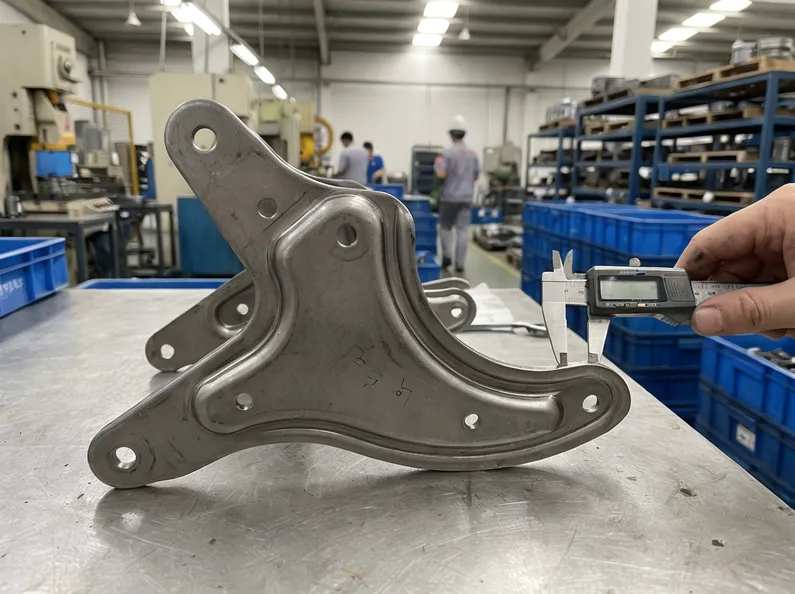
The bearing or bushing doesn't perform in isolation. It performs inside a seat — the machined or stamped housing that holds it in position. If that seat is out of tolerance, a high-grade bearing underperforms. We stamp our mechanism plates to ±0.15mm tolerance on bearing seat dimensions. That's not a marketing number — it's the threshold below which bearing preload becomes inconsistent and rotation smoothness degrades even with a correctly spec'd bearing.
We've seen mechanisms from other suppliers where the bearing itself was fine but the seat was stamped loose — 0.3–0.4mm variation across a batch. The result is inconsistent rotation feel across units in the same order, and accelerated wear because the bearing isn't seated concentrically. Your end customer notices it as "some chairs feel different from others," which is a warranty and brand problem, not just a QC problem.
When you're evaluating a mechanism supplier on bearing type, ask about seat tolerance, not just bearing grade. The two specs together determine what you're actually getting.
Load Testing as a Sourcing Benchmark
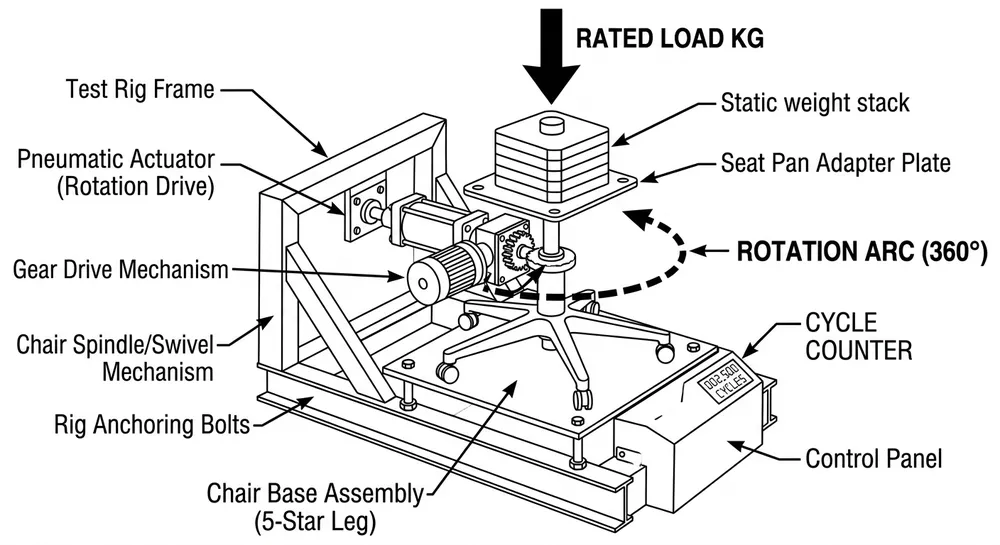
We run 50,000-cycle load testing on chair mechanisms as standard batch qualification — not as a special request, not as a premium service tier. That's the minimum threshold for commercial office chair certification in most markets, and we use it as our floor.
For ball bearing configurations going into heavy-use commercial applications, we test higher — typically 80,000–100,000 cycles at rated load before a batch ships. The test simulates full rotation under load, not just static weight. A mechanism that passes static load but fails under dynamic cycling is the failure mode that generates warranty claims in the field.
What this means for your sourcing decision: ask your supplier for cycle test data, not just a load rating number. A load rating without cycle life data tells you the mechanism can hold the weight — it doesn't tell you for how long. The two numbers together are what you need to match the mechanism to your warranty commitment.
You can review our Chair Mechanism range for standard catalog configurations with published load and cycle specifications.
The Sourcing Trap: What "Ball Bearing" on a Spec Sheet Doesn't Tell You
Not all ball bearings are the same spec, and a spec sheet that says "ball bearing" without further detail leaves several important questions open.
Bearing grade matters. ABEC 1 and ABEC 3 bearings are standard commercial grade — adequate for most chair mechanism applications. ABEC 5 and above are precision grades used in higher-speed or tighter-tolerance applications. For chair mechanisms, ABEC 3 is typically the right spec. Paying for ABEC 5 in a chair mechanism is over-specification; accepting an ungraded bearing from a supplier who won't confirm the grade is a risk.
Sealing matters. Open bearings require periodic relubrication. Sealed bearings (2RS designation) are factory-greased and maintenance-free for the life of the mechanism. For furniture applications, sealed is almost always the right choice — end users don't regrease chair mechanisms, and an open bearing that runs dry degrades quickly.
Steel grade matters. Chrome steel (52100) is the standard for bearing races and balls in commercial applications. Stainless steel bearings exist but add cost without benefit in a chair mechanism environment unless corrosion resistance is specifically required (outdoor furniture, marine environments).
When you send an RFQ for a ball bearing mechanism, specify: bearing grade (ABEC 3 is standard), sealing (2RS sealed), and steel (chrome steel 52100). If a supplier can't confirm those three parameters, the "ball bearing" on their spec sheet is not a complete specification.
For nylon bushing mechanisms, ask for the bushing material spec — glass-filled nylon (PA66-GF30 is common) performs significantly better under load than unfilled nylon. The difference in material cost is small; the difference in wear life under 100 kg load is not.
Application Fit by Market Segment
Your bearing spec decision is also a market positioning decision. Here's how it maps to the segments most of our buyers are serving:
Contract office furniture — Ball bearing, minimum ABEC 3, 100,000-cycle tested. This segment has procurement specs and warranty requirements that nylon bushing mechanisms won't satisfy. The price premium is absorbed in the contract pricing structure.
E-commerce office chairs (mid-range, $150–300 retail) — Ball bearing is increasingly the expected spec at this price point. Buyers in this segment read reviews, and "swivel feels stiff after 6 months" is a recurring complaint pattern on nylon bushing mechanisms at this price tier.
Residential dining and accent seating — Nylon bushing is correctly specified here. Load is intermittent, rotation frequency is low, and the cost sensitivity is real. A ball bearing mechanism adds cost without adding meaningful service life benefit in this application.
Gaming chairs ($200+ retail) — Ball bearing. The category has trained buyers to expect premium mechanism specs, and the margin structure supports it. Gaming chair buyers rotate frequently and sit for long sessions — exactly the use profile where ball bearing longevity shows up.
Hospitality and contract seating — Ball bearing, with attention to load rating. Restaurant and hotel seating takes abuse that residential specs don't anticipate. We've had buyers come to us after a hospitality deployment with nylon bushing mechanisms that degraded within 18 months. The replacement cost and logistics of a hospitality refurb are significantly higher than the bearing premium at the sourcing stage.
Frequently Asked Questions
Can I replace a nylon bushing with a ball bearing in an existing mechanism design?
Not as a direct swap. The bearing seat geometry, housing dimensions, and preload requirements differ between the two configurations. If you want to upgrade a product line from bushing to bearing, the mechanism needs to be re-specified — either a different catalog item or an OEM redesign. We can advise on which catalog mechanisms are available in both configurations and what the dimensional differences are.
What causes a ball bearing chair mechanism to develop noise over time?
Two main causes: contamination (dust and debris entering an open or damaged seal) and lubrication depletion. Sealed bearings (2RS) resist contamination well, but a damaged seal from impact or over-loading lets debris in. The other cause is bearing preload loss — if the seat tolerance is loose, the bearing can shift slightly under load, which creates noise before visible wear appears. This is why seat tolerance matters as much as bearing grade.
How does bearing type affect swivel chair bearing replacement in the field?
Nylon bushings are generally easier to replace in the field — they're a sleeve fit, and a replacement bushing can often be sourced locally or from the mechanism supplier. Ball bearing replacement requires matching the exact bearing spec (OD, ID, width, grade, sealing) and proper installation to avoid preload issues. For products where field serviceability is a selling point, this is worth factoring into the spec decision.
What's the minimum order quantity for ball bearing vs nylon bushing mechanism variants?
Our standard MOQ is 500 units for catalog mechanisms in either configuration. For OEM variants with custom bearing specs or modified seat geometry, MOQ depends on tooling requirements — we'll give you the specific number based on your drawings. Factory-direct pricing means no trading layer markup between the bearing-grade variant and the standard catalog price. Request a quote with your load requirement and target application and we'll specify the right configuration.
Does bearing type affect CE or SGS certification requirements?
The certification covers the mechanism as a whole — load capacity, structural integrity, and cycle life. Bearing type affects which load and cycle thresholds the mechanism can meet, which in turn affects which certification tier it qualifies for. A nylon bushing mechanism certified to residential load standards won't carry the same certification as a ball bearing mechanism certified to commercial office use standards. Make sure the certification on the spec sheet matches your application, not just the product category.
—
The bearing spec in a rotating chair mechanism is a $0.30–$1.50 per unit decision at the sourcing stage. In the wrong application, it becomes a warranty program, a product recall conversation, or a lost account. The right call depends on your load requirements, your use profile, and your warranty commitment — not on which option is cheaper.
If you're specifying a mechanism for a new product line or re-evaluating your current supplier's configuration, send us your load requirement, target application, and annual volume. We'll recommend the right bearing configuration from our Rotating Chair Mechanism range and provide a factory-direct quote with full cycle test data. “`