Most mechanism failures in the field trace back to a spec that was never confirmed at the RFQ stage. A buyer orders 5,000 units, the mechanisms arrive, and six months after deployment the tilt locks are slipping or the gas lift range doesn't match the chair frame. The fix is expensive — warranty claims, replacement shipments, customer complaints. The cause is almost always a spec conversation that didn't happen early enough.
This article breaks down the four parameters that govern adjustable chair mechanism performance: height adjustment range, tilt tension, load capacity, and cycle life. For each one, we cover what the typical commercial values look like, what happens when the spec is underspecified, and what to include in your RFQ to get an accurate quote the first time.
If you're evaluating suppliers or building an OEM brief, this is the spec framework we use internally when a new buyer sends us a project.
—
The Four Specs That Determine Commercial Viability
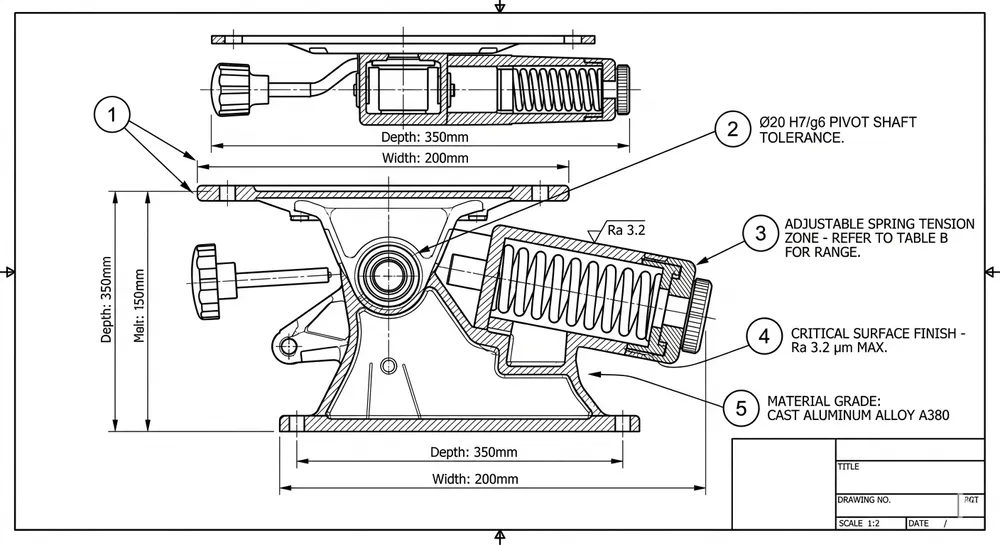
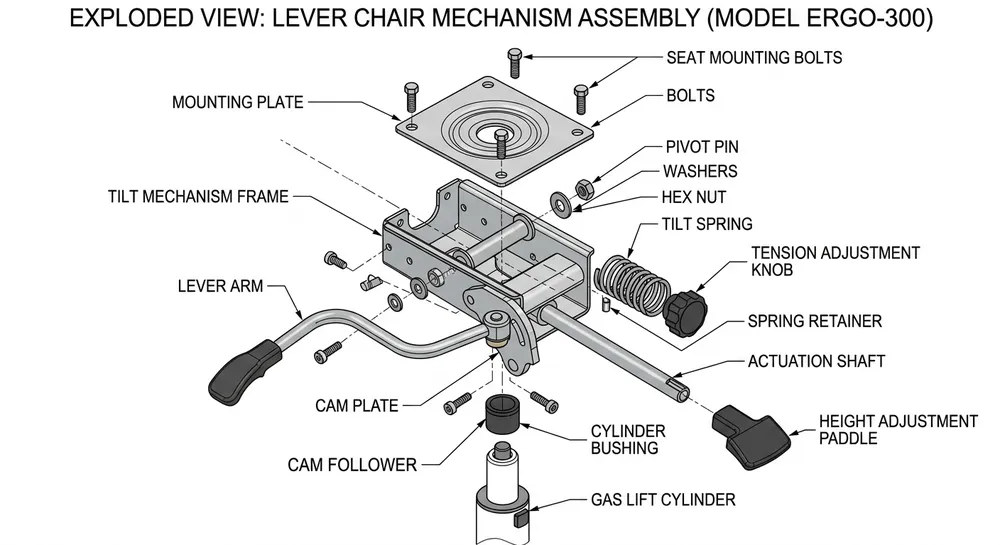
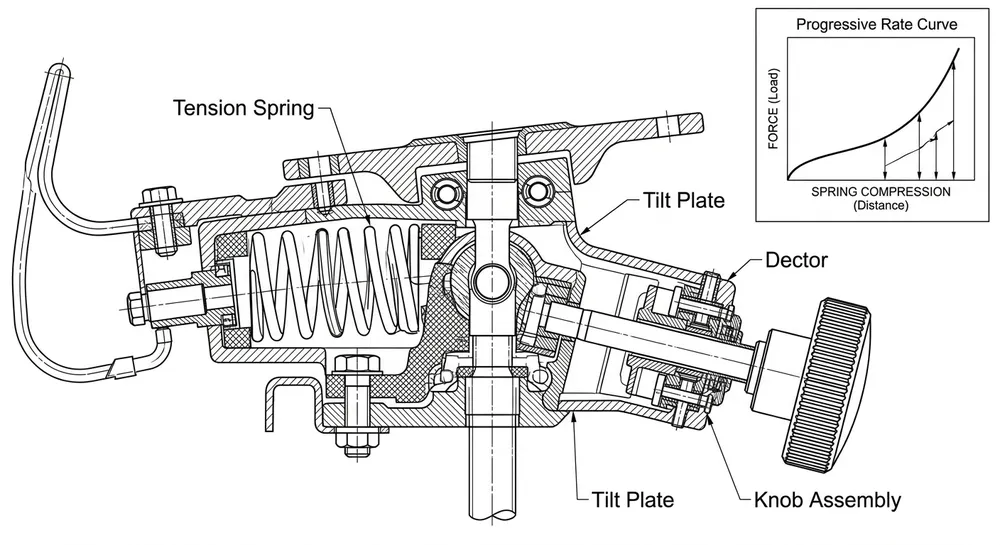
An Adjustable Chair Mechanism is not a single component — it's an assembly of a gas lift cylinder, tilt plate, tension spring, lock mechanism, and adjustment hardware. Each of those sub-components has its own tolerance stack, and the interaction between them determines whether the chair performs consistently across 50,000 use cycles or starts degrading at 15,000.
The four specs below are the ones that separate a mechanism built for commercial deployment from one built to pass a photo shoot.
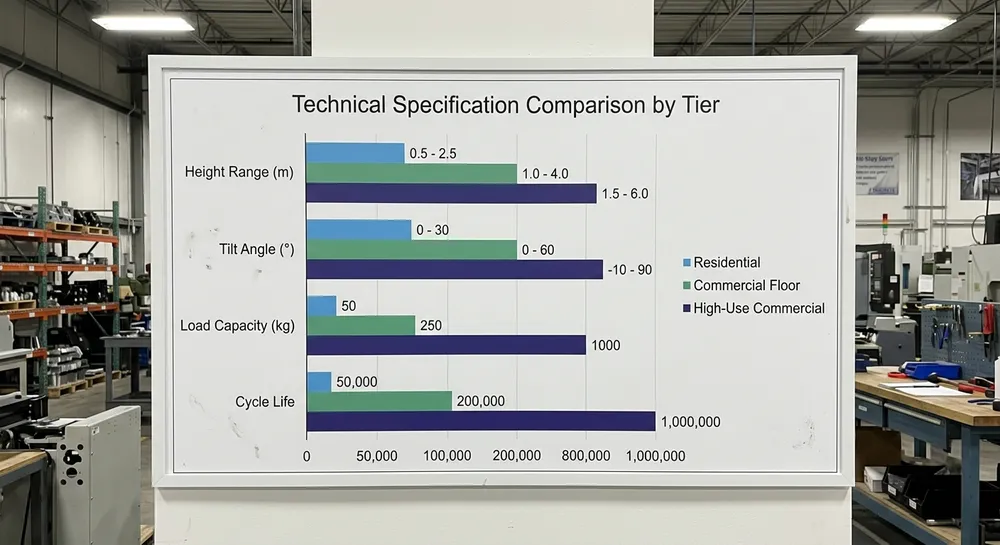
| Spec Parameter | Residential Typical | Commercial Floor | High-Use Commercial |
|---|---|---|---|
| Height adjustment range | 80–100mm | 100–120mm | 120–150mm |
| Tilt angle range | 10–12° | 12–15° | 15–20° |
| Load capacity | 100–110 kg | 120 kg | 150 kg |
| Cycle life (load test) | 20,000–30,000 | 50,000 | 80,000–100,000 |
| Stamping tolerance | ±0.3–0.5mm | ±0.15–0.2mm | ±0.15mm |
The residential column is what most low-cost catalog mechanisms are built to. The commercial floor is the minimum we'd recommend for any order going into office furniture, hospitality, or education environments. High-use commercial covers call centers, co-working spaces, and any application where a chair sees multiple users per day.

—
Height Adjustment Range: What the Numbers Actually Mean for Your Frame
The gas lift cylinder controls seat height, and the adjustment range — typically expressed in millimeters of travel — determines how wide a user population the chair can accommodate. A 100mm range covers roughly the 5th to 95th percentile seated height for most adult populations. Below 100mm, you start excluding users at the extremes.
For commercial office furniture, 100–120mm is the standard range. For ergonomic or executive lines where the chair needs to accommodate a broader user base, 120–150mm is more appropriate. The cylinder class (Class 3 or Class 4) determines the range and the pressure rating — Class 4 cylinders are standard for commercial use, Class 3 is residential.
What buyers miss: the stated range on a spec sheet is the cylinder's mechanical travel. The usable range after the chair is assembled depends on the frame geometry and the mechanism mounting height. We've had buyers spec a 120mm cylinder and end up with 95mm of usable travel because the frame design consumed 25mm at the top of the stroke. If you're doing OEM work, send us the frame drawings — we'll confirm the effective range before production.
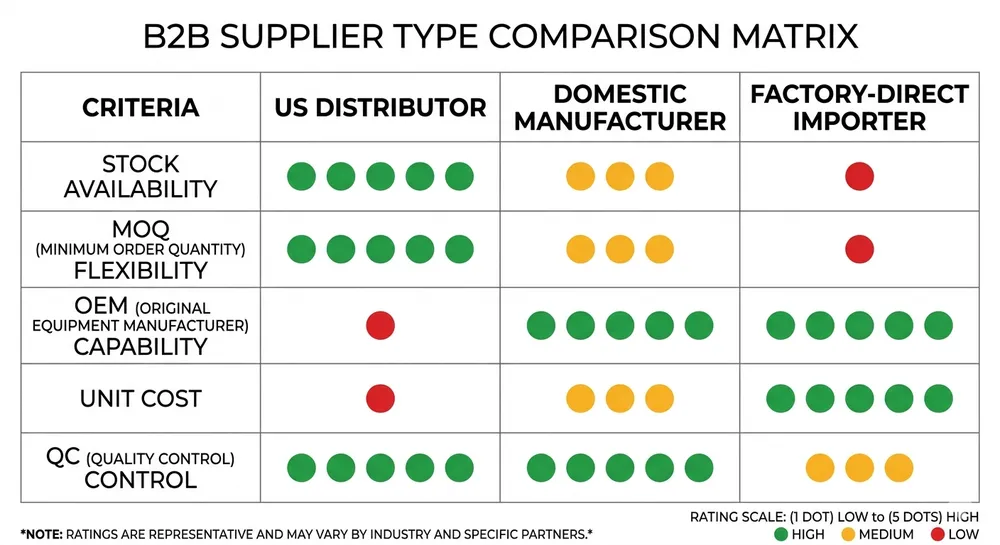
(A note on gas lift quality: the cylinder is the component most likely to be substituted at a lower-cost factory. A Class 4 label on the box doesn't guarantee Class 4 internal construction. We source cylinders from two approved suppliers and pull pressure-decay tests on incoming batches — not every factory does this.)
—
Tilt Tension: The Spec That Buyers Most Often Underspecify
Tilt tension is the resistance a user feels when leaning back in the chair. It's controlled by the tension spring in the tilt mechanism, and it's adjustable via the tension knob — but the adjustment range is bounded by the spring rate. If the spring rate is too low, even the maximum tension setting feels loose for heavier users. If it's too high, lighter users can't recline at all.
The spring rate needs to be matched to the load capacity of the mechanism. A mechanism rated for 120 kg with a spring designed for 80 kg will feel sloppy at the top of the load range. This is a common mismatch in catalog mechanisms that list a high load rating but use a spring spec from a lighter-duty design.
For commercial mechanisms, we use a progressive spring rate — stiffer at the end of the recline arc than at the start. This gives a natural feel across a wider range of user weights without requiring constant tension adjustment. The tilt angle range for commercial use is 12–15° from vertical; ergonomic models extend to 20°.
The tilt knob itself is a die-cast component, and dimensional consistency here matters more than most buyers realize. A knob that's 0.3mm out of spec on the thread engagement depth will feel loose after 10,000 cycles even if the spring is correct. We die-cast tilt knobs and adjustment collars in-house specifically because this was a recurring quality complaint when we were sourcing them externally. The fix was to own the process.
—
Load Capacity and Stamping Tolerance: Where the Spec Sheet Meets the Shop Floor
Load capacity is the spec buyers check first and verify least. A mechanism rated at 120 kg should mean the assembly — tilt plate, pivot brackets, gas lift mount, and all structural welds — holds 120 kg through the full range of motion without permanent deformation. In practice, the rating is only as good as the manufacturing tolerance behind it.
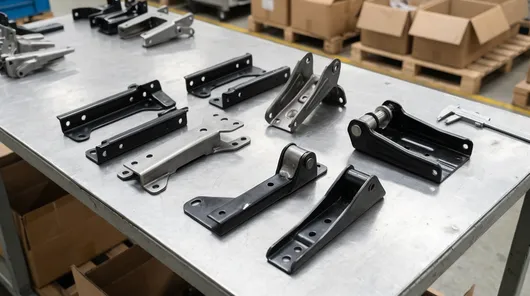
The tilt plate and mounting brackets are stamped components. At ±0.3mm tolerance (typical for manual or lower-precision progressive stamping), the pivot geometry can vary enough that load distribution across the assembly is uneven. Under repeated loading, that unevenness concentrates stress at the weakest point — usually a weld or a bracket bend radius — and that's where fatigue cracks initiate.
We run progressive die stamping to ±0.15mm on structural mechanism components. That tolerance isn't a marketing number — it's what keeps the pivot geometry consistent batch to batch, which is what keeps the load distribution predictable, which is what the cycle life rating depends on. A mechanism stamped to ±0.3mm and rated at 120 kg / 50,000 cycles is a different product from one stamped to ±0.15mm with the same rating, even if the spec sheet looks identical.
When you're comparing quotes from multiple suppliers, ask for the stamping tolerance on the tilt plate and main bracket. If they can't give you a number, that's the answer.
—
Cycle Life: The Commercial Floor Is 50,000 — Here's Why That Number Matters
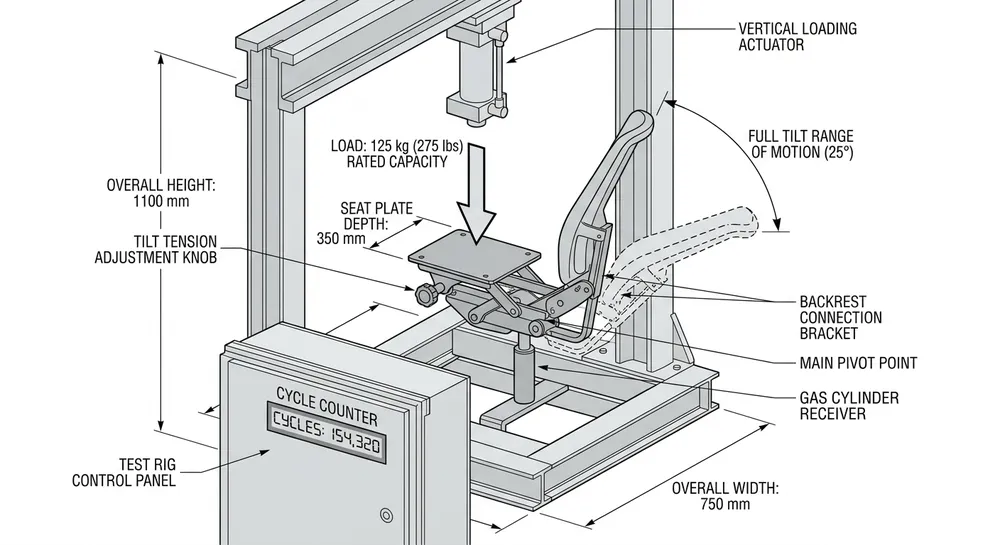
Cycle life is the number of complete use cycles — sit down, recline, return to upright, stand up — a mechanism is tested to without functional failure. The test standard most commonly referenced is BIFMA X5.1 for office seating, which sets 100,000 cycles as the durability requirement for commercial office chairs. The mechanism inside the chair needs to support that rating.
For the mechanism itself, 50,000 cycles is the commercial floor — the minimum batch qualification standard we apply to every production run. This isn't a premium test tier; it's the baseline. Mechanisms that don't pass 50,000-cycle load testing at rated capacity don't ship.
The test protocol matters as much as the number. Load cycling at 120 kg through the full tilt range is a different test from cycling at 80 kg through a partial range. When a supplier quotes "50,000 cycles," ask what load and what range. We test at rated capacity through the full tilt arc — that's the condition that exposes fatigue in the pivot geometry and weld joints.
For high-use commercial environments — call centers, co-working spaces, airport lounges — we'd recommend specifying 80,000 cycles minimum and confirming the test load matches your mechanism's rated capacity. The incremental cost difference between a 50,000-cycle and 80,000-cycle mechanism is smaller than one warranty replacement shipment.
(We've had buyers push back on the higher cycle spec to save $0.80 per unit on a 10,000-unit order. The math on one container of warranty replacements changes that conversation quickly.)
—
How Manufacturing Process Directly Affects Adjustment Reliability
Spec numbers on a data sheet describe the design intent. What you actually receive is determined by the manufacturing process behind those numbers.
Three process factors have the most direct impact on adjustment reliability in the field:
Stamping tolerance on structural components. As covered above, ±0.15mm on the tilt plate and mounting brackets keeps pivot geometry consistent. Looser tolerances mean variable load distribution, which accelerates fatigue at stress concentration points.
Die-cast dimensional consistency on adjustment hardware. The tilt knob, tension adjustment collar, and height lock ring are all die-cast components. If the thread engagement depth or the collar bore diameter varies batch to batch, the adjustment feel changes — and over time, the mechanism develops play that users notice as looseness. We control this in-house. The die-casting cell that produces these components runs to a tighter dimensional spec than most outsourced foundries hold, because we're measuring every batch against the mechanism assembly tolerance stack, not just the component drawing.
Weld quality on load-bearing joints. The pivot bracket welds are the highest-stress joints in the assembly. We use MIG welding on structural joints with visual inspection and periodic pull-testing. The failure mode we watch for is incomplete fusion at the root of the weld — it passes visual inspection but fails under cyclic loading. Pull-testing on a sample from each welding batch catches this before it reaches assembly.
These three process controls are what the cycle life rating is actually built on. A mechanism that passes 50,000 cycles in our QC lab does so because the stamping, die-casting, and welding are all held to the tolerances that make the design intent real.
—
What to Include in Your RFQ to Get an Accurate Quote
The most common reason an RFQ produces a vague or inaccurate quote is missing spec data. Suppliers fill in the gaps with assumptions — usually the cheapest assumption that still technically fits the request.
To get a quote that reflects what you actually need, include these parameters:
| RFQ Parameter | Why It Matters |
|---|---|
| Load capacity (kg) | Determines spring rate, bracket gauge, and weld spec |
| Height adjustment range (mm) | Determines cylinder class and frame compatibility |
| Tilt angle range (°) | Affects spring selection and mechanism geometry |
| Cycle life requirement | Sets the QC test standard for batch qualification |
| End-use environment | Commercial office, residential, high-use — changes the spec tier |
| Annual volume | Affects MOQ, tooling amortization, and unit pricing |
| Surface finish requirement | Nickel plate, zinc plate, or powder coat — affects lead time and cost |
| Certification requirements | CE, BIFMA, RoHS — determines documentation package |
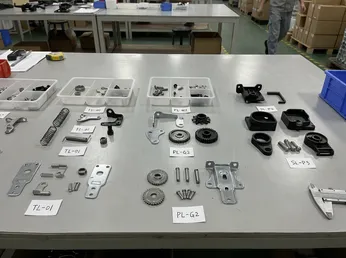
If you have an existing mechanism you're replacing or improving, a photo and the current spec sheet (even a partial one) is more useful than a written description. We can reverse-engineer the spec from a sample and tell you where the current design is underspecified for your application.
For OEM projects, add your frame drawings or mounting dimensions. The mechanism spec doesn't exist in isolation — it has to fit the chair frame, and the frame geometry affects the effective adjustment range and tilt feel.
Send your RFQ parameters to our Chair Mechanism product team, or go directly to the Request Quote page with your spec details. We'll come back with a specific mechanism recommendation, not a catalog link.
—
Spec Verification: What to Ask For Before You Commit to a Production Order
A quote is not a guarantee. Before you place a production order, these are the verification steps worth taking:
Request a dimensional inspection report on the tilt plate and main bracket. This confirms the stamping tolerance claim. A supplier running ±0.15mm should be able to produce a CMM report or a first-article inspection report showing actual measured dimensions against drawing tolerances.
Request the cycle life test report for the specific mechanism model. The report should show the test load, the tilt arc range tested, the number of cycles completed, and the pass/fail criteria. A generic "50,000 cycles tested" statement without these parameters is not a test report.
Request a material certification for the steel. Cold-rolled steel coil should come with a mill test certificate (MTC) showing the material grade, thickness, and mechanical properties. This is standard documentation — if a supplier can't provide it, the material source is unverified.
Order a sample before committing to volume. Assemble it into your frame, test the adjustment range, sit in it, cycle the tilt 200 times by hand. The sample tells you things the spec sheet doesn't — how the tension knob feels, whether the height lock engages cleanly, whether the tilt return is smooth or has a catch. We ship samples to qualified buyers before production orders; most serious buyers in this category use that step.
(The sample step is where we catch frame compatibility issues before they become production problems. We've had buyers skip it to save time and then discover the mounting hole pattern doesn't match their frame. That's a tooling change conversation nobody wants to have after 5,000 units are in production.)
—
FAQ: Adjustable Chair Mechanism Specs for B2B Buyers
What cycle life rating should I specify for commercial office chairs?
For standard commercial office environments with single-user-per-chair deployment, 50,000 cycles at rated load is the minimum. For multi-user environments — hot-desking, co-working, hospitality — specify 80,000 cycles and confirm the test load matches your mechanism's rated capacity. BIFMA X5.1 sets 100,000 cycles for the complete chair; the mechanism needs to support that rating with margin.
What's the difference between a Class 3 and Class 4 gas lift cylinder?
Class 4 is the commercial standard. It has a higher pressure rating, a longer service life, and typically a wider adjustment range (100–150mm travel) compared to Class 3 (80–100mm). Class 3 cylinders are adequate for residential use but will underperform in commercial environments where the chair is used 8+ hours daily. Always specify Class 4 for commercial orders.
How do I know if a supplier's load capacity rating is real?
Ask for the test report. A credible load capacity rating comes from a documented test at the stated load through the full range of motion, run for the stated cycle count. If the supplier can only provide a spec sheet number without a test report, the rating is a design target, not a verified result. Also ask for the stamping tolerance on structural components — a 120 kg rating built on ±0.3mm stamping is a different product from one built on ±0.15mm.
What causes tilt tension to feel inconsistent across a batch?
Usually die-cast dimensional variation on the tension knob or adjustment collar. If the thread engagement depth varies by 0.3–0.5mm across units, the effective spring preload varies with it, and users notice different resistance levels on chairs from the same order. This is why in-house die-casting with tight dimensional control matters — it's not a visible spec, but it's what determines whether your batch feels consistent.
What specs should I always include in an OEM chair mechanism brief?
Load capacity, height adjustment range, tilt angle range, cycle life requirement, and end-use environment. Add your frame mounting dimensions and any certification requirements (CE, BIFMA, RoHS). If you have a reference mechanism you're improving on, include it — a physical sample or detailed photos tell us more than a written description.
What's the minimum order quantity for a custom mechanism spec?
For standard catalog mechanisms with minor configuration changes (surface finish, cylinder class, spring rate), MOQ is 500 units. For OEM projects requiring new tooling, MOQ depends on tooling amortization and we'll give you the honest number based on your spec. We don't use round-number MOQs designed to sound accessible — the number we quote reflects the actual production economics.